


Major Industries in Mexico: A Sector-by-Sector Guide for Manufacturers
13 min Read
Key Takeaways
- Mexico's export manufacturing runs in established industries, each with its own clusters, supplier base and customs rules; this guide covers nine of them.
- Each industry concentrates in a few states, and the right one for you depends on your product, your customer and your process more than on any national figure.
- What your inputs owe entering Mexico and what your product owes entering the United States are two separate checks, and sourcing changes both.
- The figures come from INEGI, UN Comtrade, the U.S. Census Bureau, the Commerce Department and USTR, each with its scope and year attached.
- Tetakawi has helped companies manufacture in Mexico since 1986: you run your own factory on a Manufacturing Campus, and we run everything around it.
Jump to Section
Mexico usually comes up for a reason: a customer asking for a North American source, an existing plant at capacity, a shift that cannot be staffed. Whatever the trigger, the first question is usually the same. What does Mexico manufacture, and is my industry already there? Mexico specializes in export manufacturing. Nine of its industries, for example, have clusters, supplier bases and customs rules of their own: automotive, aerospace, medical devices, electronics, home appliances, HVAC, plastics, textiles and apparel, and furniture. Those are the industries Tetakawi supports in Mexico. So this guide takes them one at a time: what each sector makes, where production is concentrated, the official figures behind it, and what to evaluate for an operation of your own.
First, a word on the figures. They come from INEGI, UN Comtrade (with Mexico as the reporting country), the U.S. Census Bureau, the U.S. Commerce Department and USTR, and each carries its scope and year. They measure different things: a customs chapter, a single heading, an industry association’s total, a census subsector. So they do not rank the industries against each other. Instead, they tell you the scale of each one.
The nine industries at a glance
| Industry | Typical products made in Mexico | Selected manufacturing locations | What to evaluate for your operation |
|---|---|---|---|
| Automotive | Light vehicles and auto parts | Coahuila, Guanajuato, Nuevo León, San Luis Potosí, Chihuahua | Your customer’s delivery requirement and your process |
| Aerospace | Engine components, aerostructures, harnesses | Baja California, Chihuahua, Coahuila, Querétaro, Sonora | The approvals and certification scope your operation needs |
| Medical devices | Instruments, orthopaedic and surgical products | Baja California, Chihuahua, Sonora, Sinaloa | What your product and its markets require of the facility |
| Electronics | Computers and servers, TVs, harnesses, components | Chihuahua, Baja California, Nuevo León, Jalisco, Tamaulipas | Assembly, test and sourcing capabilities |
| Home appliances | Refrigerators and freezers, laundry, cooking, small appliances | Nuevo León, Querétaro | Component sourcing and finished-product shipping |
| HVAC | Air-conditioning units, condensing units, compressors | Nuevo León, Chihuahua, Jalisco | Fabrication, assembly and test capabilities |
| Plastics | Moulded parts and packaging for the other eight | Estado de México, Guanajuato, Nuevo León, Querétaro, Jalisco | Material, tooling and process requirements |
| Textiles and apparel | Apparel and made-ups | Estado de México, Puebla, Mexico City, Yucatán | Sourcing and production steps against the origin rule |
| Furniture | Seating, office and household furniture, mattresses | Estado de México, Jalisco, Baja California | Materials, product dimensions and shipping |
Automotive manufacturing in Mexico
Mexico builds light vehicles for fourteen brands and the parts that go into them, and most of both cross the northern border. In 2025, INEGI counted 3.95 million light vehicles built (preliminary figures) and 3.39 million exported. Vehicles and parts together were USD 185.8 billion of exports that year, 4.2% below 2024, according to INEGI’s trade release. The brands building here are General Motors, Nissan, Ford, Stellantis, Volkswagen, Toyota, KIA, Mazda, Honda, Audi, BMW, Mercedes-Benz, Acura and JAC, as INEGI lists them. The plant-by-plant picture is in which car brands are made in Mexico.
That production sits in a corridor. In the second quarter of 2026, Coahuila led the country’s transport-equipment exports, followed by Guanajuato, Nuevo León, San Luis Potosí and Chihuahua. Under the IMMEX export program, transport equipment, which includes aerospace, employed 930,491 people in August 2026, about a third of the program’s manufacturing employment.
For a supplier, the question that narrows the map fastest is usually where your customer wants the part and how often. A seat frame or a harness feeding an assembly line in Saltillo or Silao is delivered in hours and in sequence. So the delivery requirement often shapes the location before the cost comparison does. Then workforce, utilities and the building itself narrow it further. Gemini Group, for example, runs a three-shift automotive operation in Saltillo on a Tetakawi Manufacturing Campus; its case study describes the launch.
Then there are the trade rules. In 2025, 92.9% of U.S. vehicle imports from Mexico, by value, claimed USMCA preference, according to the USTR’s report to Congress. Parts carry their own content rules, and a Mexican plant address does not make a part originating; in other words, the claim needs evidence behind it. The automotive manufacturing in Mexico page explains what an auto parts plant needs on a Campus, from the building and the workforce to customs and compliance.
Aerospace manufacturing in Mexico
Mexico’s aerospace industry makes engine components, turbine parts, aerostructures, harnesses and interiors, mostly for U.S. and European programs. It is a mid-sized industry by dollars and a dense one by companies: the federal government counted 386 companies in 19 states at the end of the first half of 2024. Exports were USD 10.7 billion in 2024 on FEMIA’s figures, and the U.S. Commerce Department’s country guide describes Mexico as the fourth largest exporter of aerospace products.
Sonora’s cluster around Guaymas and Empalme is built on machining and special processes for engine programs. Kinetic Engine Systems, for example, makes turbine components there, and Senior Aerospace operates in Saltillo.
In this sector the practical work is approvals. Nadcap accreditation for special processes, AS9100 registration and your customer’s source approval each have a defined scope. Because a new facility has to be brought inside that scope, confirm what the proposed site, its processes and the certification scope require, and put the audits on the launch schedule from the first day. The guide to Mexico’s aerospace industry covers the clusters and the approvals in depth. The aerospace manufacturing in Mexico page explains how an aerospace plant is set up and supported on a Campus.
Medical device manufacturing in Mexico
Mexico makes instruments, orthopaedic and surgical products, disposables and electromedical equipment, mostly for export. Across four customs headings (medical instruments, orthopaedic appliances, mechano-therapy and X-ray apparatus), exports were about USD 20.5 billion in 2025 (UN Comtrade). The Commerce Department’s healthcare guide calls Mexico the largest medical device exporter in Latin America and the eighth largest in the world. Baja California and Chihuahua lead production, and Sonora’s Guaymas and Empalme corridor and Mazatlán in Sinaloa have device plants of their own.
The practical work here is regulatory. It starts with three facts about your own operation: the product, the markets it will be sold in, and the work the plant will perform. Together, those three decide which facility, product and quality-system requirements apply on each side of the border. A device sold in Mexico generally needs a COFEPRIS registro sanitario, while some products made in Mexico only for export can leave under COFEPRIS’s export-certificate procedure without one; U.S. requirements depend on the establishment’s activities and its relationship to the U.S. market. For the Mexican side, the COFEPRIS registration guide walks through the steps. The medical device manufacturing in Mexico page covers clean rooms, quality systems and supplier approvals on a Campus.
Electronics manufacturing in Mexico
Mexico’s exports under the electrical machinery and electronics chapter (HS 85) were USD 113.0 billion in 2025, and 87.5% of them went to the United States (UN Comtrade). The customs tariff counts computers and servers in the next chapter over, however, and that heading (HS 8471) rose from USD 34.6 billion in 2024 to USD 84.6 billion in 2025. In addition, Mexico supplied 76% of U.S. television imports in 2024. Under IMMEX, the computer and electronic products subsector employed 421,118 people in August 2026.
This sector runs along the border and in Jalisco. The five largest exporting states, by HS 85 exports in 2024 (Secretaría de Economía, Data México), are in the table below.
| State | Electronics exports (HS 85), 2024 |
|---|---|
| Chihuahua | USD 20.4 billion |
| Baja California | USD 19.3 billion |
| Nuevo León | USD 14.2 billion |
| Jalisco | USD 12.9 billion |
| Tamaulipas | USD 11.9 billion |
What to evaluate is the capability set and the sourcing. Assembly and test are established across the border states, but many components are imported. So two things have to be checked before the cost case holds: what those inputs owe entering Mexico, and whether the finished product meets its USMCA origin rule entering the United States. Mexico tariffs in 2026 explains both crossings. Many of the electronics manufacturers on Tetakawi’s Campuses are wire-harness and interconnect makers, TE Connectivity among them. The electronics manufacturing in Mexico page explains what an electronics plant needs here, from ESD-grade space to the workforce and the customs program.
Home appliance manufacturing in Mexico
Mexican plants build refrigerators, freezers, washers and dryers, cooking appliances and small appliances for the North American market. Exports of refrigerators, freezers and other refrigerating equipment (HS 8418) were USD 7.3 billion in 2025, and U.S. imports from Mexico across the five main appliance headings were USD 10.1 billion in 2024 (UN Comtrade). Nuevo León and Querétaro are the established appliance states. INEGI’s 2019 Economic Census, reporting 2018 data, placed Nuevo León and Querétaro at the top by production value.
Two things drive an appliance plant’s location: component sourcing and the space finished products occupy in transit. Compressors, motors and steel have to arrive reliably and at the right cost. And a finished refrigerator is mostly air, so the distance to a distribution center is a large share of its landed cost. As a result, those two often weigh more than the labor rate, though workforce and building suitability still need checking. The appliance manufacturing in Mexico page explains what an appliance operation needs on a Campus.
HVAC manufacturing in Mexico
Mexican plants build air-conditioning units, condensing units, compressors and coils for U.S. residential and commercial customers. Exports of air-conditioning machines (HS 8415, which also covers vehicle air conditioning) were USD 7.6 billion in 2025, after a 12.1% rise in 2024 (UN Comtrade). Nuevo León is the center. It holds the largest share of the 674 HVAC establishments INEGI listed in May 2026, and in the 2019 Economic Census (2018 data) it carried 61% of the sector’s production value. By establishment count, Chihuahua and Jalisco follow Nuevo León.
In HVAC, the evaluation covers fabrication, assembly and test together. Sheet metal, brazing and refrigerant charging are the fabrication side; pressure, leak and performance testing are what the customer audits; and, wherever the unit is built, U.S. efficiency standards and refrigerant rules apply to the product. The HVAC manufacturing in Mexico page explains what that capability set looks like on a Campus.
Plastics manufacturing in Mexico
Injection moulding, extrusion, blow moulding and packaging feed the other eight industries on this page. That is why plastics is on it. Exports of plastics and articles of plastics (HS 39) were USD 12.3 billion in 2025, 82% to the United States (UN Comtrade). INEGI’s 2024 Economic Census (2023 data) counted 458,784 people in plastics and rubber across 7,065 establishments. The industry follows its customers: Estado de México, Guanajuato, Nuevo León, Querétaro and Jalisco lead by production value.
For a moulder, three things shape the operation. First, material: where the resin comes from affects both its cost entering Mexico and the origin analysis of the finished part. Second, tooling: moulds are your asset and need their own customs treatment when they come in. Third, process: secondary operations such as painting, plating and assembly decide whether the plant is a moulder or a module supplier. Intec Group, for instance, moulds automotive plastics in Guaymas on a Tetakawi Campus; its case study describes the operation. The plastics manufacturing in Mexico page explains what a moulding plant needs here.
Textile and apparel manufacturing in Mexico
Mexico cuts and sews apparel and made-ups, mostly for U.S. brands, and spins and weaves some of the inputs. Exports across the textile and apparel chapters (HS 50 to 63) were USD 8.1 billion in 2025, down 13.2% from 2024, with 90% going to the United States (UN Comtrade). Apparel and made-ups alone were USD 6.5 billion. The 2024 Economic Census (2023 data) counted 515,153 people across textile inputs, textile products and apparel. Estado de México, Puebla, Mexico City and Yucatán are the established states.
Here the origin rule shapes the economics more than in most sectors. For example, most apparel qualifies for USMCA under a yarn-forward rule, where the yarn and every later step are North American. But the rules are product-specific: fiber-forward, fabric-forward and single-transformation rules all exist, and the product’s own rule is the one that counts. Mexico also raised its own duties on a range of textile and apparel lines from countries without a trade agreement in January 2026. So where the fabric comes from affects the Mexican duty as well as the U.S. claim. Mexico tariffs in 2026 covers both. The textile manufacturing in Mexico page explains what a cut-and-sew operation needs on a Campus.
Furniture manufacturing in Mexico
Mexican plants make seating, office and household furniture and mattresses for U.S. retailers and contract customers. INEGI’s 2024 Economic Census (2023 data) counted 193,949 people in furniture, mattresses and blinds across 31,524 establishments, most of them small. Estado de México, Jalisco and Baja California lead by production value.
What a furniture manufacturer has to weigh is materials and freight. Wood, foam and fabric origin feed into the USMCA analysis. Meanwhile, a finished sofa occupies a lot of truck for its value, so distance to the customer is a large part of the landed cost. That is why much of the industry sits near the border and along the lanes into Texas and California. The furniture manufacturing in Mexico page explains what a furniture operation needs on a Campus.
What to evaluate for your own operation
Two facts frame all nine. First, U.S. goods imports from Mexico were USD 534.3 billion in 2025, 15.6% of U.S. goods imports, per the U.S. Census Bureau, and Mexico holds 14 free trade agreements with 50 countries; Mexico’s free trade agreements explains which ones matter to a manufacturer. Second, on cost: on Tetakawi’s October 2026 figures, an unskilled operator in Mexico costs about a sixth of a U.S. assembler, fully loaded on both sides, and a production manager a little over 40% of a U.S. counterpart; the role-by-role figures, with both sides dated, are on the manufacturing labor costs in Mexico page.
Those figures are the starting point for your own operation, not the answer: a sector total cannot tell you whether your plant works here. Instead, the evaluation runs across costs, workforce, facilities, logistics and regulatory requirements together.
Four questions that do most of the work
- Is your process established here? Not the industry, the process: the special processes, the supplier tier and the test capability your product needs.
- Where does your customer need the product, and when? The delivery requirement narrows the map, and workforce, utilities and building suitability narrow it further.
- What do your inputs owe entering Mexico, and what does your product owe entering the United States? Two crossings, two checks, and sourcing changes both.
- Which approvals and registrations apply? Customer source approvals, regulatory registrations and quality-system certifications each have a scope, and the new facility has to be brought inside it.
Launch, operate and grow with Tetakawi
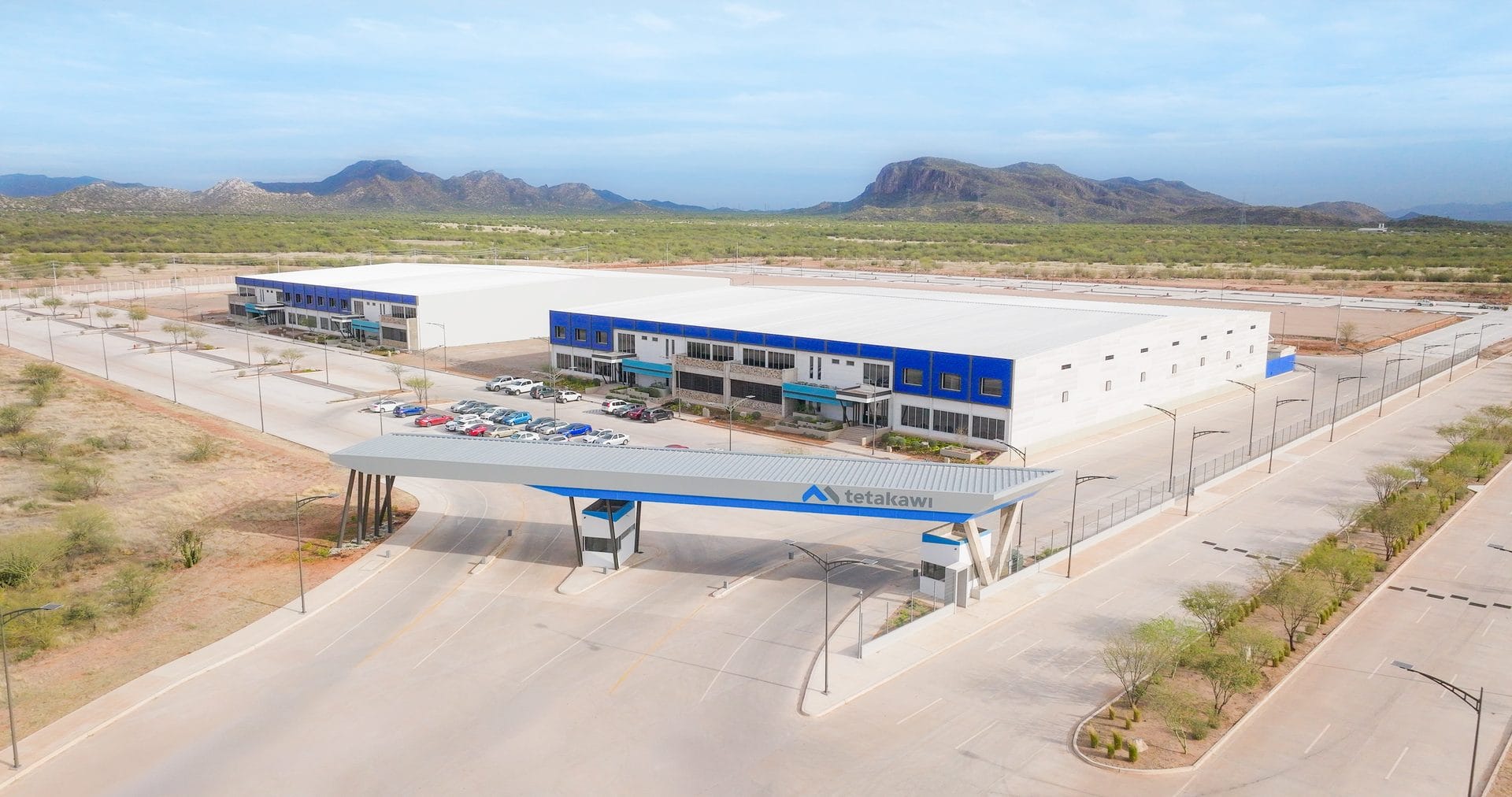
Tetakawi’s Manufacturing Campuses help foreign companies launch, operate and grow their own factories in Mexico. Each Campus combines industrial space, shared infrastructure and an on-site team that takes care of the work around your plant: hiring and workforce administration, logistics and customs, and compliance. You run the factory and focus on production, process and quality, with an established organization already in place around you.
Since 1986, Tetakawi has supported manufacturers across the industries in this guide, on Campuses in Saltillo, Guaymas, Empalme, Hermosillo and Mazatlán. See how the model works and our Manufacturing Campuses for what that looks like for a plant like yours.
Explore what manufacturing in Mexico could look like for your company
Tell us what you manufacture and what you want to achieve. We’ll help you evaluate the requirements, understand the costs and identify the next steps for your operation.
Common questions
What are the major manufacturing industries in Mexico?
Automotive, electronics, aerospace, medical devices, home appliances, HVAC, plastics, textiles and apparel, and furniture are the established export industries this guide covers, each with its own clusters and customs rules.
What is Mexico’s main industry?
It depends on the measure. By export value in INEGI’s trade classification, automotive products were about 31% of Mexico’s manufacturing exports in 2025. By employment under the IMMEX export program, transport equipment accounted for about a third of manufacturing employment in August 2026. Neither figure speaks for the whole economy, where services employ more people than manufacturing.
What does Mexico manufacture for the United States?
Vehicles and auto parts, computers and servers, televisions and electronic components, medical devices, refrigerators and air conditioners, moulded plastics, apparel and furniture. U.S. goods imports from Mexico were USD 534.3 billion in 2025.
Is Mexico a good place to manufacture?
That is a question about your operation rather than about the country. The answer comes from evaluating the proposed plant’s costs, workforce, facilities, logistics and regulatory requirements against the alternatives, product by product. The sector pages linked above show what each industry’s operations need here, and that evaluation is the first conversation to have.
Subscribe to stay up to date with our latest insights