





Shelter Services in Mexico: Everything You Need To Know
10 min Read
Key Takeaways
- A shelter arrangement lets a foreign manufacturer run its own factory in Mexico while a provider holds the Mexican legal and administrative structure around it.
- You direct production, process and quality. The provider handles the agreed Mexican functions: recruiting, payroll, customs, tax filing and permitting.
- Shelter describes the commercial arrangement. Albergue is the specific IMMEX authorization modality that sits underneath it.
- Providers differ in which authorizations they hold, at which registered locations, and in how much of the operation they run themselves.
- Three to six months is typical to get an operation started. What each side carries depends on the operation, the applicable law and the agreement.
Jump to Section
Choosing to manufacture in Mexico isn’t the hard part. Deciding how to operate there is, and that choice decides how much of Mexico your own team has to become expert in.
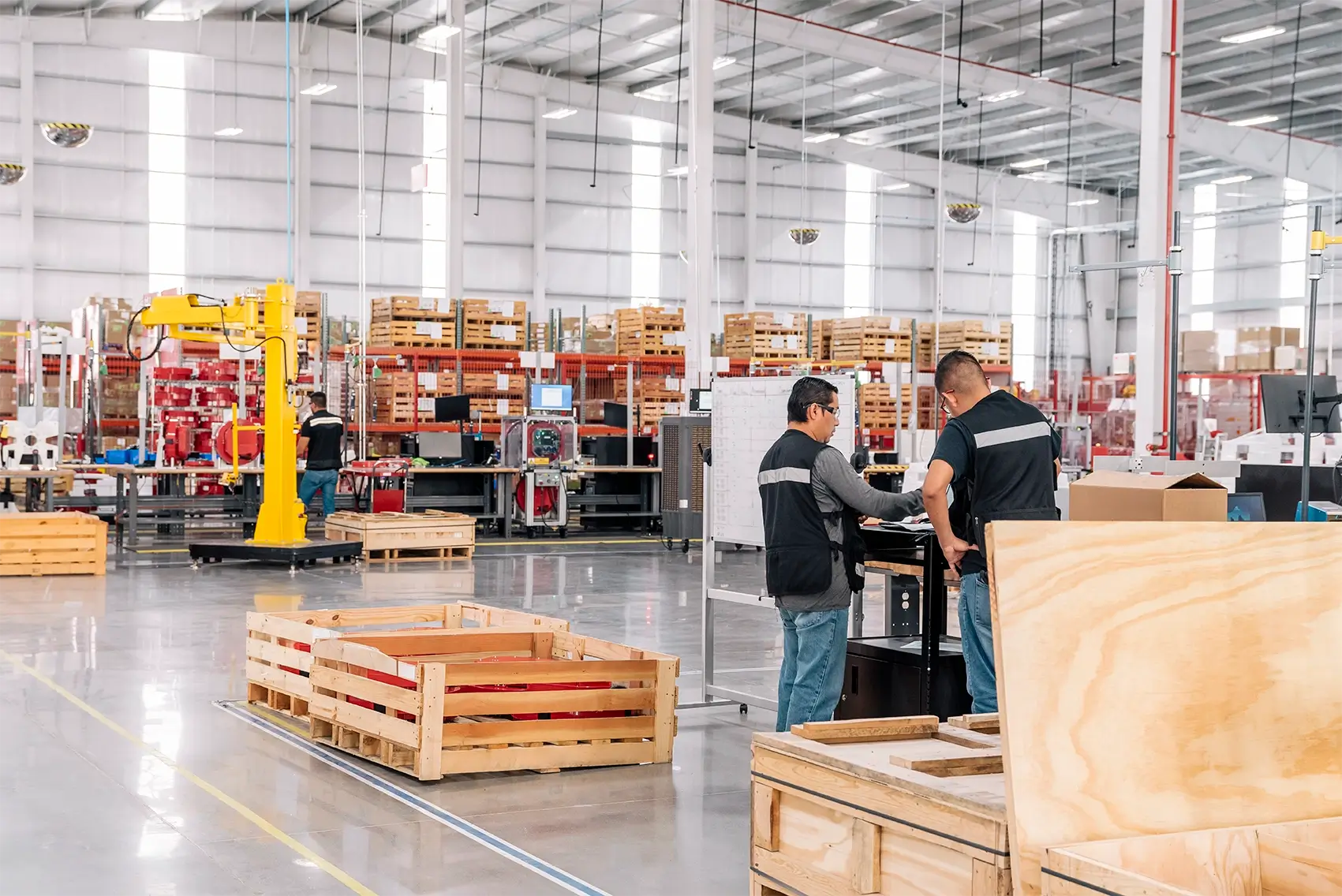
Shelter services in Mexico let a foreign manufacturer operate through a Mexican legal and administrative structure the provider holds. The provider runs recruiting, payroll, customs, tax filing and permitting. You control production, process and quality.
What you control, and what the provider runs
So the useful question is not what a shelter is. It is which parts of running a plant in Mexico stay on your side of the line, and which do not. Function by function, here is how it divides.
This illustrates a provider-held arrangement. Included services and responsibilities depend on the operation, applicable law and agreement.
| Function | Your role | Provider’s role |
|---|---|---|
| Production process and technology | You control it | None |
| Quality | You control it | None |
| Engineering | You control it | None |
| Recruiting | You select | Sources and screens |
| Employment, payroll, benefits | You set headcount and roles | Runs them |
| Labor relations | Day to day supervision | Union relations and formal processes |
| Mexican import and export declarations | Supply the product, value and material data | Importer and exporter of record on its side |
| Supply chain and inventory | You plan it | Border crossing and dock handling |
| IT systems | You own and run them | Site connectivity |
| Accounting and tax filing | Supply operating information and meet your company’s applicable obligations | Handle the Mexican accounting and filings assigned to it under the applicable framework |
| Environmental and safety | Disclose processes and materials; implement requirements assigned to your operation | Administer applicable programs, reporting and authorizations within its responsibilities; confirm the allocation during project review |
| Facilities, security, transport | Specify what you need | Operates them |
Read down the middle column and the pattern holds. Your product decisions never move. This is the line that separates a shelter arrangement from contract manufacturing, where another company performs the production under agreed specifications.
The third column is where providers actually differ. Shelter arrangements have supported export manufacturing in Mexico for decades. The IMMEX Decree recognizes albergue as an authorization modality; it does not prescribe a universal package of commercial shelter services. Some hold a structure that already carries other manufacturers. Some stand one up for a single client. Some hold it only through a transition.
How shelter services in Mexico actually work
These arrangements are not new. Shelter services in Mexico have run through the country’s maquiladora program for decades, and the two words are not alternatives to each other: a maquiladora is the export manufacturing operation, while a shelter is the arrangement that supports it.
Shelter describes the commercial arrangement. Albergue is a specific IMMEX authorization modality. The provider’s actual authorizations and operating structure determine which requirements apply.
A Mexican company holds the IMMEX program and, in the usual arrangement, employs the workforce. Under LISR article 183, a qualifying foreign resident operating through an authorized albergue may be treated as not having a permanent establishment in Mexico, subject to the conditions that article sets and to article 183-Bis, which places the per-resident calculation and joint liability on the shelter. The tax and customs treatment depends on the authorizations held and the requirements applicable to the operation.
And treatment as having no permanent establishment is not the same as having no Mexican obligations. Registration, reporting and filing requirements can still apply to your own company. What those are is a question for your advisors and ours together.
One more distinction that catches people out: IMMEX, VAT and IEPS certification, and OEA registration are three separate authorizations, and holding one does not confer the others. A provider that already holds them can reduce the setup work, but your proposed premises, goods and processes still have to be checked against the scope of what it holds. That check belongs in project review rather than in a quote.
The other ways to manufacture in Mexico
Common options include shelter, a standalone subsidiary and contract manufacturing. Other routes, including acquisitions and joint ventures, are covered in our guide to six ways to manufacture in Mexico.
| Model | What it gives you | Main trade-offs |
|---|---|---|
| Shelter | You control production, process and quality. Administrative functions run through the provider, which may already hold the authorizations. Three to six months is typical, and as little as 30 days on an established Manufacturing Campus. | An ongoing fee for as long as you use it, and your operation depends on the provider’s authorizations staying in force and its service holding up. |
| Standalone subsidiary | Direct control of the Mexican entity and its administration, as well as production. Can use an existing building; it does not have to be a new build. | Eight to eighteen months to stand up a standalone operation. You decide which functions to staff and which to outsource locally, and you manage both. |
| Contract manufacturing | Low maintenance. The contracted company is responsible for production. | The contractor performs production under agreed specifications and quality requirements, so you influence process through the contract rather than directly. What happens to your process knowledge is governed by that contract. |
Comparing shelter with a standalone operation requires more than comparing a provider’s fee with an internal payroll budget. Trade volume, customs complexity, service scope and existing local expertise all affect the result. Our shelter-versus-standalone comparison explains the operating choices, and our shelter-cost guide explains the fee components.
What a shelter arrangement actually gives you
Under shelter services in Mexico you are not forming a subsidiary, buying a Mexican company, or handing production to a partner. You run your own operation inside a structure someone else maintains. Three things follow.
Less setup work. A provider that already holds the authorizations can bring your operation under them rather than starting new applications, provided your premises, goods and processes fall inside their scope. Where they do, that removes a stretch of schedule you would otherwise be waiting on. What that looks like on a Manufacturing Campus, part by part, is in what a Campus speeds up and what it can’t.
A labor market someone already knows. Recruiting in Hermosillo is not recruiting in Saltillo, and the difference shows up in the roles that are hardest to fill. For example, a provider that has staffed CNC operators in a city for years knows which technical schools graduate them and how long those people tend to stay.
Room to change size. As you add lines and shifts, part of the administrative growth is carried by a team that already exists. Not all of it. Capacity and staffing still scale with demand, and a large enough expansion is a planning conversation rather than an assumption.
But what the arrangement does not do is move your obligations onto someone else’s balance sheet.
What shelter services in Mexico do not cover
No arrangement makes an audit impossible, and anyone who tells you otherwise is selling something. Shelter services in Mexico move a great deal of work off your desk, but some things stay yours whichever provider you pick.
You still supply accurate product, value, ownership and material consumption information, and you still disclose your processes and materials. The customs declaration is filed on the provider’s side, but the data in it comes from you, and it has to be right. Consider a classification that has drifted over three years of engineering changes. Your engineers disclose what changed; the trade team and the broker work out what it means for classification. Neither half works without the other.
Then there are permits. These sit in more than one place: site and building permits for the Campus sit with the operator, and environmental permitting runs across municipal, state and federal authorities. Which authorizations your specific process needs, and who holds each one, is identified during project review rather than assumed from the arrangement.
Worth saying plainly
These are the limits as Tetakawi runs the arrangement, and other providers draw some of them differently. Service scope and commercial responsibilities are documented in the agreement. Legal obligations also depend on applicable law and how the operation is organized. Project review establishes how those responsibilities are handled in the proposed arrangement.
How to choose a provider for Mexico shelter services
Providers of shelter services in Mexico differ more than their websites suggest. They range from Campus operators running their own industrial parks to full service providers without real estate, start up specialists who hand the operation back at an agreed point, contract manufacturers, real estate companies adding services, and menu style providers offering a few functions each. Those are different businesses, and two quotes that look alike can sit on either side of that line. We compare all six in how to compare shelter providers.
Fit depends on your sales markets, production model, footprint and sourcing plan. Tell us whether you intend to serve the Mexican domestic market, need someone else to manufacture the product, or require a smaller operation. Those requirements need to be assessed before selecting the arrangement. If you source components internationally, review the applicable duty treatment as part of that assessment.
What to verify before you sign
Companies selling shelter services in Mexico describe overlapping offerings in nearly identical language, so the comparison only becomes real when you ask about mechanics.
- Whose authorization will you operate under
- The provider’s existing IMMEX program, or one obtained for you? How long has it been in force, and is it shared or dedicated? The answer has tax, labor, customs and environmental consequences.
- What the fee actually covers
- Which services sit inside the quoted number and which are billed per event? Ask for the full list in writing.
- Who owns the building and who fixes it
- Which costs sit with the operator and which with you: property taxes, building insurance, maintenance, utility connections? A signed agreement is not a working building.
- Where the people who run your operation sit
- On your site, in a regional office, or shared across clients? Who employs them, and which roles will you be expected to hire yourself?
- Who answers when a regulator arrives
- Ask for the person and their title rather than the department. Then ask what happened the last time it occurred at one of their sites.
That full list is in the guide to choosing a shelter service provider, and it is worth taking to every conversation rather than only to ours.
What shelter services does Tetakawi offer?
Everything above describes the category. Here is how we run it. Tetakawi is not a contract manufacturer: you run your own factory, and our shelter services in Mexico take one shape around it. Inside a Manufacturing Campus you get four things, delivered by seven service lines.
| What you get | Delivered by |
|---|---|
| Industrial space | Start-Up Services and Facilities Management |
| Workforce | Human Capital Management |
| Logistics | Import and Export, and Indirect Procurement |
| Compliance | Fiscal and Tax Compliance, and EH&S Compliance |
Under the arrangement described here, the importer of record into Mexico and exporter of record from Mexico are on Tetakawi’s side. The responsible Mexican entity is identified on the customs declaration. For shipments entering the United States, the client acts as importer of record under this arrangement; the designated party is confirmed for the transaction during project review.
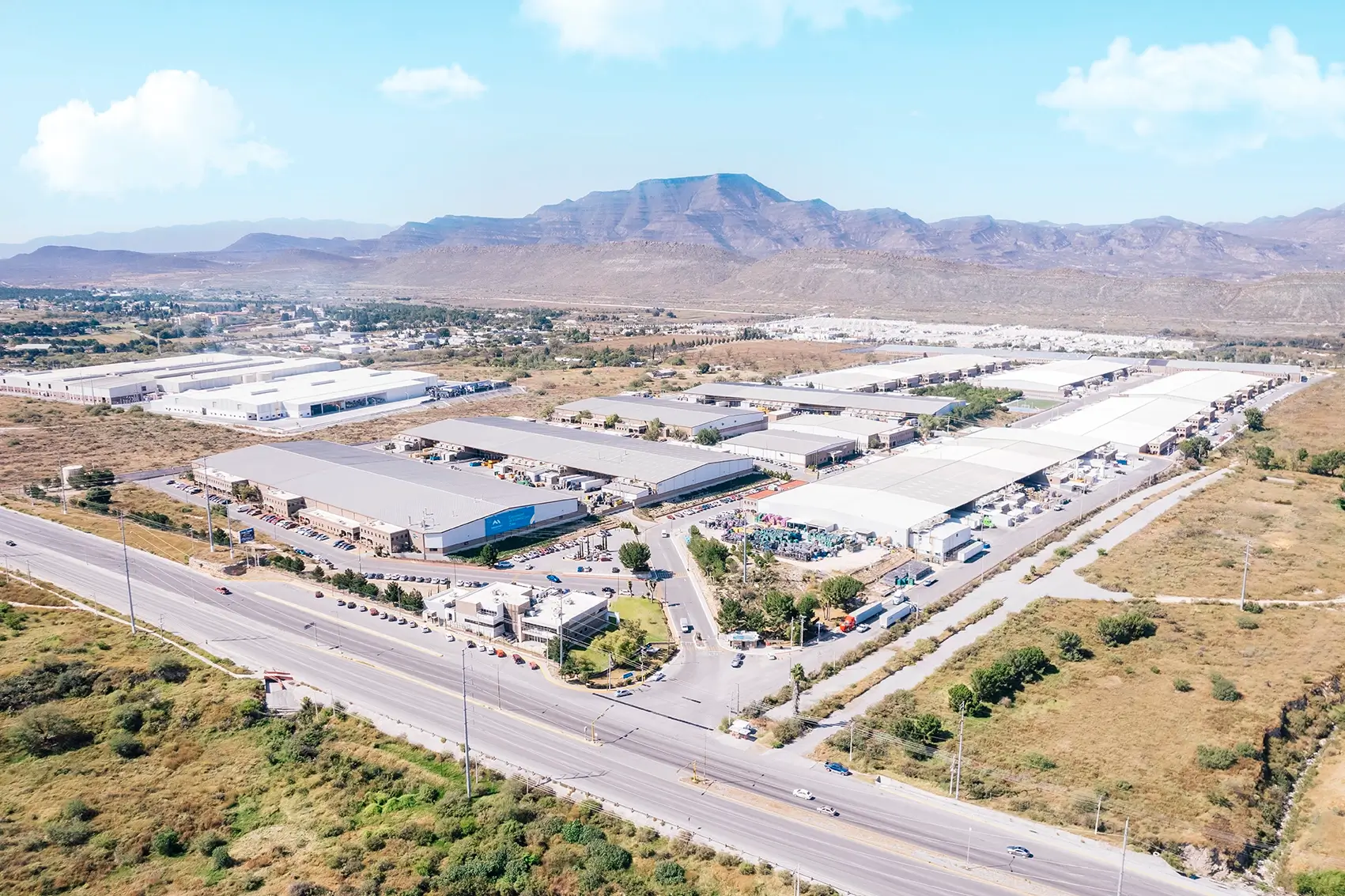
A Manufacturing Campus brings industrial space and operating support together in one location. Its economics come from sharing resources, coordinating services and applying local experience.
Scale. Sharing recruiting resources, worker transport and supplier relationships can spread part of the fixed support cost across manufacturers. Staffing and capacity still have to grow with demand.
Scope. Space, workforce, logistics and compliance run through one organization, reducing the number of separate providers your team has to coordinate.
Learning. Repeated launches and ongoing operations build experience with local hiring, transport and operating requirements. That experience can inform the next project, while each manufacturer supplies its own process and production requirements.
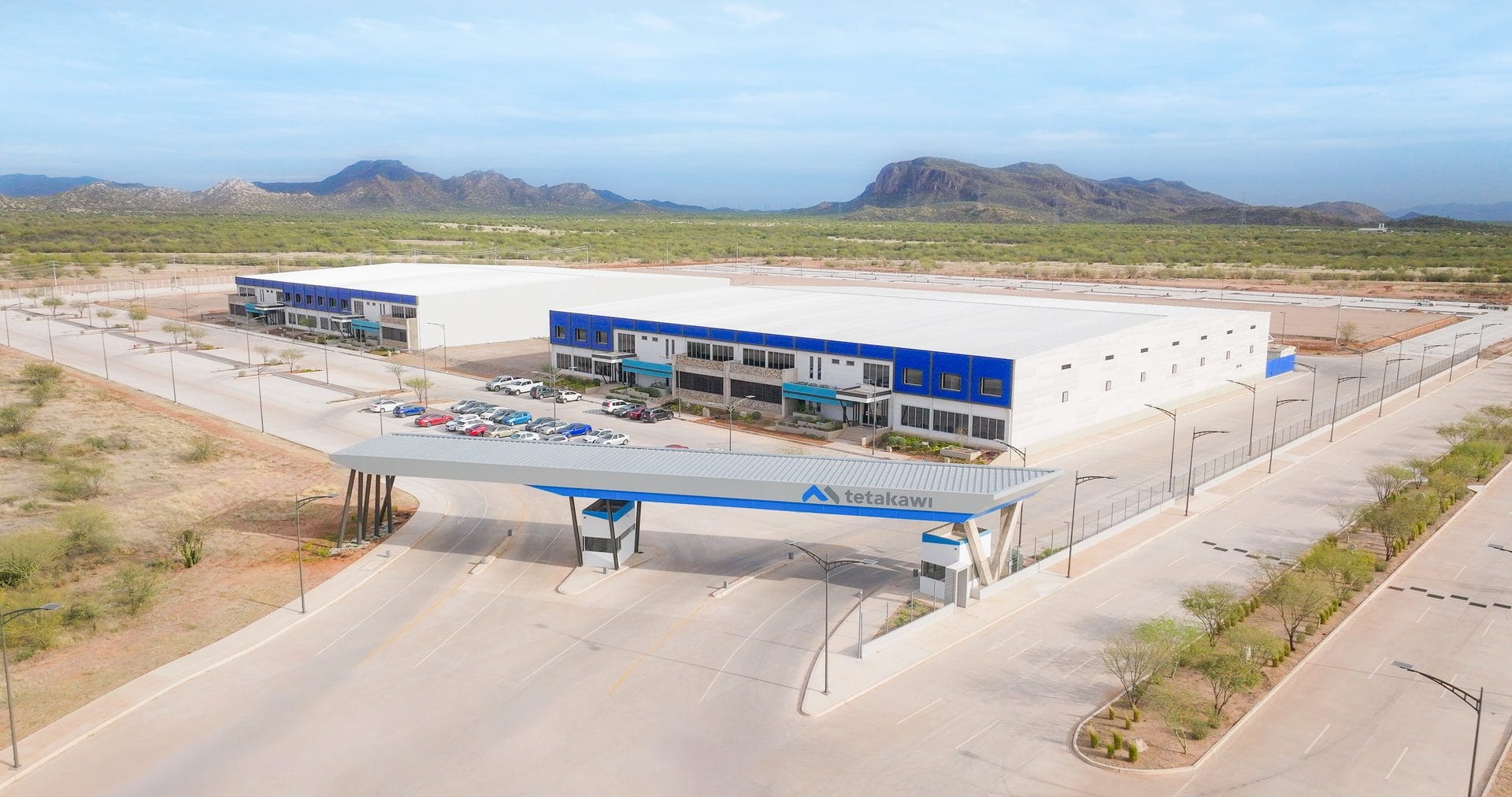
Five Campuses: Hermosillo, Guaymas, Empalme, Mazatlan and Saltillo. More than 60 manufacturers run their own operations inside them, and we have been doing this since 1986. But a Campus is not the right answer for everyone: if you need to be in Tijuana or the Bajio, we do not operate there, and a provider who does will serve you better.
How to get started
Four steps.
- Get in touch
- Describe your product, process, headcount, space requirements and target date.
- Compare the economics
- Review the proposed scope, cost assumptions and responsibilities alongside a standalone alternative.
- Visit a Campus
- Review the available space and meet the teams supporting the proposed operation.
- Plan the launch
- Establish the required preparations, responsibilities and milestones for the project.
Common questions
Is a shelter company the same as a contract manufacturer?
No. Tetakawi is not a contract manufacturer. A contract manufacturer performs production under agreed specifications and quality requirements. Under a shelter arrangement, you direct production, processes and quality, while the provider handles the agreed Mexican administrative functions.
Does a shelter arrangement mean my company has no tax presence in Mexico?
Not automatically. Under LISR article 183, a qualifying foreign resident operating through an authorized albergue may be treated as not having a permanent establishment, subject to the conditions that article sets. That is not the same as having no Mexican obligations, and what registrations your own company needs is a question for your advisors and ours together.
How long does it take to start?
Three to six months is typical to get an operation started. On an established Manufacturing Campus, moving into a standing building that carries the process as it is, a well prepared operation can get started in as little as 30 days. A new building on a Campus adds its own delivery schedule, about six months. Timing also depends on available utilities, required authorizations, equipment installation and customer approvals, so confirm the milestones for site readiness, equipment installation and commercial production in the project plan.
What does a shelter arrangement cost?
Shelter services in Mexico are priced on headcount, the functions you use and the space you need, so any number quoted without those is a guess. We walk through how the cost is built in what a shelter arrangement costs.
Sources
Permanent establishment and shelter obligations: Ley del Impuesto sobre la Renta, articles 183 and 183-Bis. The albergue authorization modality: the IMMEX Decree.
Before you shortlist a provider
Ask us the same five questions
Send your product, your headcount plan and the space you need. We will tell you what the arrangement would carry, what would stay with you, and which Campus fits. If none does, we will say so.
Subscribe to stay up to date with our latest insights