




VAT in Mexico for Manufacturers: IVA Refunds and IVA/IEPS Certification
12 min Read
Key Takeaways
- Export manufacturers may recover eligible VAT paid in Mexico, so both eligibility and the wait for recovery belong in the cash forecast.
- The general refund period is 40 business days after a complete application, and information requests or verification can extend the wait.
- On qualifying IMMEX temporary imports, a company can pay the VAT and seek recovery, use an accepted guarantee, or apply the IVA/IEPS certification credit.
- Certification covers eligible import VAT. VAT on local purchases follows the separate credit or refund process.
- With Tetakawi, the IMMEX program and IVA/IEPS certification sit on Tetakawi's side, and its fiscal team files the monthly VAT refund claims.
Jump to Section
If your company is thinking about manufacturing in Mexico, VAT comes up early, usually in the first cost model. Mexico’s standard value-added tax, called IVA, is 16%. A new plant may start paying it on local purchases before production begins. A manufacturer that exports what it makes may be able to recover eligible VAT, subject to SAT’s review. The catch is timing, and timing is cash.
The short answer
For an export manufacturer, the VAT question is how much is recoverable and how much cash is committed while it waits. Eligible VAT on what you buy locally can be recovered through refund claims, which SAT, Mexico’s tax authority, reviews before it pays. VAT on materials you import under an IMMEX program can be covered at the border without a cash payment, through an accepted guarantee or the IVA/IEPS certification credit.
The easiest way to see how it works is to follow the money through the first months of a new plant: what you pay, how recovery works, what it does to your cash while you wait, and where IVA/IEPS certification and the way you set up the operation change the answer. The monthly VAT claims and tax filings in Mexico sit underneath every step.
What VAT Will You Pay in Mexico?
The first VAT shows up on ordinary bills. Many local purchases, including power, services and supplies, are subject to the standard 16% rate, and the seller lists the tax separately on the invoice. Under Mexico’s VAT law, the tax counts when money actually changes hands. For example, a supplier invoice on 60-day terms produces no VAT to recover until you have paid it.
Then the first container arrives, and imported materials create a second VAT calculation. For IMMEX temporary imports, the VAT tax base starts with the customs value and includes the taxes and charges that would apply to a definitive import. Use that full VAT tax base in the cash forecast. Depending on what the operation brings in, the resulting VAT can be a substantial cash requirement.
This is also where many companies new to Mexico hear that IMMEX makes imports VAT-free. It does not. The VAT law exempts most temporary imports, but that exemption does not apply to temporary imports under an IMMEX program. IMMEX changes how the import VAT can be handled, which is what the rest of this guide is about. It does not make the tax go away.
So where does the money come back from? The other end of the business. Exports are taxed at 0%, and a 0% sale still lets the exporter recover the VAT it paid on its inputs. Picture a plant that exports almost everything it makes: it charges almost no VAT on its sales while it keeps paying VAT on its bills. That can leave it with a VAT balance in its favor, and that balance is what a refund claim asks SAT to return.
How a VAT Refund Works in Mexico
The monthly VAT return shows whether the company has a balance in its favor. Under the VAT law, that balance can be credited against VAT due in later months or requested as a refund. An exporter usually has little VAT to offset, so it tends to request the refund. A balance requested as a refund cannot also be credited in later returns.
Then the clock starts. The Federal Tax Code sets a general refund period of 40 business days after a complete application. SAT’s requests for more information, and any verification it opens, can extend that period. So 40 business days is the legal clock, not a forecast, and a cash plan needs its own assumption for when the money actually returns.
That puts the weight on your record, because a claim has to show the VAT is eligible for recovery. It rests on:
- valid electronic invoices, called CFDIs, issued through SAT’s system with the taxpayer’s required details, including the exact legal name and tax ID;
- evidence that each invoice was actually paid;
- the customs declarations, or pedimentos, for imports;
- contracts and other records that substantiate the transactions where SAT asks for them.
Accurate documents support the claim, but SAT still reviews whether the refund is due. Export timing matters too: where the refund depends on exporting goods, the export has to have taken place first. The weeks between paying the VAT and being able to file for it add to the cash that is tied up.
That is the whole cycle for the VAT on your local spend: you pay it, you claim it, and you wait for SAT. Import VAT is different, because on qualifying temporary imports you may be able to avoid the cash payment in the first place.
What VAT Does to Your Cash
So an IMMEX operation has three ways to handle the VAT on its temporary imports.
| Route | What happens at import | What it does to cash | What it takes |
|---|---|---|---|
| Pay and seek recovery | VAT is paid with the customs declaration | Cash is paid at entry; recovery through a VAT credit or refund depends on eligibility | Eligibility for recovery and the records supporting the claim |
| Guarantee | The tax is secured with an accepted bond or letter of credit instead of paid | No VAT payment at entry; fees and any collateral requirements affect the cash benefit | An accepted guarantee, compliance with the guarantee rules, and keeping it in force |
| Credit (IVA/IEPS certification) | A credit equal to the import VAT is applied instead of payment | No upfront VAT payment on eligible imports while the certification benefit applies | SAT certification, renewed each year |
That difference shows up in working capital. Take a hypothetical IMMEX export manufacturer whose imports create a monthly VAT tax base of US$2 million, already including the required additions to customs value. At 16%, that is US$320,000 of import VAT a month. If three full monthly amounts have been paid and are still awaiting recovery, US$960,000 is tied up.
That illustration assumes all three amounts qualify for recovery and the export conditions have been met. It shows a possible outstanding balance, not a prediction of how long SAT will take.
Now take the credit route: applying the certification credit to the same eligible imports avoids those upfront payments. An accepted guarantee can also avoid them, though its fees and any collateral belong in the comparison. Either way, the VAT on local purchases and the cost of keeping the route in place sit outside this calculation.
Figures are illustrative US-dollar equivalents. Actual tax calculations and payments use Mexican pesos and the applicable exchange-rate rules.
What IVA/IEPS Certification Is
IVA/IEPS certification is a registration with SAT that lets a company apply a credit equal to the VAT on its eligible temporary imports, instead of paying that VAT at the border. For an IMMEX operation, it is a separate registration alongside the current IMMEX program, and holding the program alone does not give the credit. The credit replaces the payment rather than adding a second recovery, and under the VAT law it is not taxable income for Mexican income tax. The same credit applies to IEPS, the excise tax on certain goods, which is why the certification carries both names.
That credit comes with conditions, set in the 2026 foreign-trade rules. Among them:
- It must meet the applicable returned-value test. On the ordinary manufacturing route, returns generally have to represent at least 60% of the value of the inputs imported temporarily over the preceding twelve months. The sensitive-goods route uses an 80% test and has further conditions.
- It must meet the workforce requirement, with at least 10 workers registered with IMSS, Mexico’s social security institute.
- It has to be current on its taxes, with a positive compliance opinion from SAT.
- It has to keep two sets of controls. Its temporary imports are tracked in an automated inventory system that meets Annex 24, and its credits and guarantees in SCCCyG, SAT’s credit and guarantee account-control system under Annex 30. One tracks the goods; the other tracks the credit each import carries until it is discharged.
A new operation does not have to build a year of export history first. A company that obtained its first IMMEX program within the 12 months before applying can document the hiring of at least 10 workers and is exempt from the ordinary returned-value test. That exception should not be assumed to cover the sensitive-goods route, which has its own conditions. Until certification takes effect, the import VAT is paid or covered by an accepted guarantee. Once granted, the ordinary registration lasts one year and can be renewed in the 30 days before it expires, as long as the company still qualifies.
IVA/IEPS certification comes in three categories: A, AA and AAA. All three provide the same import-VAT credit. Under the current rules, ordinary registrations are granted for one year, and AA or AAA status does not provide a shorter VAT refund deadline. A is the baseline. AA and AAA require the general conditions plus one of the alternatives below, along with the additional tax-assessment and refund-history conditions.
| Category | Operating history | Workforce | Machinery and equipment |
|---|---|---|---|
| AA | At least four years operating under the relevant regime | An average of more than 1,000 IMSS-registered workers over the preceding 12 months | Worth more than MXN 50 million |
| AAA | At least seven years operating under the relevant regime | An average of more than 2,500 IMSS-registered workers over the preceding 12 months | Worth more than MXN 100 million |
These are alternatives within one requirement, and AA and AAA also carry tax-assessment and refund-history conditions. So a higher category reflects what a company has to show; the credit itself is the same. These categories are also separate from the company levels proposed under IMMEX 4.0, Mexico’s initiative to modernize how the IMMEX program is administered.
Then there is what certification does not do. It does not cover the VAT on your Mexican spend, which follows the separate credit or refund process. It does not cover import duty, and it does not determine how the operation is taxed for income tax.
Certification can end if the company loses its IMMEX program or fails to account for temporary imports within their permitted time. When SAT notifies the company that cancellation proceedings have begun, it orders the certification’s effects suspended. The credit can therefore stop before the final cancellation decision.
Expiry or notification of cancellation starts a separate 60-calendar-day period to give goods already imported under the credit a permitted destination, such as a return abroad, and submit the required discharge reports. Goods whose permitted stay had already expired before certification ended must follow the separate customs regularization procedure. If the requirements for the credited goods are not met, the VAT or IEPS becomes payable with inflation adjustments and surcharges.
Further imports require payment or an accepted guarantee, subject to the applicable conditions and a valid underlying import authorization. After cancellation, the company cannot obtain certification again until two years after the cancellation resolution is notified.
Do You Have to Set This Up Yourself?
That depends on how you enter Mexico.
Take a standalone operation first. Your own Mexican company applies for its own IMMEX program and then for its own certification. It meets the applicable certification conditions itself, including the provisions for a qualifying first-time applicant, keeps the credit accounts in order and renews every year. Until the certification takes effect, it handles the import VAT through one of the other two routes. It also files its own monthly refund claims for the VAT on local spend.
Now compare a shelter arrangement. A Mexican company that already holds an IMMEX program brings your temporary imports in under that program and the registrations behind it. Where that program holder is certified, the certification is the holder’s own, and it does not transfer to the client. Packages vary between providers, so it is worth reading exactly what is covered, including how the VAT on local spend is claimed.
So on VAT, the difference comes down to who carries the application, the conditions and the yearly renewal. The shelter model and the standalone model differ in more ways than that, and shelter services in Mexico sets out what the arrangement includes.
Common Questions About VAT in Mexico for Manufacturers
Is there a VAT exemption for IMMEX manufacturers?
IMMEX authorization alone does not exempt imports from VAT. On qualifying taxable temporary imports, a certified company can apply the IVA/IEPS credit. A company without certification can pay the tax and seek recovery or use an accepted guarantee, subject to the applicable conditions. The certification credit and import guarantee do not cover VAT on local purchases; that VAT follows the separate credit or refund process.
How long does a VAT refund take in Mexico?
The general statutory period is 40 business days after a complete application. SAT’s information requests and verification can extend the wait, so a cash forecast should allow for that rather than assume payment on the statutory deadline.
Do I need IVA/IEPS certification to manufacture in Mexico?
No. An IMMEX operation without certification can pay the import VAT and seek recovery, subject to eligibility, or use an accepted guarantee if it meets the requirements. Certification provides a credit against eligible import VAT, avoiding that upfront payment while its conditions are met.
Does AA or AAA certification give faster refunds?
No. Under the current rules, AA and AAA status does not provide a shorter VAT refund deadline. All three categories provide the same import-VAT credit, and ordinary registrations are granted for one year. The separate OEA registration can allow eligible IMMEX inputs to remain in Mexico for up to 36 months.
Who holds the certification under a shelter arrangement?
Where the arrangement uses certification, the Mexican company that holds the IMMEX program holds it. With Tetakawi, the IMMEX program and the IVA/IEPS certification sit on Tetakawi’s side of the arrangement.
Where Tetakawi Fits
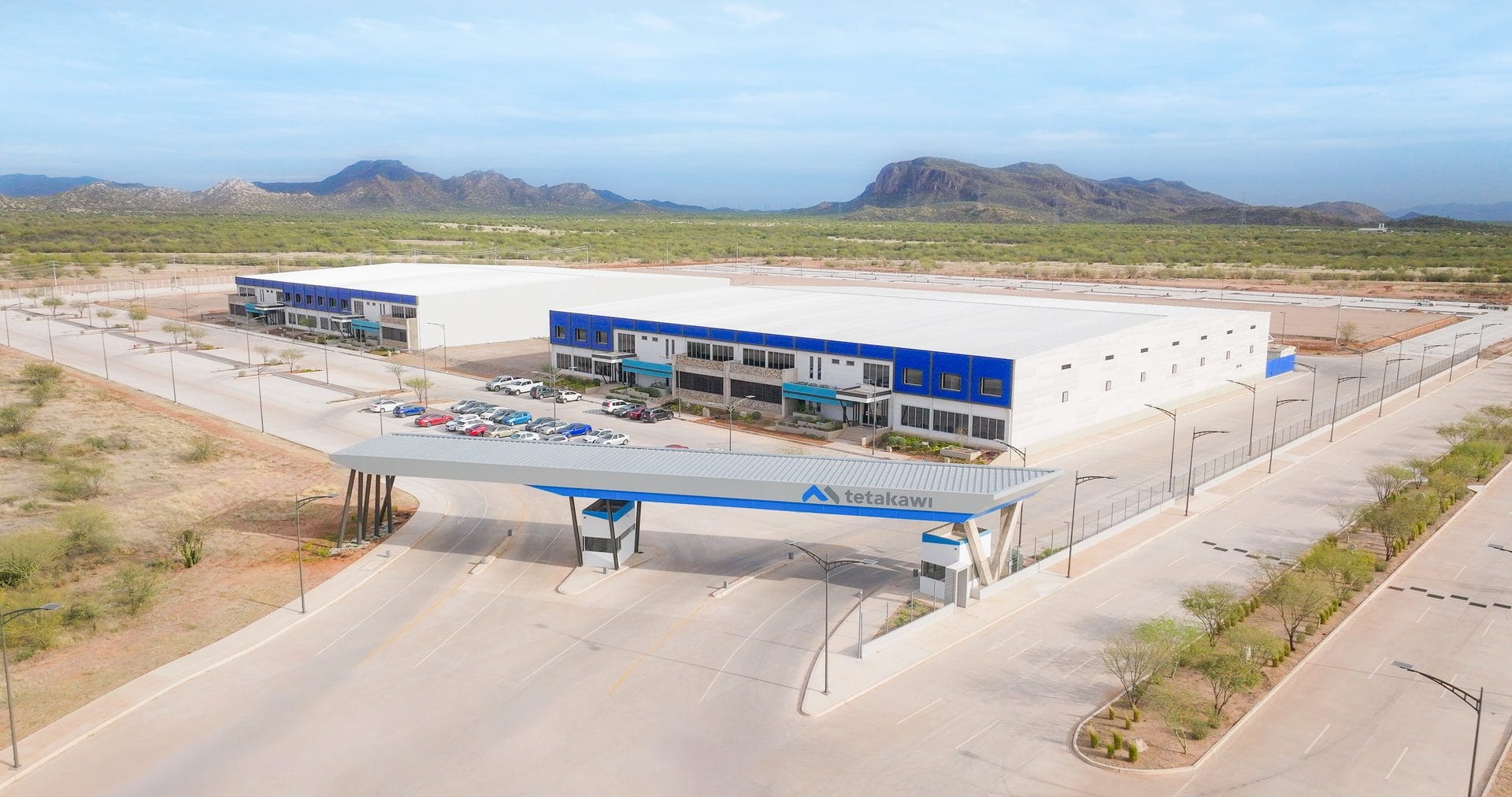
Tetakawi has helped companies manufacture in Mexico since 1986. On a Tetakawi Manufacturing Campus, an established industrial site with shared infrastructure and an on-site support organization, you run your own factory. You control production, process and quality. Tetakawi provides the building, employment administration, customs and logistics support, and compliance services covered by your agreement. Tetakawi is not a contract manufacturer.
IMMEX programs and IVA/IEPS certification are active across Tetakawi’s network, so qualifying temporary imports use the program and certification held on Tetakawi’s side of the arrangement, with customs entries prepared from the data your team supplies. For local VAT, Tetakawi’s fiscal team files the monthly refund claims and reports what SAT has returned. SAT determines the amount approved and when it is paid.
Your corporate books, financial statements and tax position stay with your own accountants and advisors.
See how VAT would work for your operation
Tell us what you plan to import and where you expect to manufacture. We can walk through how import VAT and local VAT claims would be handled under the proposed arrangement, and what information your team would need to provide.
Subscribe to stay up to date with our latest insights