

What Is a Shelter Company in Mexico? How the Model Works
8 min Read
- Manufacturing in Mexico
Key Takeaways
- A shelter company supplies the Mexican operating structure a foreign manufacturer runs its factory inside.
- The manufacturer directs the product, the process, production planning and quality standards.
- The provider administers the agreed employment, foreign trade, tax and facility functions.
- Service scope varies by agreement. Legal responsibilities also depend on applicable law and how the operation is actually organized.
- Providers differ in whose Mexican company is used, what they perform directly and where their people sit.
Jump to Section
A shelter company provides the Mexican legal and administrative structure through which a foreign manufacturer can set up and run a factory in Mexico. The manufacturer keeps control of production, processes and quality. The provider manages the agreed local employment, administrative and compliance functions.
Those functions cover registration with Mexican authorities and monthly filing, a foreign-trade program, payroll and benefits administration under Mexican labor law, and the automated inventory records customs requires. A manufacturer arriving on its own organizes each of them itself. Under shelter services in Mexico, it works with a provider that already performs them.
How shelter manufacturing works in Mexico
Shelter operations in Mexico run under an IMMEX program held by a Mexican company. IMMEX is the authorization that lets qualifying materials and equipment enter Mexico temporarily for authorized export manufacturing, subject to the applicable customs and tax requirements. The decree recognizes albergue, or shelter, as one of its modalities, describing a foreign company supplying technology and materials without operating the program itself.
In a provider-held shelter arrangement, the manufacturer can operate without establishing its own Mexican subsidiary. The provider supplies the Mexican operating structure, while the manufacturer directs production. The entities and authorizations involved depend on the arrangement and the activities being carried out.
In the usual provider-held arrangement, a Mexican company belonging to the provider employs the workforce, signs the employment contracts and administers payroll and benefits, while the manufacturer’s own people direct the work on the floor. That split is the heart of the model, which is why the provider should name the employing company and explain how employment responsibilities and production supervision are organized. The arrangement has to comply with Mexican labor law and be reflected both in the agreements and in how the operation actually runs.
Why manufacturers use a shelter company
Manufacturers use shelter services to obtain local administrative expertise and operating support while keeping control of production. Instead of organizing each function independently, they work with a provider that coordinates the agreed employment, customs, accounting and compliance services.
The provider may use an existing structure or establish one for the project. The manufacturer pays for those services and relies on the provider for important local functions, so the scope of work, the reporting and the division of responsibilities need to be clear from the start.
What the provider manages, and what stays with the manufacturer
The provider administers employment, foreign trade, tax and facilities. The manufacturer directs the product, the process and quality. Scope and legal responsibilities depend on the actual arrangement, so read the table as the usual shape rather than a fixed allocation.
| Function | Typical provider role | Manufacturer role |
|---|---|---|
| Production and quality | Supports the local administrative functions the operation needs | Directs the product, the process, production planning and quality standards |
| Employment | Administers recruitment, payroll and employment records through the applicable Mexican employer | Defines staffing and skill requirements, and manages production work within the agreed structure |
| Foreign trade | Administers authorized import and export processes, customs records and inventory controls through the relevant program holder | Supplies accurate product, value, ownership and material-consumption information |
| Tax and accounting | Maintains local accounting and prepares applicable filings within the agreed structure | Provides the information those filings depend on, and funds the obligations as agreed |
| Facilities | Provides or coordinates industrial space and the agreed facility services, where included | Defines footprint, equipment, layout and process requirements |
| Safety and environment | Coordinates applicable permits, reporting and agreed safety and environmental support | Discloses processes and materials, and operates the controls those processes require |
The manufacturer supplies the operating information these services depend on and retains control of production and quality.
For example, when a manufacturer adds a product, it supplies the specifications, material information and expected production requirements. The shelter team uses that information to coordinate the relevant customs records, staffing administration and any needed compliance review. The manufacturer remains responsible for the production process and quality standards.
What varies between shelter providers
Four differences matter most, and each one changes what the manufacturer is buying.
Whose Mexican company, and whether it already exists. Some providers work through a structure that already supports other manufacturers. Some establish one for a single client. Some hold one through a transition while the client builds its own. These are commercial variations rather than statutory categories, and they affect setup time and how separate the operation is.
What the provider performs directly. Providers may deliver services directly or coordinate third parties, and the agreement should make responsibility clear. This affects who coordinates the work and handles issues.
Where the people doing the work sit. The HR lead, the trade specialist and the safety engineer may work on site, from a regional office, or through a shared service team.
Who the contracting party is, and how disputes are handled. The agreement should identify the contracting parties, the law governing the contract, and how and where disputes will be resolved.
The difference between a maquiladora and a shelter company
Maquiladora is the operation, IMMEX is its government authorization, and shelter is the commercial arrangement supporting it. These three get conflated constantly.
Maquiladora describes the export manufacturing operation itself. Mexican tax law gives maquila a narrower, more specific meaning than everyday usage does.
IMMEX is the government authorization the operation runs under. It carries continuing obligations for whoever holds it, including export requirements, authorized use of goods, registered locations, inventory control and annual reporting.
Shelter is the commercial arrangement supporting the operation.
In the export-manufacturing arrangement described here, these terms describe different aspects of the same operation: the manufacturing activity, its IMMEX authorization, and the shelter arrangement supporting it. The IMMEX decree recognizes the shelter modality but does not define a package of shelter services, so any list of what a shelter includes is a commercial description rather than a legal one.
Qualifications that matter
Tax treatment is specific rather than absent. Article 183 of Mexican income tax law provides specific treatment for qualifying foreign manufacturers operating through an authorized albergue, including conditions under which those activities do not create a Mexican permanent establishment for income-tax purposes. Registration, reporting and tax obligations still apply. The tax and customs treatment depends on the authorizations held and the requirements applicable to the operation.
The program is not a blanket exemption. IMMEX authorization does not itself provide a VAT exemption. Under article 28-A of Mexican value-added tax law, a separate SAT certification can provide a credit against qualifying import VAT, and an authorized guarantee route is also available. Authorized Economic Operator status is a further, separate customs and supply-chain security certification. Customs duties and permitted periods of stay depend on the goods and the applicable rules.
Compliance requires participation from both sides. The provider performs the functions assigned to it and fulfills its applicable legal obligations. The manufacturer supplies accurate information and follows the operating requirements that apply to its processes.
Questions manufacturers ask
Do we need our own Mexican company?
In a provider-held shelter arrangement, the manufacturer can operate without forming its own Mexican subsidiary. The specific structure should be confirmed with the provider, and registration, reporting and other obligations may still apply to the foreign manufacturer.
Who employs the workers?
In the usual provider-held arrangement, a Mexican company belonging to the provider is the employer of the workforce and administers payroll and benefits. Ask any provider to name that company in writing. The manufacturer defines its production and staffing requirements, while hiring, supervision and employment responsibilities follow the agreed operating structure and Mexican labor law.
Who controls production?
The manufacturer controls its products, production processes and quality standards. Intellectual-property ownership, use and confidentiality should be addressed in the agreements.
Is a shelter program the same as a shelter company?
The terms are used interchangeably, and that is where the confusion starts. The shelter company is the Mexican company that holds the authorizations and, in the usual arrangement, employs the workforce. A shelter program describes the arrangement that company operates under, including the foreign-trade program the operation runs on. Because providers use both labels for the same commercial service, the useful question is which company holds the authorizations rather than what the service is called.
Is a shelter the same as contract manufacturing?
No. The distinction is who undertakes and directs production. A contract manufacturer produces for its customer; under a shelter, the manufacturer directs its own production.
How Tetakawi does it
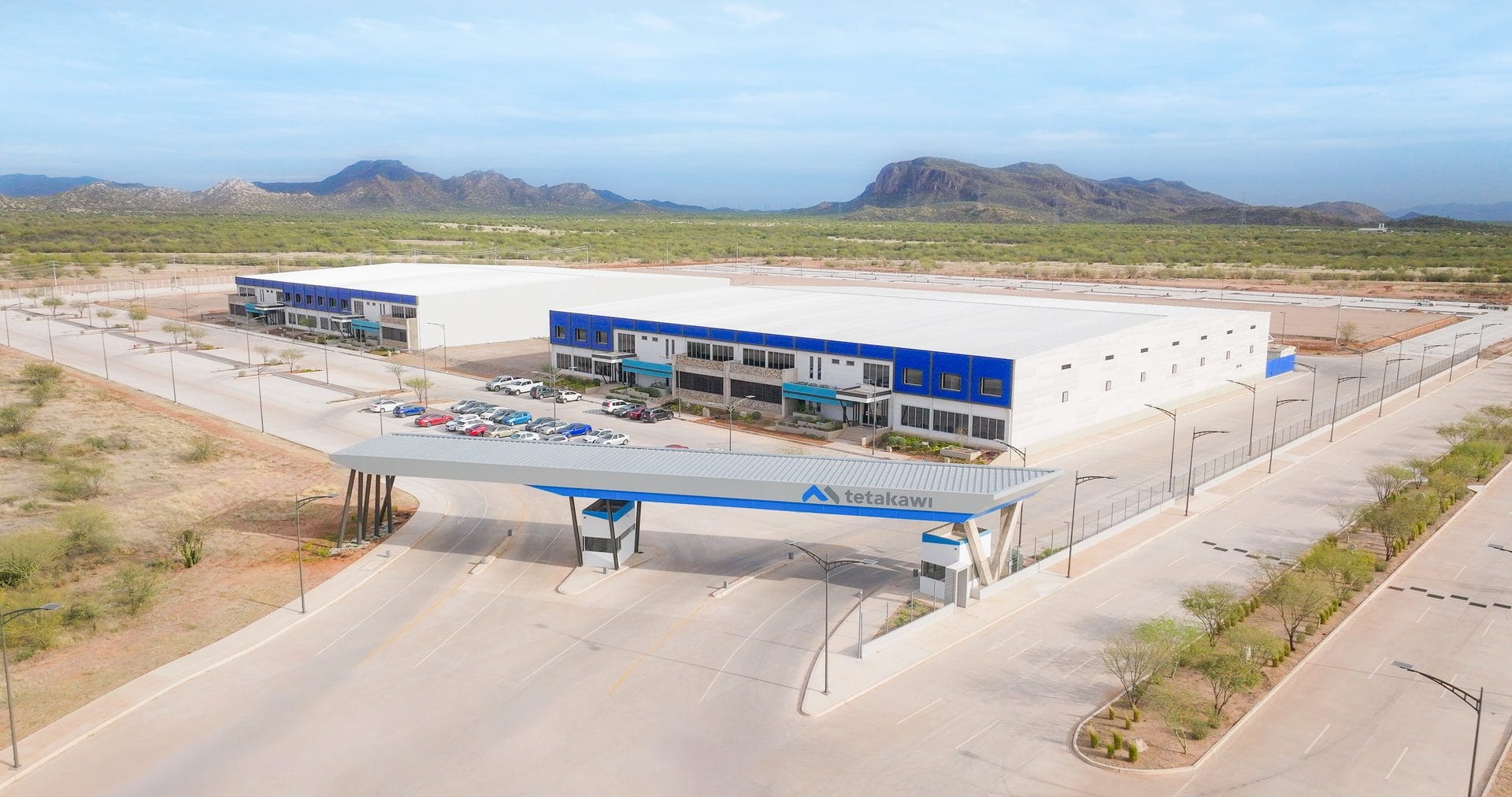
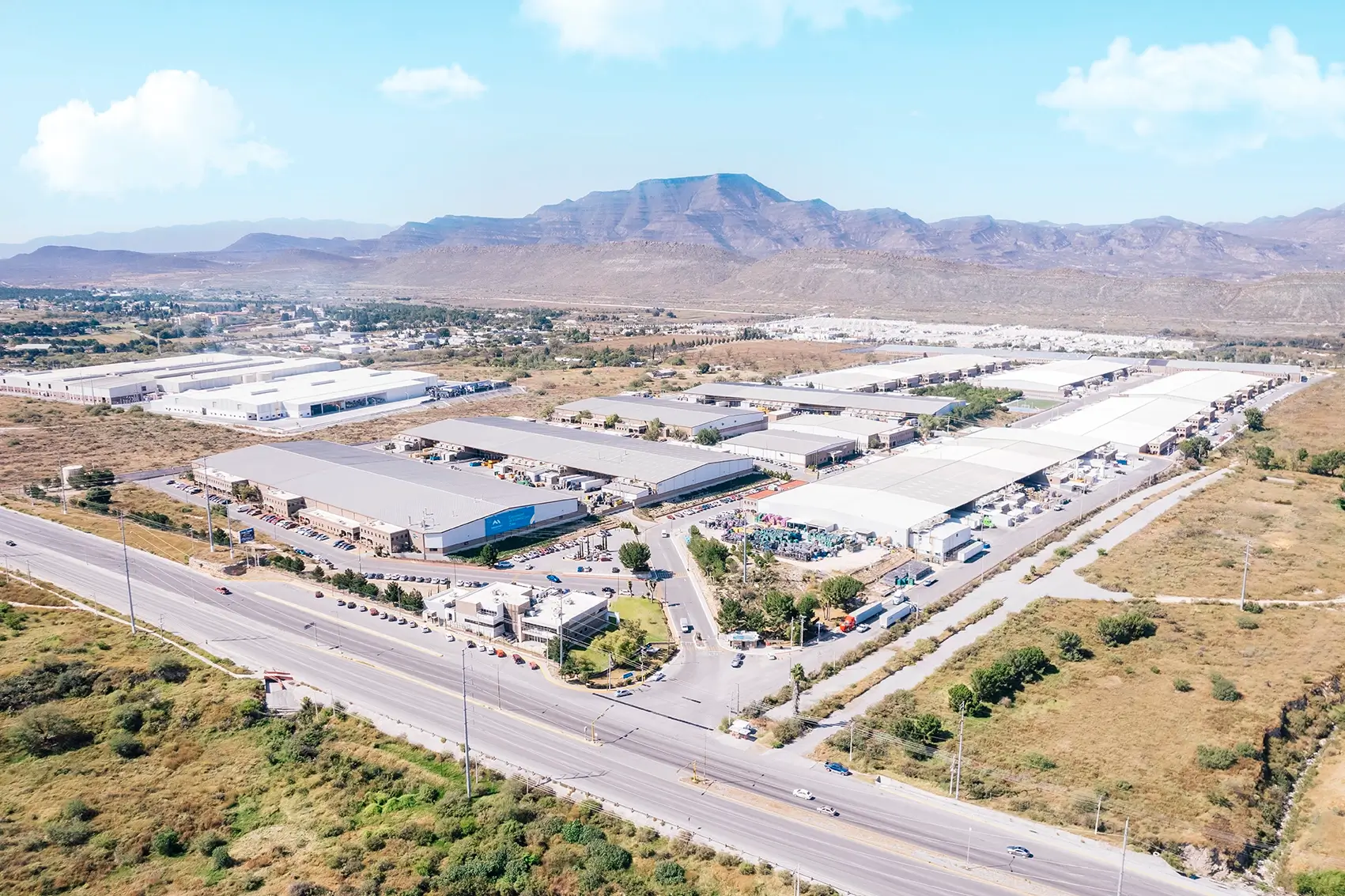
Tetakawi’s Manufacturing Campus model brings industrial space, workforce, logistics and compliance support together around a concentration of manufacturers. Each manufacturer directs its own production while drawing on the surrounding support structure.
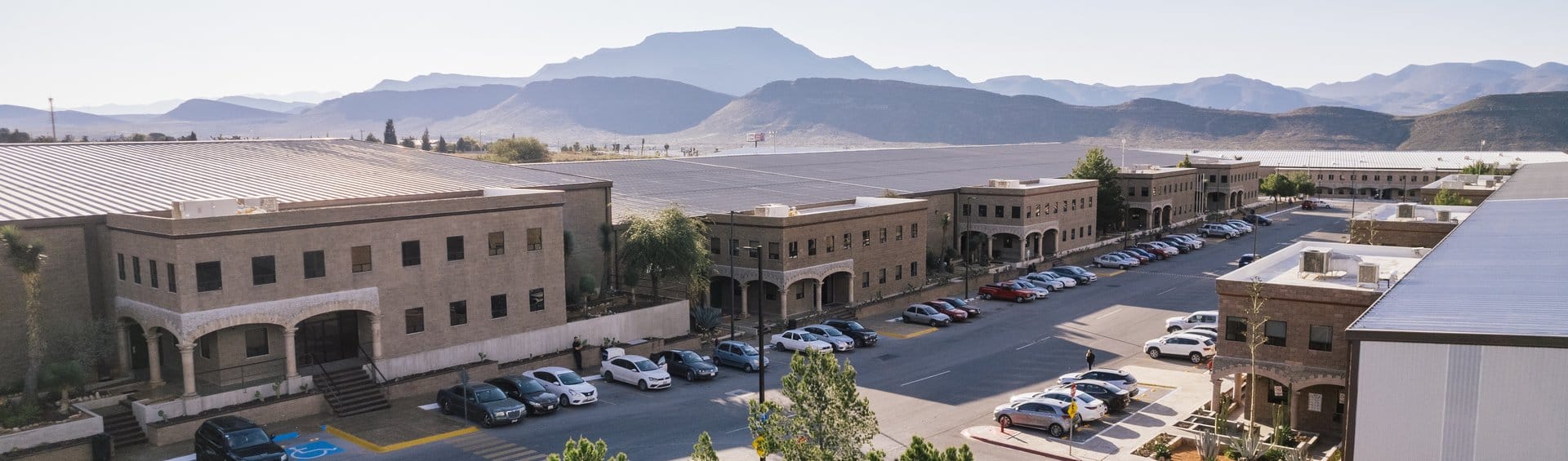
The economic logic rests on three advantages: economies of scale, economies of scope and economies of learning.
Economies of scale: sharing resources across operations. A manufacturer establishing an independent operation has to organize the support capacity it needs, even when it does not need all of that capacity all of the time. Concentrating several operations creates opportunities to share infrastructure and specialist support. Proximity matters, because local resources can serve nearby operations with less duplication and travel. This can make capabilities accessible that would be costly to establish for one operation alone.
Economies of scope: making related services work together. An expansion affects more than floor space. It changes staffing needs, material flows and compliance requirements. Bringing those services together allows the people supporting the operation to plan the changes together. The economic opportunity comes from reducing duplicated work and handoffs between functions, while the manufacturer sets its requirements and directs production.
Economies of learning: applying local experience repeatedly. Supporting manufacturers in the same region creates repeated exposure to its recruiting conditions, commuting patterns and trade corridors. When that experience is captured in service routines, a lesson from one assignment can improve how the next is handled. The value lies in applying what has been learned, rather than approaching each project as a first encounter with the region.
A provider serving plants across the country can also share systems and expertise. The Campus model adds physical concentration, which makes it easier to combine those broader capabilities with resources and experience tied to a particular place.
For the manufacturer, the appeal is access to an organized support structure without having to build each capability independently. The services included, the available capacity and the economics still need to fit the particular project.
Shelter Services in Mexico: Everything You Need To Know sets out the arrangement function by function: what you control and what the provider runs. For how providers differ from one another, 6 Types of Shelter Companies in Mexico sorts the market on what providers operate, where their people sit and whose payroll carries the work. What shelter services cost in Mexico explains shelter pricing and the cost considerations behind it. Shelter services compared with a wholly owned subsidiary sets the two routes side by side.
Ask us the same questions
Put the model against your own project
Tell us the operation you are planning, the process it runs and the footprint it needs. We will tell you what a shelter arrangement would carry for it, and what would stay with you.
Subscribe to stay up to date with our latest insights