Advantages of a Shelter Company in Mexico: The 2026 Guide
9 min Read
Key Takeaways
- A shelter arrangement moves most of the work of standing up and administering an operation in Mexico onto the provider.
- You control production, process and quality.
- Shared Campus services spread supporting infrastructure and administrative resources across the manufacturers on the site.
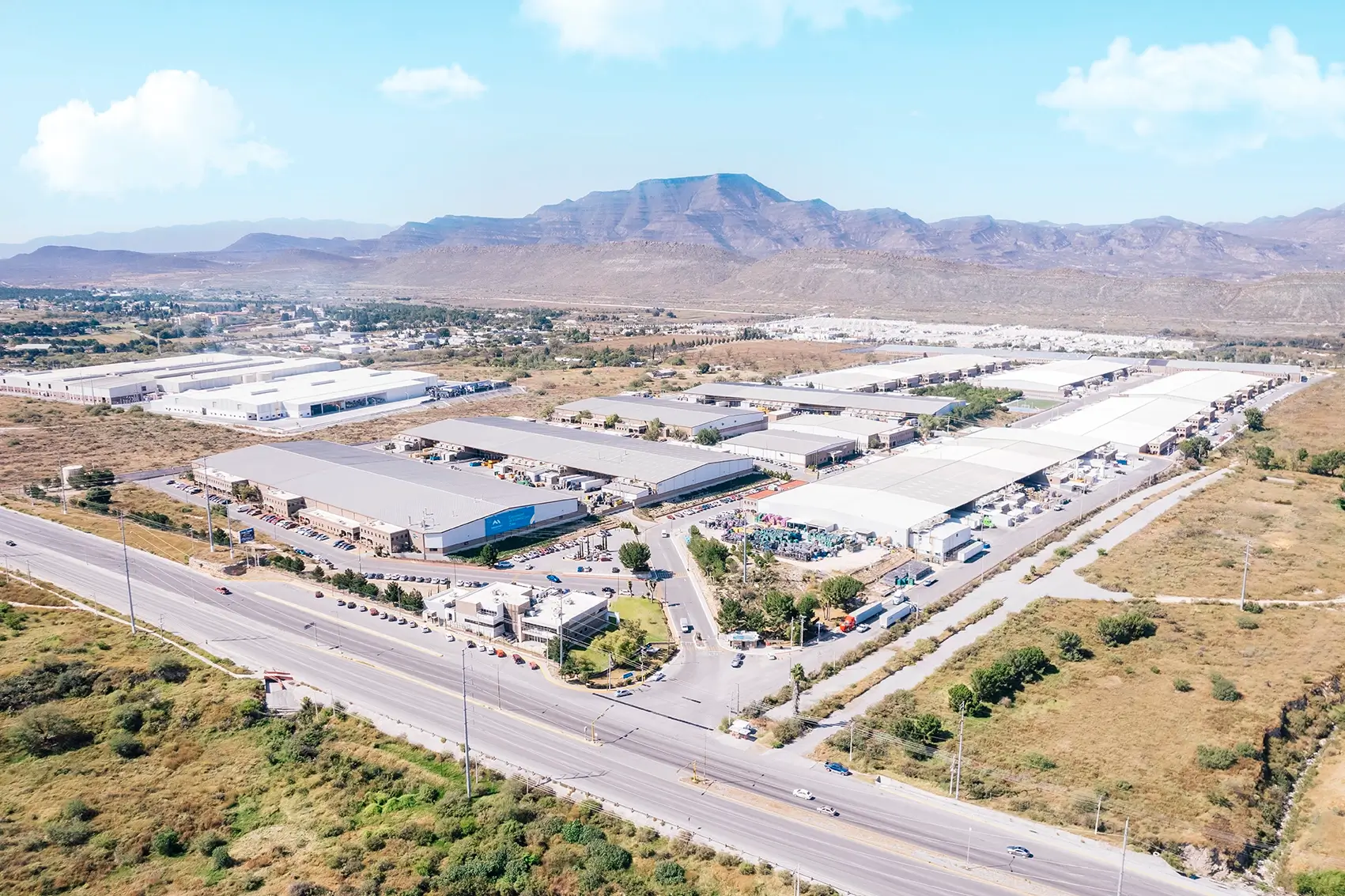
- Tetakawi runs five Manufacturing Campuses with sixty-plus manufacturers and 22,000+ employees across client operations.
- Your Mexican obligations, your production decisions and your product information stay with you.
Jump to Section
What you get from a shelter arrangement in Mexico is a plant that starts producing without building a company around it first.
The short version
An established shelter can shorten setup by providing an administrative and compliance framework that already exists in Mexico, rather than one you build. Less has to be staffed before production starts, and the filings sit with people who handle them continuously. Project-specific requirements still need to be addressed. You control production, process and quality.
What separates one provider from the next is what sits behind that framework.
What the arrangement takes off your plate
Say you need a second line running by March. Standing alone, the months before you hire anyone go to forming the entity, filing for authorizations, recruiting an administrative staff and learning which returns are due when. Working through an established provider, much of that groundwork is already in place, and your operation uses what is there.
In Tetakawi’s experience a well prepared operation takes three to six months to get started this way. Standing up your own Mexican entity, with its registrations and permits, typically takes eight to eighteen months. On an established Manufacturing Campus, where the building and the teams already exist, as little as thirty days. Where a provider holds authorizations your process can use and has suitable space, those months come off the front of the schedule. Both depend on the provider and on the project, which is why you ask early. What is standing on a Campus before you arrive, and what still depends on your equipment and your customer, is in what a Campus speeds up and what it can’t.
The supporting functions work the same way. You do not have to establish and staff each one yourself before production starts. Shared workforce and administrative services can reduce the resources needed to build that support around your operation.
Then there is the work that never ends. Payroll runs every week. Filings come due every month. Audits and permit renewals arrive on their own schedule. On a Campus that work sits with compliance teams who handle it continuously, for the operations on the site.
The effect a plant manager notices is simpler than any of this. When the administrative load sits somewhere else, the hours go back into yield, delivery and the customer commitments that justified the Mexico decision in the first place.
What makes any of this hold up over five and ten years comes down to what the provider actually runs.
What a Campus adds
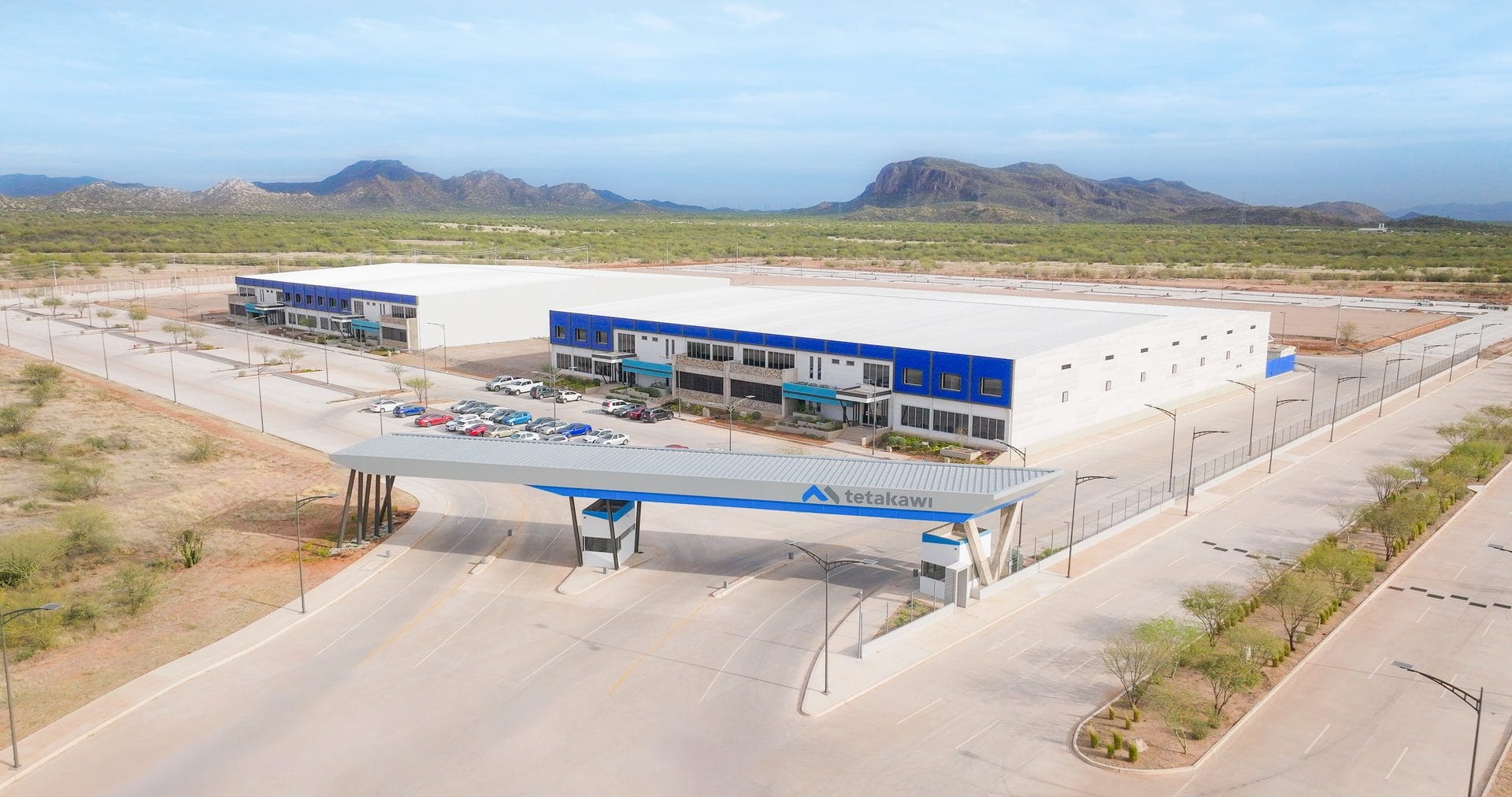
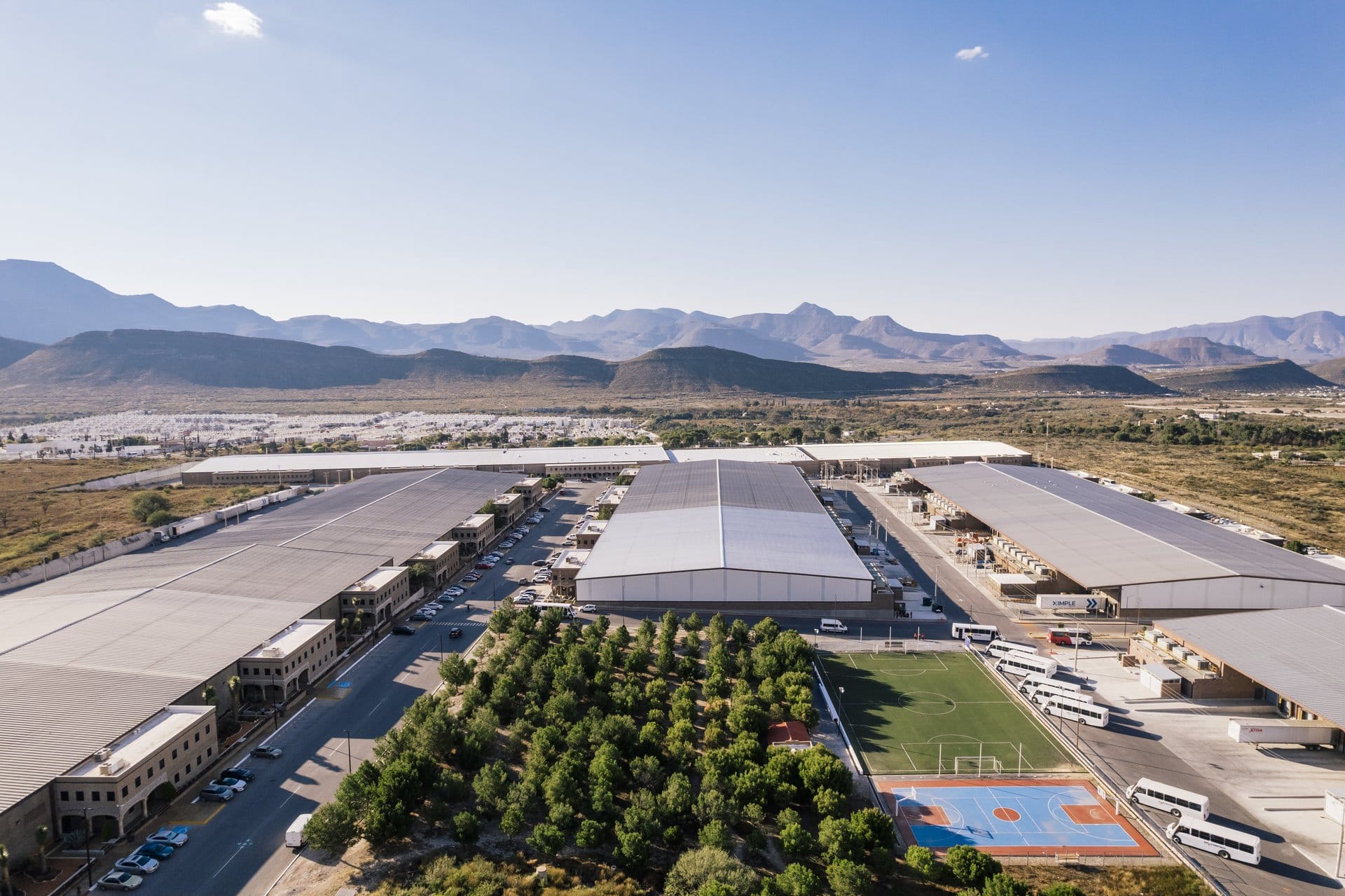
A Tetakawi Manufacturing Campus is an industrial site where Tetakawi owns the real estate, builds and maintains the shared infrastructure, and employs the on-site support teams. Site and building permitting for the Campus itself is in place. The permits that attach to your own process and materials are assessed in planning, with your advisors and ours.
That ownership is what puts things on the ground before you arrive. Worker transport, an on-site medical clinic, perimeter security, an environmental, health and safety (EHS) program: each is a capital decision and a running cost for a manufacturer standing alone. Take a fifty-person operation. On its own, arranging employee transport adds a service to fund and manage. On a Campus it uses an established transport network, because the cost of running one is spread across the manufacturers on the site, and it is running the day the first shift starts.
So scale in Mexico is not how many cities a provider lists. It is how much is actually built and running where manufacturers produce. Tetakawi runs five Manufacturing Campuses across Sonora, Sinaloa and Coahuila, with sixty-plus manufacturers and 22,000+ employees across client operations.
The same pooling happens with knowledge. Each Campus has workforce teams who work that labor market continuously: which technical schools turn out which skills, which months turnover moves, what a competitive offer looks like in that town. That goes into staffing plans and pay planning for the operations on the Campus, and it stays current because it is used every week. A manufacturer arriving alone learns the same things, one hiring cycle at a time.
What one accountable team changes
Run your own Mexican operation and you decide, function by function, what to build, what to buy and what to do without: accounting, customs, labor counsel, recruiting, EHS, facilities, payroll, tax. Each one gets arranged, managed and renewed, in-house or outsourced or some of each, and the handoffs between them are yours to chase.
| Running your own Mexican operation | On a Manufacturing Campus |
|---|---|
| Who you deal with | Accounting, customs, labor counsel, recruiting, EHS, facilities, payroll and tax, each arranged and managed on its own |
| What the agreement covers | One U.S.-based contract covering HR, payroll, customs including the U.S. cross-dock, purchasing, EHS, accounting and facilities, within the agreed scope |
| Who owns the handoffs | Yours to chase between providers, or one accountable team inside one organization |
Now put those same functions on a Manufacturing Campus, where they already exist and are shared. A company employing fifty people and a company employing a thousand use the same security operation, the same clinic, the same transport network and the same EHS framework. The administrative side works the same way, through one import and export operation rather than a broker you appoint and manage.
For a VP of Operations running a plant from Ohio, that is the difference that shows up in the calendar. One accountable team reduces the number of supporting relationships to coordinate.
What the model is worth, then, is as much about what you do not have to build, staff or coordinate as about what the provider delivers.
Experience that carries into your operation
Entering a new country, some assumptions turn out to be wrong. The question is who absorbs the cost of finding out.
Standing up your own operation, a wrong read on wages, permits, turnover, logistics or customs comes out of the first years of margin. Working with a long-established provider, a share of those questions already have answers, and the answers are in the systems and the teams your operation starts with.
Still, a long record is not the same as a useful one. Tetakawi has operated in Mexico since 1986. NAFTA came and went. USMCA replaced it. Labor law was substantially reformed. The 2020 supply-chain shock rewired global sourcing. Through all of it, each regional labor market tightened and loosened on its own cycle. Client relationships averaging 17.5 years are one measure of what that judgment is worth.
Consider the 2019 labor reform. It introduced requirements for personal, free, direct and secret worker votes, and a legitimation process for existing collective bargaining agreements that ran until 2023 rather than a single change on a single date. Campus workforce teams worked through it with programs and bargaining processes already in place.
That regional layer is where this cuts deepest. Sonora does not behave like Sinaloa or Coahuila. Real depth in Hermosillo or Saltillo means knowing which benefits move retention in that town, and how to prepare documentation for the customs procedures your shipments require. Those things are learned locally, and learning them on your own operation is the expensive way.
Consolidated Precision Products
CPP, a global aerospace manufacturer, had run operations in Mexico both ways: independently in Ensenada, and on a Tetakawi Manufacturing Campus in Guaymas. So when they needed more capacity, they were not guessing about the trade-offs.
They chose Tetakawi’s newest Campus, in Mazatlan, for regional labor depth fed by local technical schools, for retention, and for an operating backbone that simplifies execution from procurement through customs.
Jeremy Main, Senior Vice President at Consolidated Precision Products, describes the value as having subject-matter expertise available across the operation: shipping, sourcing, consumables, labor and tax.
CPP reports that of its operations across the United States, Europe and Mexico, the Mazatlan site leads the company in employee retention.
Where the model stops
A shelter arrangement changes how supporting work gets handled. Your team still runs production, and the operation you are proposing still has to fit the requirements that apply to it. These are the limits as Tetakawi runs the arrangement. Other providers draw some of them differently, and your own agreement is what governs.
Your Mexican obligations do not disappear. The tax and customs treatment depends on the authorizations held and the requirements applicable to the operation. What registrations your own company needs is a question for your advisors and ours together.
You still run the plant. Production, process, quality, engineering and the product are yours. So is the information behind them: accurate product, value, ownership and material-consumption data.
You are relying on an organization. Your operation runs on authorizations and services held on the provider’s side. That is the trade you are making: an operating environment you did not build, provided by the people who built it.
Sales into Mexico need their own look. If selling to Mexican customers is part of the plan, the tax and customs treatment depends on the authorizations held and the requirements applicable to the operation, and that needs assessing before anyone confirms fit.
It is not for everyone. A company too small to carry the business case, or one that would rather not run an operation at all, is usually better served another way.
What to do next
Ask a provider you are considering three questions: what is already built and running at the site you would move into, which authorizations your specific process requires and who holds them, and who is accountable for each supporting function once you are operating.
Then bring the specifics. A target start date, the headcount you expect in year one, and what your process actually requires let us begin assessing site fit and identify what else is needed for a cost model built on your numbers.
If you are weighing providers rather than models, the six types of shelter company in Mexico sets out how they differ. If the question is price, what shelter services cost in Mexico takes a quote apart. And if you are still working out what a shelter arrangement is, what a shelter company is and how the model works covers the mechanics. And for the whole arrangement in one place, function by function, start with Shelter Services in Mexico: Everything You Need To Know.
Questions manufacturers ask us
What is the difference between a shelter company and a Manufacturing Campus?
A shelter arrangement is the commercial and administrative structure a foreign manufacturer operates under in Mexico. A Tetakawi Manufacturing Campus is a physical site where Tetakawi owns the real estate, maintains the shared infrastructure and employs the on-site support teams. A provider can offer the arrangement without running a site of its own. Where it does run the site, the infrastructure and the teams are already there.
How long does it take to start manufacturing in Mexico with a shelter company?
In Tetakawi’s experience, three to six months is typical. On an established Manufacturing Campus, where the building and the teams already exist, a well prepared operation can get started in as little as thirty days. A new building has a separate construction schedule, about six months in Tetakawi’s experience, with overall launch timing settled during planning. Timing also depends on utilities, the authorizations your process requires, equipment installation and customer approvals.
Does the shelter model work for regulated industries?
Aerospace, medical device and automotive operations run on Tetakawi Campuses today. The arrangement covers the operating environment and the administrative framework around your plant. Your own product certifications, process validations and customer approvals remain yours to hold and maintain. A provider does not supply them.
How much overhead can a Manufacturing Campus save versus running your own operation?
Up to about 30% lower overhead. That figure covers the administrative and support overhead of operating in Mexico: the entity, the filings, the shared infrastructure and the supporting teams. It is not a claim about total manufacturing cost, and it is not a quote. What it looks like for a specific operation comes out of a cost model built on that operation’s own numbers.
What are the main limits of a shelter arrangement?
Your Mexican obligations do not disappear; the tax and customs treatment depends on the authorizations held and the requirements applicable to the operation. Production, process, quality and the information behind your product stay with you. And your operation runs on authorizations and services held on the provider’s side, which is the trade you are making.
Is a shelter company the same as contract manufacturing?
No. Tetakawi is not a contract manufacturer. Under contract manufacturing, another company makes your product. Under a shelter arrangement you run your own plant with your own equipment, your own process and your own people on the floor, and the provider handles the operating environment around it.
Bring us your start date and headcount
We will assess site fit across the five Manufacturing Campuses and tell you what else we need to build a cost model on your numbers.
Subscribe to stay up to date with our latest insights