







Mexico is on the table at your company. Maybe a customer asked for production closer to home, or your plant has run out of room. Either way, someone now has to determine your manufacturing costs in Mexico, and the question usually arrives in plainer words: what would it cost us to set up a factory there?
Finance will hear that as two numbers. What does it cost to open the factory, and what does it cost each month once it is running?
The short answer: to determine your manufacturing costs in Mexico, start with the factory you would run. That means the positions on each shift, the space and power the process needs, and where the product ships. Then price each line with current local rates for one city, with wages fully fringed. Keep the cost to open apart from the monthly cost to run.
Four checks for any wage figure
Most teams reach for a wage first, because a wage is easy to find. It is a fair first step.
A wage belongs to a position. A welder, a machinist and an assembly operator are three different figures. So the first check is which position the number describes. The second is where, because pay differs from one city to the next. The third is whether it is fully fringed, meaning the wage plus the benefits and contributions. The fourth is how old it is. Wages in Mexico are reviewed every year, and a dollar figure moves with the exchange rate.

Your factory turns a rate into a cost
A wage that passes all four checks is a good number. It is still a rate for one position, though, and the question was what a factory costs. What turns a rate into a cost is your factory: how many people it needs in each position, on which shifts, with how much overtime, space and power.
For example, take two plants in the same city that pay the same rates for the same positions. One runs a single shift of assembly. The other adds machinists and welders and a night shift, which is shorter by law. It also runs overtime in its peak weeks, at the premium the law sets, and its furnaces shape its electricity bill. The rates were right for both. Still, what an hour of work costs in each plant looks nothing alike.
That matters, because a business case built on the rate alone can miss in either direction. If it is too low, the plant runs over the case your company approved. If it is too high, your company sets aside a move that would have worked.
Where a first cost figure for Mexico comes from
Each of these five is worth using, though none was built for your business case.
| Where the number comes from | What it is good for | Where it stops |
|---|---|---|
| An AI assistant | A fast first answer, and a good list of the cost lines to ask about | It summarizes published text. It can’t see a payroll or a utility bill, and unless you press it you won’t learn the city, the year or what the wage includes |
| Online articles and cost calculators | A sense of scale | They average across cities and years, and often quote a base wage alone |
| An economic development corporation | Sites, incentives and introductions | It promotes one region and says little about the others |
| A purchased wage and salary survey | Pay ranges by job family | Its respondents may not resemble you or define the job as you do |
| A shelter service provider | A ballpark figure for a factory of your size | It rests on averages, not on your factory |
That last row is us. Tetakawi has helped manufacturers launch, operate and grow their own factories in Mexico since 1986. On our Manufacturing Campuses, you run your own factory and we run everything around it, under what is called a shelter arrangement.
We can give you a ballpark figure, and you will find current ones on our page about what it costs to manufacture in Mexico and in our guide to the cost of manufacturing in Mexico. A ballpark tells you whether Mexico deserves a closer look. A business case needs a cost model, and that is work we do with you.
How Tetakawi works through a cost model with you
A cost model is an estimate of what your own factory would cost to open, and to run each month, in one Mexican city. It is built from your positions and shifts, your building, your utilities and your freight.
It starts with a first call about what you make, the process you would run and where the product ships. Nothing is committed on that call. We can share ballpark figures then, to help you judge whether Mexico is worth exploring further.
If it is, we get into the detail together. We work through an input sheet with you in four parts: your people by position and shift, the building your process needs, your utilities and factory expenses, and your freight. The model is as exact as what goes into it, so we ask for specifics and help you pull them together.
To determine your manufacturing costs in Mexico, start with your factory
Your people already hold most of what the input sheet asks for. They know how many people the work takes, in which positions and on which shifts. They also know how much space and power the process takes, and where the product ships. The model takes it in a set order.
Where, and when production starts
We ask two things before anything else: where the factory will be, and when production starts. For the city, we start from your customer. For example, a plant that ships to Texas and one that ships to Arizona shouldn’t be looking at the same cities. It pays to look past the wage when you compare cities. A low wage where people leave quickly can cost more than a higher wage where they stay. The start date matters because wages and the legal workweek change by year.
People, position by position
We price the position, whatever the title says. A machinist who programs and sets up the work and one who loads and unloads parts share a title and little else. So a model built on titles will be wrong about both. We list direct labor by shift, then the factory staff who support it, then the administrative staff the operation requires.
We price every position fully fringed. In Mexico, manufacturing pay is usually set and quoted as a daily wage in pesos, not per hour as in the United States and Canada, and a daily wage is paid for rest days and holidays as well as days worked. Social security, retirement and housing contributions, a state payroll tax, the year-end bonus and vacation pay all come on top of it. Our guide to how manufacturing wages in Mexico are calculated walks through the math. Overtime gets a line of its own, because it carries a premium.
The building, the utilities and the smaller lines
We size the building to the process, then the utilities: power, and gas and water where the process uses them. Power needs the same care as wages. Electricity is billed on use, time of day and peak demand. For instance, two plants that use the same kilowatt hours get different bills if one of them peaks higher.
Then come the smaller lines: maintenance, supplies and miscellaneous expenses. Mexico also adds lines your home plant may not carry, such as employee transportation and a provision for severance. Together with factory labor, factory staff and the building, these lines make up factory cost. General and administration then closes the monthly operating cost.
The cost to open, kept apart from the cost to run
You pay some costs once, before the first shipment: added electrical capacity, compressed air, gas and water connections, permits, the environmental study, equipment installation and early hiring. Those are one-time costs. They belong on a page of their own, judged on payback. Freight also sits apart, priced for the shipments you expect each week.
Everything else is your monthly operating cost. Divide it by the model’s direct labor hours and you have cost per direct labor hour. Then set it beside your plant today, with hours counted the same way.
What changes your Mexico costs from year to year
The fourth check on a wage was its date. The same holds for the whole number. A number that is right today has a short shelf life.
Wages are reviewed each year, and the minimum wage resets each January. The workweek is also shrinking. Mexico amended its constitution in March 2026 and its labor law in May 2026 to take the maximum standard week from 48 hours to 40, with no cut in pay. The first step, to 46 hours, takes effect on January 1, 2027, and the week reaches 40 hours in 2030.
The arithmetic is short. Take a plant whose schedule goes from 48 hours to 46 in January at the same weekly pay. Its wage cost per ordinary hour rises about 4% before any raise, and an hourly figure built on 48 hours no longer describes it.
The exchange rate is the part no calendar will give you. You pay wages in pesos and budget in dollars, and a model can’t remove that exposure. It helps to see the number at more than one rate. Our article on how the peso moves your manufacturing costs shows how to test it.
So it is worth asking what a number becomes in year two and year three. A model that can’t say is pricing one year. Ours can run a second scenario on the exchange rate, wage increases and the workweek.
Where the rates in our cost model come from
Every line in a cost model needs a rate behind it. Ours come from operations we support every day.
That starts with payroll. Our teams administer payroll for more than 22,000 employees across client operations, so for direct labor we start from recent pay data for each position on the Campus you are considering. That settles the position, the city and the date, and the model then works out the fully fringed cost from there.
For some salaried and indirect positions we also use local recruiting data and wage benchmarks. Utility estimates start from the bills and rate schedules for that Campus, and one-time costs from quotes and estimates. Our manufacturing wage benchmarks in Mexico state their basis: the position, the Campuses, the month, the exchange rate and the workweek.
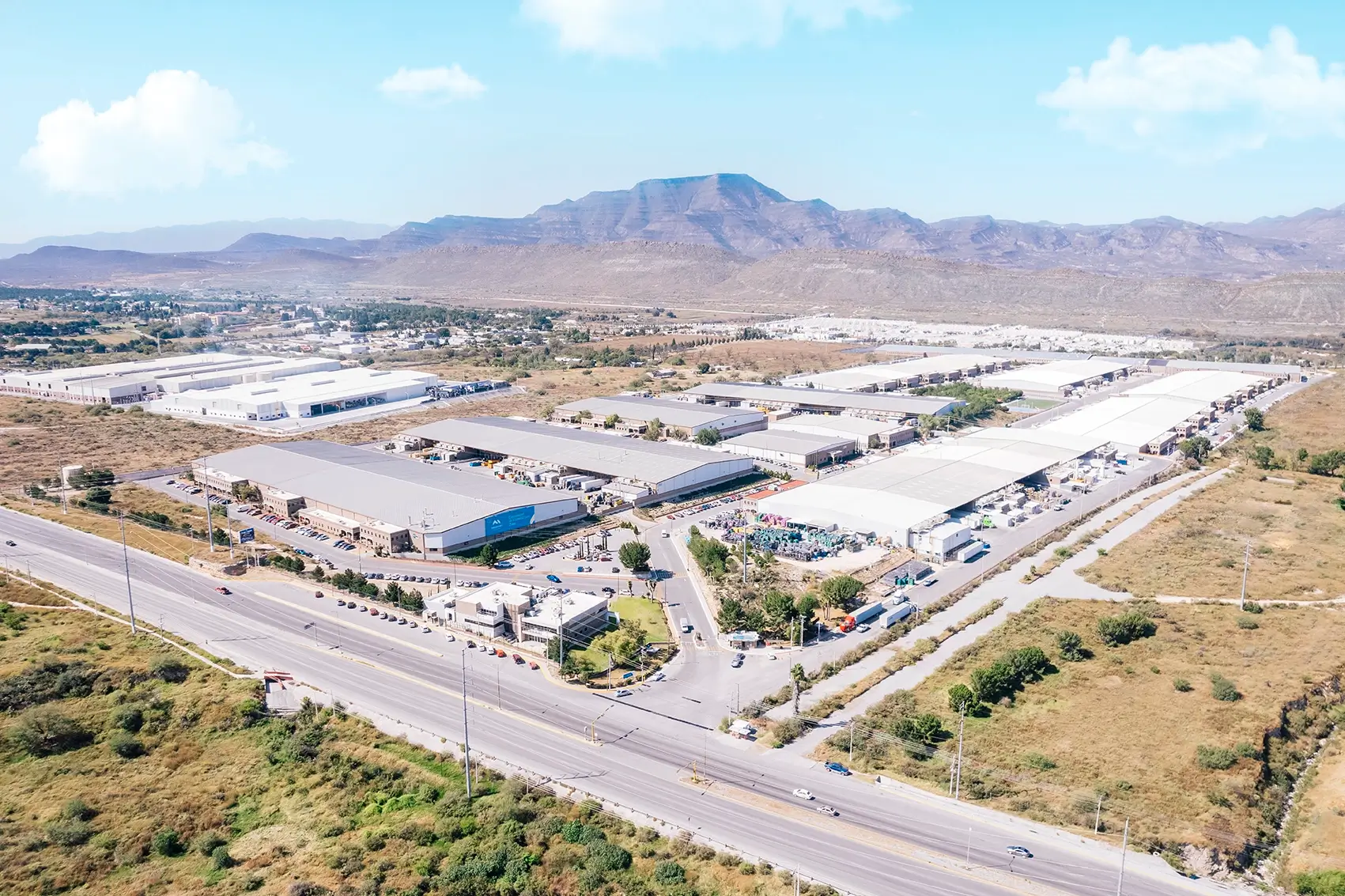
Today more than 60 manufacturers run their own factories on our five Manufacturing Campuses, in Empalme, Guaymas, Hermosillo, Mazatlán and Saltillo. A Campus adds established industrial space, shared infrastructure and an on-site support organization. You run your own factory there. You control production, process and quality. Our teams handle the agreed supporting work in industrial space, workforce, logistics and compliance. Tetakawi is not a contract manufacturer. You can see how the Campus model works in more detail.
All of this goes into our cost model, with recent data for the location you are considering and the exchange rate on the day we run it. It takes your factory as the input and returns your cost line by line. Its output is an estimate with a date on it. It is there to support your decision, and it is not a price quote.
What the model counts, and what stays in your budget
- The model prices the headcount you give it. How many people the work takes is your call, and cost per unit comes from your own efficiency data.
- It carries a line for severance, which Mexican law requires on dismissal without cause. It does not forecast turnover.
- Direct material, depreciation and corporate allocations are outside it.
- The model shows freight separately, for the shipments you enter. Duties depend on your materials and your product, and a separate customs analysis works them out.
Those are boundary conditions, and any sound model states its own. What no cost model can tell you is how fast your process will come up to rate in a new factory. The learning curve, the scrap during ramp-up and your own people’s travel are yours to budget. First plans also tend to underestimate logistics and training.
Five questions to ask of any cost estimate, including ours
Whoever builds the model, these five questions test it.
- Whose factory and shifts are modeled? Yours, by position and shift, or a typical plant.
- Where does each rate come from, and how old is it? For a wage, that means the four checks: the position, the city, fully fringed and the date.
- What does it cost to open, and what does it cost to run each month? They are separate numbers, and finance judges them differently.
- What changes from year to year? The wage review, the shorter workweek and the exchange rate.
- What does finance still need to budget? A model that lists no exclusions still has them.
Those five are about the number. The questions around it, from whether Mexico fits your operation to whether the full economics hold, are in our guide, Questions to Ask Before Manufacturing in Mexico.
What a manufacturing cost analysis for Mexico shows
What comes back from the model is a Cost Estimation Summary. It follows the model’s order: direct labor, factory cost, then general and administration.
- Each line appears three ways: cost per month, share of the total and cost per direct labor hour.
- The summary lists each position with its fully fringed hourly cost.
- The facilities fee for the building and the shelter provider’s administration cost each have a line of their own inside the monthly total. One-time costs, including a start-up fee, appear separately, and so does freight.
- A second sheet prices the monthly operating cost of the same factory as your own company in Mexico, so you can compare a shelter arrangement with a standalone operation.
- The header states the location, the estimate date, the exchange rate and the workweek the numbers assume.
We can also run the model for more than one location, and for each phase of a ramp-up, so you see the cost at your first headcount and at your full one. A customs analysis of your materials and product is separate work, and our import and export team can run it alongside.
Reading the summary together
We go through the summary with your operations and finance people, line by line, and the five questions make a good agenda. Operations usually checks the positions, shifts and headcount. Finance checks the estimate date, the exchange rate and what the model leaves out. The sheet that prices your own company in Mexico is one for your tax adviser. A visit to the Campus comes after that. You walk the buildings, meet the teams and talk with manufacturers who run their own factories there, and we step away for that conversation.
Sometimes the answer is no
A cost model does not always say yes. Take a small factory, for example. It still needs managers and support staff, and at a low headcount that overhead can outweigh the lower cost of labor. When the model shows that, we say so. A no you can trace to its lines is a better result than a yes nobody can defend.
And when it says yes, you have a number your operations people have challenged and your finance people have checked, and one you can explain line by line.
See how it goes, from a first call to a plan
Working through the numbers for a factory in Mexico?
It starts with a first call about the process you would run, and we can build a cost model with you from there.
About this article. It describes a method and gives no cost figures. A cost model produces an estimate, not a price quote. The estimate depends on the information provided and on data as of its stated date, and a client’s agreement governs what it pays. References to Mexican labor law reflect the law as of November 2026. Nothing here is legal, tax or customs advice. Speak with your own advisers before you decide.
Frequently asked questions
How do you calculate manufacturing costs in Mexico?
Start with the factory you would run, then price each line with current local rates. List the positions by shift, the space and power the process needs and your freight lanes. Keep the cost to open apart from the monthly operating cost.
What is a cost model for manufacturing in Mexico?
A cost model is an estimate of what your own factory would cost to open, and to run each month, in one Mexican city. It is built from your positions and shifts, your building, your utilities and your freight. For published averages, see our guide to the cost of manufacturing in Mexico.
How do manufacturing labor costs in Mexico compare with the United States?
The gap depends on the position, so compare them one by one. It is widest for unskilled operators and narrower for managers. Our comparison of labor costs in Mexico and the U.S. by role shows both sides on a stated basis.
How will Mexico’s 40-hour workweek change manufacturing costs?
At the same weekly pay, each step raises wage cost per ordinary hour. The standard week falls from 48 hours to 40 in two-hour steps each January from 2027 to 2030, with no cut in pay. Still, shift design and productivity can offset part of it in cost per unit. Our guide to Mexico’s 40-hour workweek covers the schedule and what to plan for.
What do shelter services cost in Mexico?
Providers price in different ways, so compare the structure before you compare the total. Two quotes with the same total can be built very differently. Our article on what shelter services cost in Mexico explains the pricing mechanics to look for.
What does a manufacturing cost analysis for Mexico include?
Direct labor, factory cost, and general and administration, with one-time costs and freight shown apart. Each line is worth seeing per month, as a share of the total and per direct labor hour. Direct material, depreciation and corporate allocations sit outside it, and a separate customs analysis works out duties.