



A Site Selector’s Guide to Manufacturing in Saltillo
13 min Read
- Manufacturing in Mexico
Key Takeaways
Jump to Section
If you are looking at Saltillo, start with what the rankings show. It sits in Mexico’s top four for registered IMMEX programs, with just over a million people in the metro area. That is a deep industrial labor market by any standard.
Look next at the stability measures. Among the large manufacturing states compared here, Coahuila has the lowest share of registered IMMEX programs carrying a suspended or flagged status in the June 2026 registry snapshot, and its safety record is set out below.
Capability and consistency are separate questions, and a launch date depends on the second. This guide provides evidence for both.
Here is the short version. Manufacturing in Saltillo means operating inside Mexico’s fourth-largest concentration of registered IMMEX programs, in a metro labor market of just over a million people, about three and a quarter hours from Laredo, the busiest truck crossing on the US border. Coahuila is the country’s largest producer of auto parts by value, and it carries the lowest share of suspended or flagged trade programs among the large manufacturing states compared here.
The rest of this guide covers the six things to settle before Saltillo goes on a shortlist: the labor market, who already manufactures there, what labor costs, how product moves, safety and compliance, and where technical people come from. In Mexico a state number and a city number are almost never the same number, so each one below tells you which it is.
Can you staff a plant in Saltillo?
Use the metro number when you size a hiring plan: 1,031,779 people. Saltillo, Ramos Arizpe and Arteaga are three separate municipalities, but they share one labor market (INEGI, 2020 Census). Saltillo on its own holds 879,958.
Population alone will not tell you who you can hire. What you draw from is the formal workforce, and you can measure that. Coahuila has 857,955 workers registered with the Mexican Social Security Institute, spread across 126,048 employers, as of April 2026. Informality runs at 34.2% and unemployment at 3.4% (INEGI, National Occupation and Employment Survey, first quarter 2026). So about two-thirds of the employed population is in the formal economy. That tells you how much of the current workforce is already visible in formal-employment data; the addressable recruiting pool can be larger than that, depending on role, shift and commute radius.
1,031,779
people in the Saltillo metro area, which works as one labor market
857,955
formally registered workers across Coahuila
34.2%
informality rate, which is what sizes the formal hiring pool
10,185
formal jobs added in Coahuila in July 2026, third among all Mexican states
Coahuila added 10,185 formal jobs in July 2026, third among all Mexican states that month (Mexican Social Security Institute). Decades of industrial activity give Saltillo a large base of workers with prior manufacturing experience, and the recruiting plan for your project starts from that base.
Reaching them rewards a local playbook. Hiring line workers in Saltillo happens on the ground, not online: public announcements, a presence in the neighborhoods, and bus routes wide enough to pick people up in Ramos Arizpe and Arteaga. If your buses only cover the streets around the plant, you are hiring from a slice of the city instead of all of it. Transportation coverage can materially change the recruiting radius for shift-based roles.
In Mexico, if there is no transportation, there are no people. Turnover begins at the employee’s doorstep. Luis Ávila · Human Resources Manager, Tetakawi Saltillo
Who already manufactures in Saltillo
Coahuila has 409 registered IMMEX programs across 919 registered plants. Nationally the totals are 5,998 programs and 12,635 plants (Mexican Secretariat of Economy trade program registry, 30 June 2026). That puts Coahuila in the national top four, and ahead of Guanajuato and Querétaro, the two states most often benchmarked against it.
The mix behind that rank is what matters to a manufacturer. Of those 409 programs, 361 are registered under the industrial modality, a higher industrial-program share than any state ranked above Coahuila in the table.
| State | Registered programs | Industrial | Plants | Suspended |
|---|---|---|---|---|
| Baja California | 1,067 | 891 | 2,120 | 6.19% |
| Nuevo León | 906 | 733 | 1,879 | 3.97% |
| Chihuahua | 484 | 385 | 1,227 | 4.55% |
| Coahuila | 409 | 361 | 919 | 1.96% |
| Guanajuato | 361 | 325 | 822 | 3.60% |
| Querétaro | 307 | 252 | 648 | 2.61% |
| All Mexico | 5,998 | 4,951 | 12,635 | 4.65% |
Coahuila is also the largest producer of auto parts in Mexico by value: 15.7% of the national total from January through May 2026, ahead of Guanajuato and Nuevo León (National Auto Parts Industry association). If you supply the automotive industry, that is the number to circle. It means a wider set of local suppliers to buy from, and a wider set of plants to sell into, than the assembly figures alone would suggest.
General Motors and Stellantis both build vehicles here. GM has assembled at Ramos Arizpe since 1981, across five plants with more than 5,000 people, and has committed another $1 billion, with the Chevrolet Groove to be built there from 2027 and the Aveo in a later phase. Stellantis runs truck assembly, van assembly and two engine plants across Saltillo and Ramos Arizpe, building Ram heavy-duty trucks and the ProMaster van. Tier 1 suppliers in the area include Grupo Antolín, Martinrea and MAHLE. Outside automotive you will find manufacturing in machinery, aerospace, steel and electric motors: John Deere, GE Aerospace, Deacero and a new Infinitum Electric plant.
Your supplier options do not stop at the state line, either. Monterrey sits 90 kilometers east, about an hour and ten minutes by road, which puts one of Mexico’s largest industrial centers inside a same-morning drive. That does real work for you in three ways. Your supplier options extend well past the metro line. Your team flies into an international airport an hour from the plant. And when something on your line needs fixing this week, you are drawing on the combined specialist bench of two industrial centers rather than one. Plenty of operations here buy from Monterrey and ship from Saltillo.
One thing that trips people up
Ramos Arizpe is its own municipality, not part of Saltillo, and a lot of the region’s vehicle manufacturing sits there. Plant names make it worse. Stellantis runs a “Saltillo Engine Plant” that is physically in Ramos Arizpe, and a “Saltillo South Engine Plant” that is in Saltillo. For hiring and trucking, treat the two as one market. For permits, land use and anything you file with a city, they are not the same place.
What labor costs in Saltillo, and how to read a quote
Saltillo sits in Mexico’s general minimum-wage zone: 315.04 pesos a day, effective 1 January 2026 (National Minimum Wage Commission), rather than the higher northern border free zone floor of 440.87 pesos. How that structure works, and what fully fringed direct labor costs on a Campus here, is covered in the advantages of manufacturing in Saltillo.
One item to audit specifically: your social security cost depends on the risk classification assigned to your plant, so two factories in the same city can pay different rates for the same job.
Statutory rates also move on their own schedule, and the retirement contribution in particular rises on a legislated schedule through 2030, which is why every figure in this guide carries a date.
Four things to ask for in writing
Ask any provider or broker for the same four things: the fully fringed employer cost by job type, the hours and shift assumptions behind it, exactly what the figure includes, and the exchange rate and the date used for the conversion. A quote missing any one of those cannot be compared to another quote, and the gap is usually wide enough to change which site you pick.
For starting rates by position, and what drives the gap between the lowest and highest payer in this market, see the advantages of manufacturing in Saltillo. Your loaded number moves with your job mix, shift pattern, overtime and seniority, so any published figure will only get you close. We keep a working cost model for Saltillo built on union agreements, statutory rates and market survey data, and we will run your numbers if you ask.
Moving product out of Saltillo, and to the border
Saltillo sits 300 kilometers from Nuevo Laredo, about three and a quarter hours by truck. Nuevo Laredo crosses into Laredo, Texas, the busiest land port in the United States. Laredo handled roughly 2.9 million truck crossings in 2025, nearly three times the next-busiest port (US Bureau of Transportation Statistics).
Saltillo gets you into that crossing in a single day’s drive, with the carriers, brokers and customs capacity already sitting there.
| Destination | Distance | Drive time |
|---|---|---|
| Monterrey | 90 km | 1 hr 10 min |
| Nuevo Laredo / Laredo, TX | 300 km | 3 hr 15 min |
| Reynosa / McAllen, TX | 317 km | 3 hr 15 min |
| Matamoros / Brownsville, TX | 404 km | 4 hr 15 min |
| Piedras Negras / Eagle Pass, TX | 430 km | 5 hr |
| Mexico City | 850 km | 9 hr 30 min |
Three US crossings sit within about four hours. Multiple commercial gateways provide routing alternatives, which should be evaluated against your destination, carrier, broker and crossing requirements. If you move by sea, the Gulf port of Altamira is 620 kilometers away by the port authority’s own figure. Rail runs through the city on the Canadian Pacific Kansas City main line, the north-south route tying Mexico City and Monterrey to Laredo. Federal Highway 40 and 40D run east to Monterrey and west toward the Pacific. Highway 57 runs south to the Bajío and Mexico City. Highway 85D runs north to the border. Air cargo moves through Monterrey’s international airport, ninety kilometers and about seventy minutes away.
Some established industrial sites in the corridor already have contracted utility infrastructure, although available capacity and interconnection requirements still have to be confirmed for a specific project.
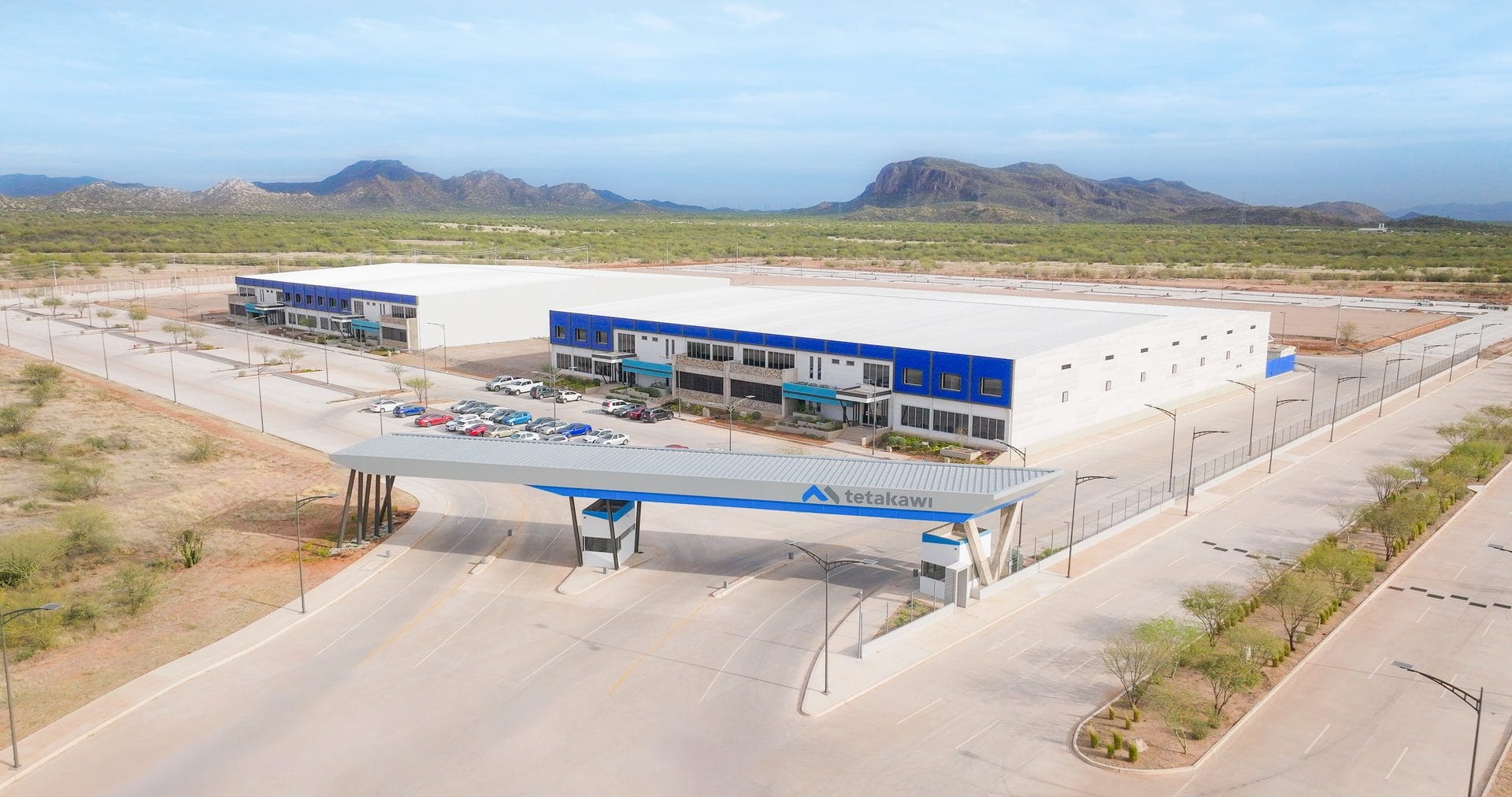
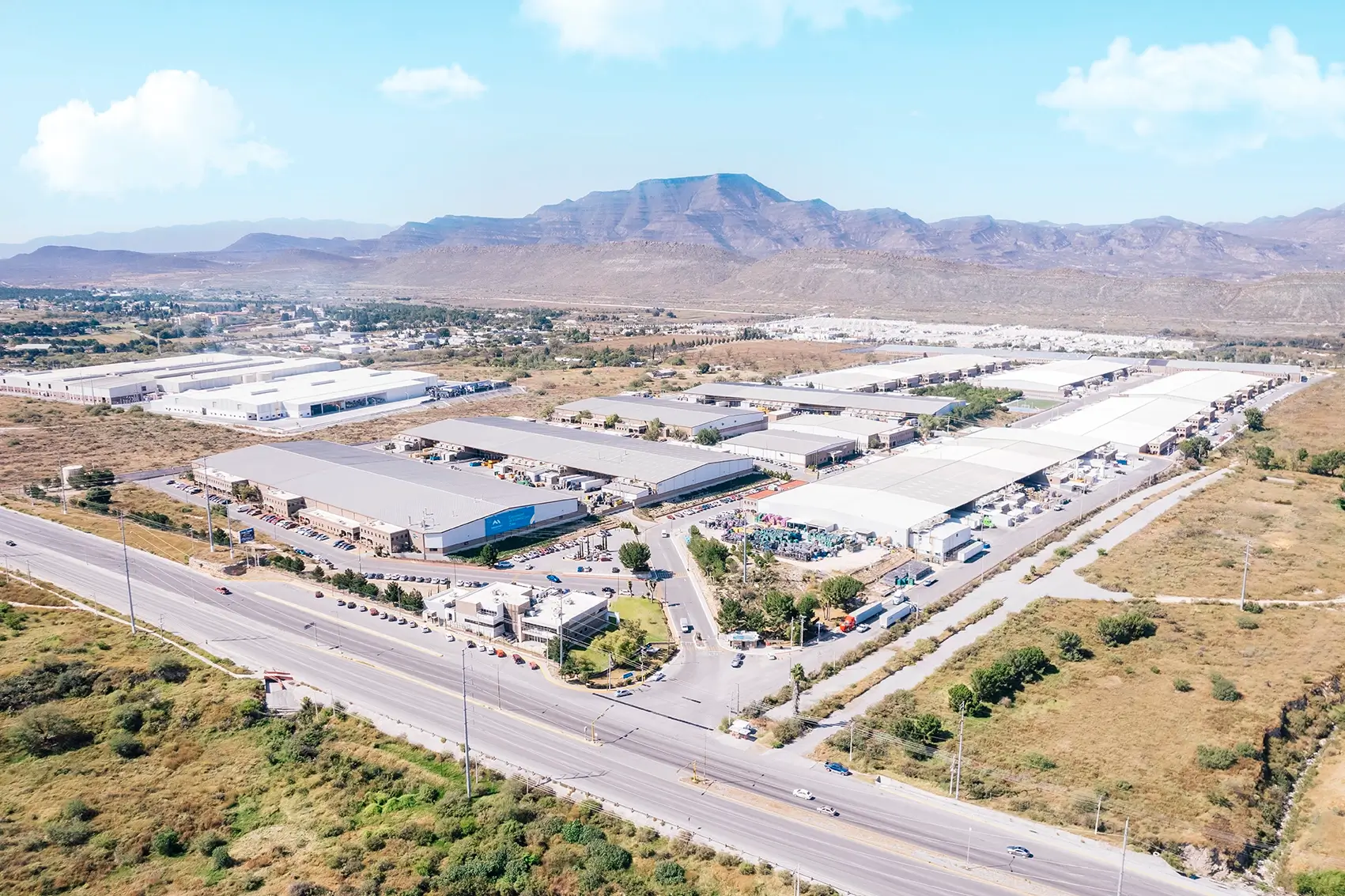
Since you will want to know where we sit on this map: our Campus is inside Saltillo. Tetakawi has operated in Saltillo since 1997, and the Campus has expanded twice. Today it runs 2.1 million square feet across 111.7 acres. Power and water are contracted at the site, with feeders already in place, so an operation connects to service rather than arranging it.
Saltillo is in the north of Mexico, near the biggest OEMs, and the connectivity to the other states is good. As a strategy, we consolidate products from our sister plants here and ship them to different locations across Mexico. Mauricio García · Plant Manager, Gemini Group
Safety and compliance in Coahuila
Coahuila’s homicide rate and its trade-program suspension rate both belong in whatever you take to your board. They are the two places the state separates itself from the rest of the country.
Safety is usually the first question a board asks, so start there. Coahuila had the second-lowest homicide rate of Mexico’s 32 states in 2025, behind only Yucatán, on the federal public security system’s own count. Saltillo’s rate sits below the state’s.
People who live there feel it too. In INEGI’s national urban safety survey for the second quarter of 2026, 16.9% of adults in Saltillo said they consider their city unsafe. The national average across the 91 cities surveyed was 59.8%. Saltillo came in third-lowest in the country, and improved from 23.5% a year earlier. If you are deciding whether to send someone down or ask a family to move, this is the section that answers it.
1.96%
of Coahuila’s manufacturing trade programs are suspended or flagged, the lowest share among the large manufacturing states compared here
4.65%
is the national average for the same measure
16.9%
of adults in Saltillo consider the city unsafe, against 59.8% nationally
The second number gets far less attention, and if you run a plant it may matter more. Of Coahuila’s 409 registered IMMEX programs, eight carry a suspended or flagged status. Nationally the figure is 279 out of 5,998. That is 1.96% against 4.65%, and the state table earlier in this guide shows how the other large manufacturing states compare.
IMMEX authorizes qualifying temporary imports for export manufacturing, subject to the applicable customs, duty and tax rules, so keeping a program in good standing is what keeps a line fed. Two things worth separating here: duty deferral comes with the program itself, while the VAT and IEPS credit comes from a separate certification you apply for on top of it. Under a shelter arrangement, qualifying operations are carried out through the provider’s authorized Mexican entity and applicable IMMEX framework. Either way, staying in good standing comes down to unglamorous discipline: annual reports filed on time, inventory reconciled against what the program says you imported, and tariff classifications that hold up when someone checks them. For a plant that depends on material crossing on schedule, that discipline is what protects the date.
See it in person
The Tetakawi Manufacturing Campus in Saltillo
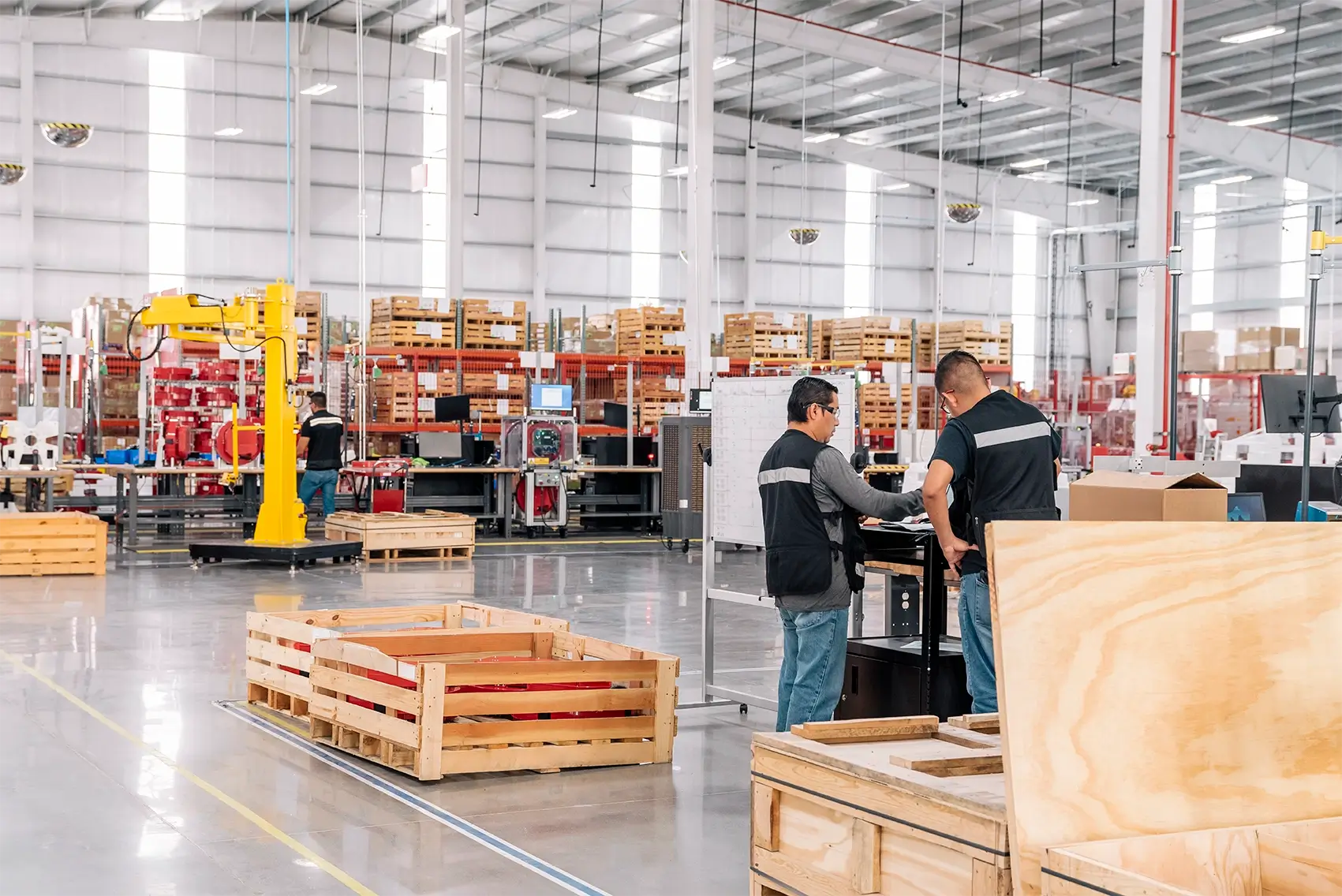
Reports take a decision only so far. Walk an operating plant, meet the team that runs it, and see how manufacturers here recruit, train and keep people. Tell us your timeline and we’ll arrange the visit.
Where Saltillo’s technical workforce comes from
Saltillo’s engineering and technical pipeline runs through a well-defined set of schools and research centers. These are the names you will see on résumés, and the ones worth a visit while you are in town.
Universidad Autónoma de Coahuila
The state public university, made up of 27 separate schools and faculties across Saltillo, Arteaga and Parras de la Fuente. The broadest engineering offering in the region by number of schools and faculties.
Instituto Tecnológico de Saltillo
Part of the national technological institute system, with manufacturing, mechanical and industrial engineering programs.
Universidad Tecnológica de Coahuila
In Ramos Arizpe, inside the same labor market. Two-year technical degrees in maintenance, automation and process work.
Tecnológico de Monterrey, Campus Saltillo
A private engineering and business school that manufacturers draw on for salaried and management roles.
CONALEP Saltillo
Two technical high school campuses running programs aimed at operator and technician roles.
CIQA, COMIMSA and CINVESTAV Saltillo
Federal research centers in applied chemistry, materials, metals and graduate engineering. Useful if your process needs a lab nearby.
Across Coahuila, 11,969 students started engineering programs in the 2024-25 school year, up from 7,617 in 2010-11 (National Association of Universities and Higher Education Institutions).
Enrollment tells you what is coming. What these programs have already produced is the part you will feel on the floor. Decades of automotive, aerospace and medical device manufacturing left a deep bench here: tight-tolerance machining, welded and painted assemblies, and processes that pass a customer audit.
Common questions about manufacturing in Saltillo
Why is Saltillo called the Detroit of Mexico?
Because General Motors, Stellantis and Daimler Truck all build vehicles within a few miles of each other, with a Tier 1 supplier base around them. The full account of what that concentration built, and how much of it transfers beyond automotive, is in the advantages of manufacturing in Saltillo.
How big is the Saltillo labor market?
Just over a million people in one metropolitan labor market. Saltillo, Ramos Arizpe and Arteaga function as an integrated metropolitan labor market, although the practical recruiting radius depends on transportation, shift and location. Coahuila also holds 409 registered IMMEX programs across 919 registered plants.
Is Coahuila safe for manufacturing operations?
Coahuila ranks among Mexico’s lowest-homicide states in the published federal series. INEGI and the national public security system count differently, one recording registered homicide deaths and the other opened investigations, so each measure should be read on its own basis.
What does manufacturing labor cost in Saltillo?
Saltillo sits in Mexico’s general minimum-wage zone at 315.04 pesos a day, effective 1 January 2026, not the northern border free zone, which carries a materially higher floor. The floor is where a comparison starts rather than the going rate. Ask any provider for the fully fringed employer cost by job type, the hours and shift assumptions behind it, exactly what the figure includes, and the exchange rate and date used for the conversion. Current fully fringed benchmarks by position are in the advantages of manufacturing in Saltillo.
How far is Saltillo from the United States border?
About three and a quarter hours from Laredo, the busiest land port in the United States, which handled nearly three times the truck volume of the next busiest crossing in 2025. Three separate US crossings sit within four hours of the city, which provides routing alternatives to evaluate against your destination, carrier, broker and crossing requirements.
What share of Coahuila’s IMMEX programs carry a suspended status?
The lowest among the large manufacturing states compared here. Of Coahuila’s 409 registered IMMEX programs, eight carried a suspended or flagged status against 279 of 5,998 nationally as of 30 June 2026, or 1.96 per cent against 4.65. Read that as a stock rather than a flow: it is the share of the current directory carrying that status on one date, not a count of enforcement events over time.
Where do Saltillo’s technical workers come from?
From a training base that predates the current wave of investment, which is the part a newcomer cannot replicate. The useful question for a staffing plan is not how many institutions exist but how many people complete programs in the specific disciplines you hire from, so ask for that count rather than an enrollment headline.
What it all adds up to
Each of these numbers is strong on its own. Together they say something more specific.
You get a metropolitan market of just over a million people, 409 registered trade programs, and the largest auto parts sector in Mexico by value. Three US crossings sit within four hours, one of them the busiest land port in the country. And Coahuila pairs one of the strongest safety records among Mexican states with the lowest share of registered IMMEX programs carrying a suspended or flagged status among the large manufacturing states compared here.
Taken together, the data describe a mature manufacturing market with a large industrial base, multiple border routes, strong published safety indicators and a relatively low share of registered IMMEX programs carrying suspended or flagged status in the June 2026 snapshot. Whether those advantages fit a project still depends on its labor requirements, supplier needs, utilities and customer lanes. Scale is Saltillo’s strength and also its constraint: a deep market is a busy one, and a smaller, more specialized labor market can suit a low-volume or high-skill process better. Guaymas and Mazatlán describe what that looks like.
If you want to go further: for the case for the region itself, and for current fully fringed employer-cost benchmarks by position, see the advantages of manufacturing in Saltillo. For how to get started without setting up a Mexican company first, start with shelter services in Saltillo. And to see the operating side of all this, the Zapa Manufacturing Campus has been operating in Saltillo since 1997, one of five Manufacturing Campuses in Mexico.
Subscribe to stay up to date with our latest insights