




Mexico’s nominal gross domestic product (GDP) was about USD 1.84 trillion in 2025, according to the IMF’s October 2026 figures. Services generate about 63% of the value the economy creates, according to INEGI, the national statistics institute. Manufacturing generates about a fifth, and manufactured goods make up more than nine of every ten dollars of Mexico’s goods exports.
For a company considering a plant, these figures are a starting point. The next step is to weigh the costs, workforce and market-access benefits of manufacturing in Mexico.
Mexico’s GDP by Sector at a Glance
Mexico’s economy divides into three sectors, and INEGI publishes each one’s share every year in its national accounts. The shares below are of gross value added: the value the economy creates, before net taxes on products are added.
| Sector | What it includes | Share of value added, 2025 | Share of employment, September 2026 |
|---|---|---|---|
| Tertiary (services) | Commerce, transport, finance, real estate, professional services, education, health, tourism, government | 62.8% | 64.7% |
| Secondary (industry) | Manufacturing, construction, mining (including oil and gas), electricity, water and gas | 33.1% | 24.0% |
| Primary (agriculture) | Agriculture, livestock, forestry, fishing and hunting | 4.1% | 10.6% |
Inside the industrial sector, one activity carries most of the weight:
| Industrial activity | Share of value added, 2025 |
|---|---|
| Manufacturing | 21.3% |
| Construction | 6.8% |
| Mining, including oil and gas | 3.0% |
| Electricity, water and gas supply | 2.1% |
How Big Is Mexico’s Economy, and How Fast Is It Growing?
Mexico’s nominal GDP was about USD 1.84 trillion in 2025, measured at current prices in U.S. dollars, according to the IMF’s October 2026 World Economic Outlook. In pesos, INEGI puts 2025 GDP at about MXN 35.9 trillion.
Mexico’s GDP per capita was about USD 13,800 in 2025 on the IMF’s figures.
Growth slowed in 2024 and 2025 and picked up in 2026. Real GDP grew 1.5% in 2024 and 0.5% in 2025, on INEGI’s revised figures. INEGI’s preliminary, seasonally adjusted estimates show the economy growing 1.9% in the first nine months of 2026 compared with the same months of 2025, including 3.2% year on year in the third quarter.
| Period | Real GDP growth | Source and status |
|---|---|---|
| 2024 | 1.5% | INEGI, revised (May 2026) |
| 2025 | 0.5% | INEGI, revised (August 2026 release) |
| January to September 2026 | 1.9% | INEGI, preliminary, seasonally adjusted |
| Third quarter 2026, year on year | 3.2% | INEGI timely estimate (October 30, 2026) |
| 2026, full year | 1.5% | IMF projection (October 2026) |
For a manufacturer, the growth rate says less than the trade figures in the sections below. In 2025, a year when real GDP grew 0.5%, Mexico’s manufactured exports rose 9.8% in dollar terms, according to INEGI.
Is Mexico a Secondary or Tertiary Economy?
Mexico is a mixed market economy and, by the standard definition, a tertiary one, because services generate the largest share of its value added: about 63% in 2025. Private companies produce most goods and services, while the state plays a large role in energy through Pemex and CFE, the federal electricity company.
The tertiary label leaves out what sets Mexico apart. Industry generates about a third of the country’s value added and employed about a quarter of working people in September 2026, and most of what Mexico sells abroad is made in its factories.
Services lead Mexico’s economy by value added; manufacturing leads its goods exports. Services carry the domestic economy, from retail to banking to logistics, while industry carries most of the country’s exports. A company building a plant works in the industrial economy and relies on the services economy for everything from trucking to payroll banking.
How Much Does Manufacturing Contribute to Mexico’s GDP?
Manufacturing generated 21.3% of Mexico’s gross value added in 2025, according to INEGI. That is the largest share within industry and slightly more than wholesale and retail commerce combined, at 19.8%. Measured against total GDP, which also includes taxes on products less subsidies, its share was about 19.9%.
Exports show manufacturing’s role from a different side. Mexico exported USD 664.3 billion of goods in 2025, and manufactured goods accounted for USD 608.6 billion, about 92%, according to Banco de México’s revised trade tables. Export values are gross, so they include the imported parts and materials that go into those goods; they measure what Mexico sells, not the value it adds. From January to September 2026, manufactured exports were 31.7% higher in dollar terms than a year earlier, according to INEGI.
Automotive products accounted for about 31% of manufactured exports in 2025, an export value of USD 187.6 billion. Mexico built nearly 4 million light vehicles that year and exported most of them. Other major manufacturing sectors include electronics, electrical equipment, medical devices, aerospace and food processing, and Manufacturing Industries in Mexico covers each sector and where it is concentrated. For the goods themselves, Mexico’s main exports breaks down what the country sells abroad.
Mexico’s Primary Sector: Agriculture, Livestock and Fishing
Mexico’s primary sector, made up of agriculture, livestock, forestry and fishing, generated about 4% of the economy’s value added in 2025. The sector employed 10.6% of working people in September 2026.
Mining, including oil and gas extraction, is counted in the industrial sector in INEGI’s accounts, not the primary sector. It generated 3.0% of value added in 2025.
Mexico’s Services Sector
Mexico’s services sector is the largest part of the economy, with about 63% of value added in 2025 and 64.7% of employed people in September 2026. Commerce is its biggest piece: wholesale and retail together generated 19.8% of the economy’s value added. Transport, real estate, financial services, professional services, education, health and tourism make up most of the rest.
The services economy is also where much of a plant’s support comes from. Freight carriers and customs brokers move goods across the border, banks handle payroll and supplier payments, and engineering firms support everything from permits to maintenance. A plant draws on all of them from its first month.
What Drives Mexico’s Manufacturing Sector
Four conditions shape Mexico’s manufacturing sector today.
Trade with the United States. Mexico was the largest U.S. goods trading partner in 2025, with USD 871.6 billion in goods trade, and it remained first in the first nine months of 2026, at USD 779.2 billion, according to the U.S. Census Bureau. Under the U.S.-Mexico-Canada Agreement (USMCA), goods that meet its rules of origin and are properly entered under its preference enter the United States free of the ordinary duty, though other U.S. tariffs can still apply to some products. Mexico’s 14 free trade agreements cover 52 countries, according to the Secretaría de Economía.
The IMMEX program. The IMMEX program lets approved manufacturers import materials and equipment temporarily with import duties deferred, within the limits the law sets for each. The operation has to meet the program’s export requirements. In August 2026, INEGI counted 5,165 manufacturing establishments operating under IMMEX, employing about 2.8 million people.
Investment. Foreign direct investment into Mexico was USD 41.5 billion in 2025 and USD 35.0 billion in the first half of 2026, according to Banco de México. Most of the first-half 2026 total was earnings reinvested by companies already operating in Mexico.
People and cost. About 9.4 million people worked in Mexican manufacturing in September 2026, 15.7% of everyone employed, according to INEGI. On Tetakawi’s October 2026 figures, an unskilled operator in Mexico costs about a sixth of a U.S. assembler, fully loaded on both sides, and a production manager a little over 40% of a U.S. counterpart; the role-by-role figures, with both sides dated, are on the manufacturing labor costs in Mexico page.
What Mexico’s GDP Means for a Manufacturer
The national numbers show the scale of Mexico’s manufacturing sector. For a plant decision, the next step is to check the suppliers, workforce and logistics available in the locations you are considering.
National numbers do not answer the questions that decide a project: which city, which building, what the workforce will cost for your roles, and how the operation gets started. Those depend on the product, the process and the customer. An automotive supplier near its customers in Coahuila and a medical device maker in Sonora face different labor markets, suppliers and freight lanes, though both sit inside the same national figures.
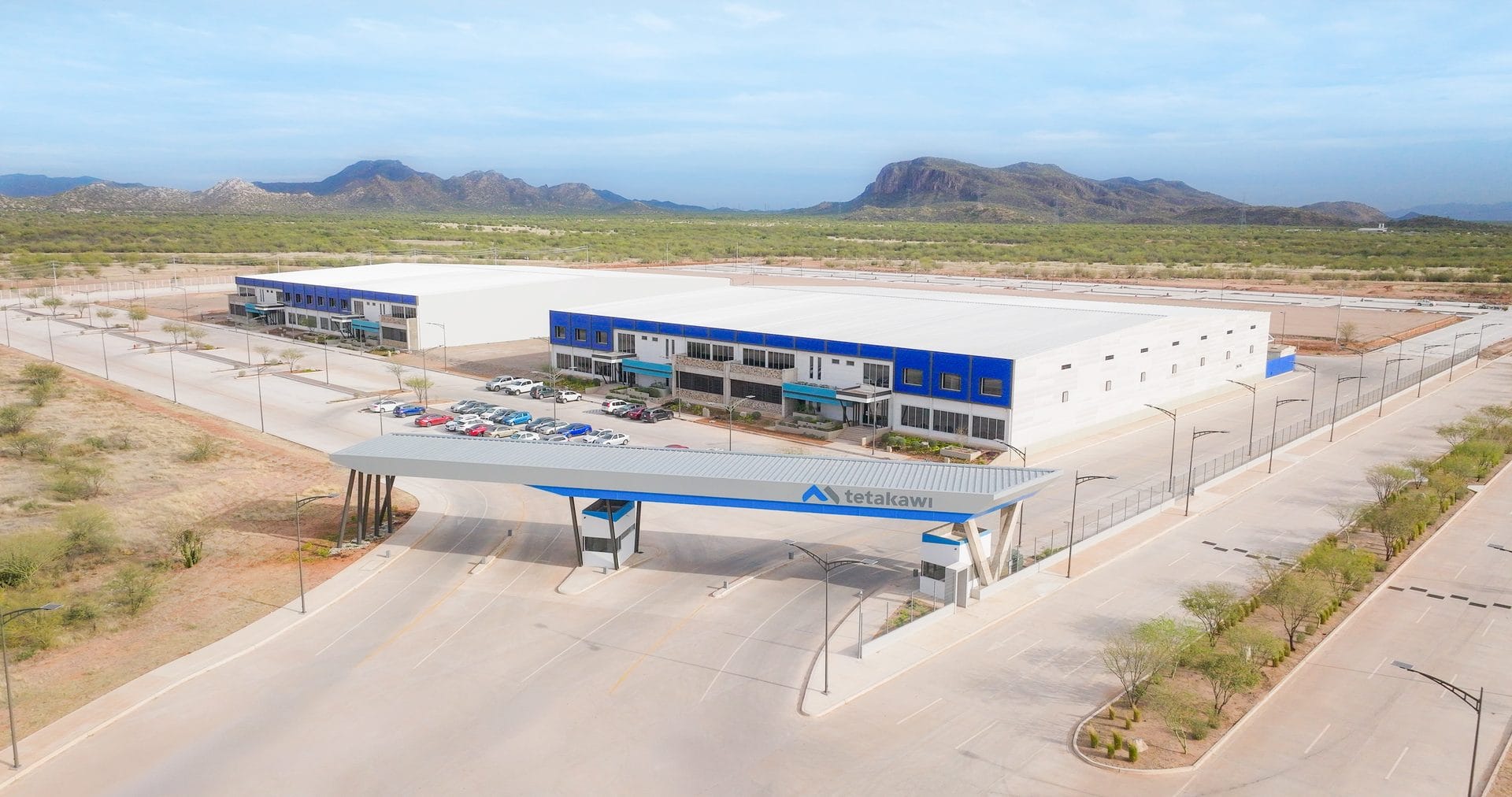
Tetakawi has helped companies manufacture in Mexico since 1986. On its five Manufacturing Campuses in Saltillo, Hermosillo, Guaymas, Empalme and Mazatlán, you run your own factory, and Tetakawi runs everything around it: the industrial space, the workforce and payroll, logistics and compliance. More than 60 manufacturers operate this way, and the average client has stayed 17.5 years. The industries Tetakawi supports include automotive, aerospace, electronics and medical devices. You control production, process and quality.
Planning to run your own factory in Mexico?
Tell us about your production process, workforce needs and customers, and we can help estimate the cost of operating on a Tetakawi Manufacturing Campus.
Frequently Asked Questions
What is Mexico’s GDP?
Mexico’s nominal gross domestic product was about USD 1.84 trillion in 2025, according to the IMF’s October 2026 World Economic Outlook. In pesos, INEGI puts it at about MXN 35.9 trillion.
What type of economy does Mexico have?
Mexico has a mixed market economy led by services, which generate about 63% of its value added. Industry generates about a third and manufacturing alone about 21%. Agriculture generates about 4%.
What percentage of Mexico’s GDP comes from manufacturing?
Manufacturing generated 21.3% of Mexico’s gross value added in 2025, according to INEGI, or about 19.9% of total GDP including taxes on products less subsidies. Manufactured goods made up about 92% of Mexico’s goods exports by value that year.
What is Mexico’s GDP per capita?
The IMF puts Mexico’s GDP per capita at about USD 13,800 in 2025, in current U.S. dollars.
How fast is Mexico’s economy growing?
Mexico’s real GDP grew 0.5% in 2025, according to INEGI. Its preliminary, seasonally adjusted estimates show 1.9% growth in the first nine months of 2026, with the full third-quarter estimate due November 23. The IMF’s October projection, made before that estimate, is 1.5% for 2026.
What are Mexico’s main industries?
Manufacturing generated 21.3% of Mexico’s value added in 2025, slightly more than wholesale and retail commerce combined at 19.8%. Within manufacturing, automotive products accounted for about 31% of manufactured exports; other major sectors include electronics, electrical equipment, medical devices, aerospace and food processing.