Our Story
Learn our story, leadership, and mission shaping manufacturing in Mexico.


Understand manufacturing costs in Mexico, including labor rates, operational expenses, and the factors that impact total cost and workforce performance.
Costs and Workforce
Manufacturing in Mexico costs materially less than it does in the United States for most operations. That much is settled. What no one can hand you is your number, because the total is built from the same categories every plant carries, labor with its statutory benefits, a building, utilities, logistics, compliance, and the one-time work of setting up, and each category depends on what you make, where you make it, and how you run it. So when a page offers one hourly rate with no date, no definition, and no place attached, it is describing someone else’s operation, not yours.
The numbers also move, and lately they move by law. Mexico raised its general minimum wage 13 percent for 2026, employer retirement contributions are climbing on a fixed schedule through 2030, and the statutory workweek is stepping down year by year, covered below. A benchmark that was right when it was published quietly stops being right.
None of this makes the question unanswerable. It makes the method matter: know what sits inside a fully burdened labor cost, know what the law changes on a schedule, and insist on current data for the specific place and roles you are pricing.
The difference that causes the most expensive misunderstandings is that a wage is not a labor cost. Mexican law builds a layer of statutory benefits and contributions on top of every base wage, and the minimums are public law:
That list is also why no honest multiplier exists. The pieces are measured against different things, the worker’s pay, a national reference value, the employer’s safety record, the company’s profits, so no single percentage turns base pay into a burdened cost. Two plants paying the same wage can carry different total labor costs, legally and correctly.
Time carries its own price tags: a fully paid rest day for every six days worked, a premium of at least 25 percent for Sunday work, and double pay for work on mandatory holidays. Annual paid time, not the quoted wage, is where a careful model shows its work. Retention belongs in the same arithmetic: a workforce that stays converts training from a recurring cost into a compounding asset.
The largest scheduled change in Mexican labor cost is now law. The reduction of the statutory workweek took effect on May 1, 2026: the ordinary maximum stays 48 hours through 2026, then steps down to 46 in 2027, 44 in 2028, 42 in 2029, and 40 in 2030. Pay and benefits cannot be reduced as the hours come down, and beginning in 2027 employers must keep electronic records of every worker’s hours.
For cost planning, the reform does two things. It makes schedule design a first-order cost lever: shifts, overtime, and coverage will be redesigned year by year as the maximum steps down, with overtime paid at double time within the legal weekly limit and triple time beyond it. And it puts an expiration date on every static benchmark, because a labor-cost figure calculated under this year’s rules will describe a different reality in two years. The advantage goes to plans built on current data.
Facilities are a market fact, not a national one. Current brokerage reports put asking rents at about $0.79 per square foot per month in Tijuana and about $0.65 in Monterrey as of the second quarter of 2026, and the point of quoting both is that they are two different markets: industrial rent in Mexico is only meaningful as a dated, named-market number.
Utilities follow the same logic. An industrial electricity bill is assembled from regional, time-of-day, and demand-based charges, so two plants with identical consumption can pay differently, and natural gas adds pipeline and distribution components on top of the commodity. Logistics is priced by the lane: origin, destination, equipment, direction, and crossing, never by a national average.
One-time setup costs are a checklist before they are a total:
What each line costs depends on the operating model you choose and on whether you build a new site or step into an existing environment, which is why the same product can launch with very different first-year numbers.
A trustworthy estimate for your operation is built, not quoted. A complete model prices your actual role mix at current regional wages, fully burdened through every statutory component; adds indirect and salaried staff; and then works through the operation itself: building area and rent, electricity from your load profile, gas, water, maintenance and supplies, transportation for people and freight, and a severance reserve, because exits are part of the cost of employment in Mexico.
A model with boundaries is more credible than a model with promises. Raw materials, inbound freight, corporate allocations, and depreciation belong to your own numbers, and no local model should pretend to price them. What the local side owes you is current data: wages that reflect this quarter’s labor market, statutory rates that reflect this year’s law, and the discipline to say which is which. Built that way, a cost model is a decision tool.
Predictability is the other half of the answer. An estimate describes day one; what the number does afterward depends on the environment the plant operates in. Where workforce, logistics, and compliance run inside one structure, costs carry fewer surprises and scale with less friction, which is why the second question, how steady the number will stay, belongs in the same analysis as the first.
Our Ecosystem
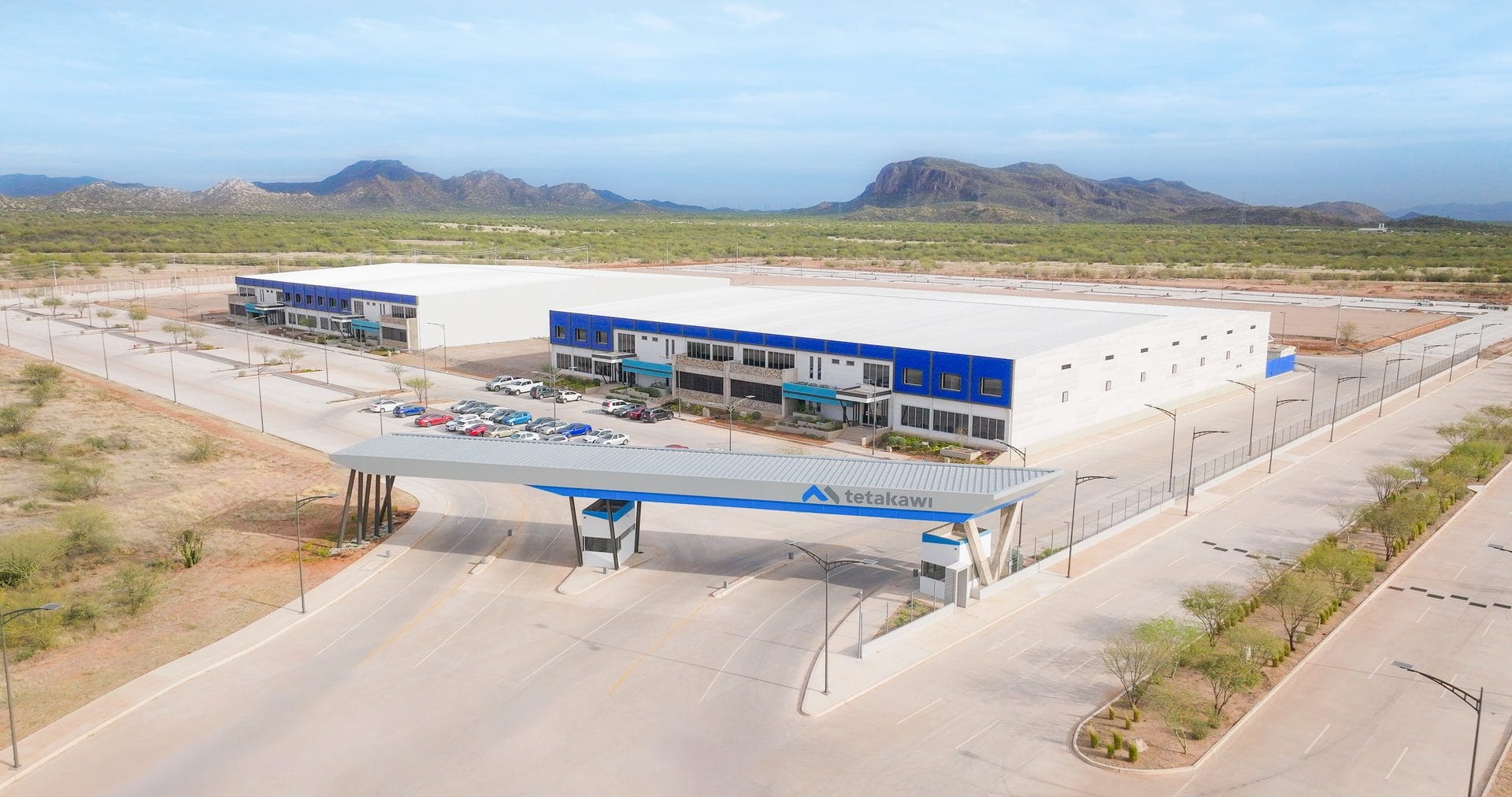
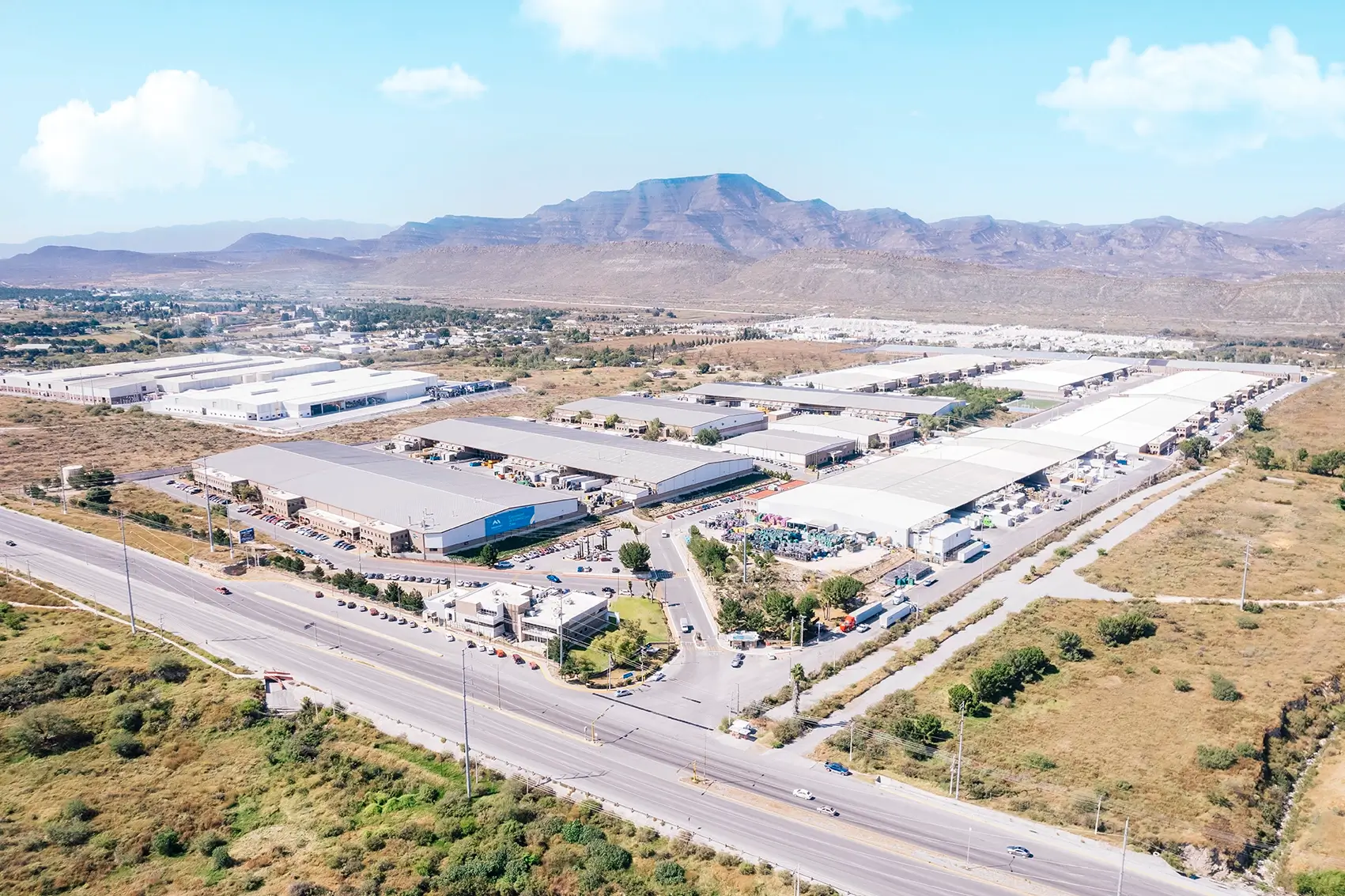
You aren’t coming to Mexico to coordinate vendors. You’re coming to launch, operate, and grow. An industrial park hands you an empty building. A Campus hands you a running environment, and the economies of scale that come with it.
Industries We Serve
We help companies expand efficiently, safely, and predictably in sectors with unique operational demands.

Component and assembly work held to OEM cost targets and safety certifications.

Assembly and test operations requiring tight process control and traceability.

Regulated production requiring validated quality systems and lot traceability.
Testimonials
From mid-sized manufacturers to global multinationals, these leaders asked the same questions you’re asking now. Their answers matter more than ours.

Jeremy Main, Senior Vice President, Consolidated Precision Products

Carlos Rivera, Plant Manager, HUBER+SUHNER


Brian Berich, Director of Operations, BAE Systems


Ricardo Gómez, Director of Operations, TE Connectivity


Mauricio García, Plant Manager, Gemini Group

Jon Jensen, Manufacturing CEO, repeat Tetakawi client since 2001
How It Works

Talk with our team about your goals and questions around manufacturing in Mexico.

Work with our team to model costs, risks, and operational tradeoffs.

See how workforce, infrastructure, and operations come together on site.
Move forward with a clear plan to launch and scale with confidence.
FAQs
Answers to common questions about estimating manufacturing costs in Mexico and understanding how costs vary across locations and operations.
There is no single number, but there are real starting points.
Mexico’s 2026 minimum wage is 315.04 pesos per workday nationally and 440.87 pesos in the northern border free zone. Both are legal floors, typical factory pay sits above them, and by law a daily minimum may not simply be divided into a generic hourly rate. Real labor cost starts from the market wage for your specific roles in a specific city and builds upward through statutory benefits and contributions.
Across our Campuses, as of the third quarter of 2026, direct labor starts at about $4.33 an hour fully fringed for unskilled positions, about $5.78 for semi-skilled roles and about $6.10 for machinists, at 17.5 pesos per dollar. Fully fringed means the wage plus the employer’s payroll taxes and benefits; overtime, transportation and indirect labor are on top. For scale, the same roles in U.S. manufacturing start at about $28, $30 and $35 an hour, wages plus benefits, our calculation from BLS data.
From there, the credible path is a model of your operation: your role mix, your schedule, your building, your utilities, your lanes.
Substantially. Official data supports the direction, not a universal percentage.
In U.S. manufacturing, total employer compensation averaged $48.62 per hour worked across every role in June 2026 and $39.25 for production jobs, by BLS measurement. At the starting end of the range, unskilled U.S. manufacturing jobs work out to about $28 an hour with benefits and semi-skilled jobs to about $30, our calculation from BLS wage and benefit data. Mexico’s official wage statistics, reported on different bases, sit far below those levels even after full statutory burden is added.
What no official source supports is a fixed savings percentage, because the answer depends on the roles you need, the region you choose, and the productivity you reach. Treat any page quoting an exact wage saving as a starting point for questions, and price your own operation before you budget.
On labor alone, close. The structural differences decide more.
The answer depends on the role and the city, and no current official source publishes an apples-to-apples comparison: the United States government series that once compared manufacturing compensation across countries was discontinued with data ending in 2009, and China’s official wage statistics are annual averages that cannot honestly be converted into burdened hourly costs. The paired hourly figures that circulate on comparison pages trace to no auditable current source.
The differences that hold up are structural. Mexican production reaches United States customers by truck, with the inventory and response-time consequences that follow; qualifying goods enter under USMCA treatment; and the two countries run different legal workweeks, 40 hours in China against Mexico’s 48 in 2026, stepping down to 40 by 2030. For products serving North American demand, those structures usually decide more than the wage gap does.
The wage plus everything employment legally carries.
The annual bonus, vacation and its premium, the housing contribution, profit sharing, and social-security contributions across several branches. Because several of those components are formulas and none of them is a flat rate, Mexican law contains no single multiplier that converts base pay into a burdened cost.
Official statistics illustrate the integration: the average salary base on which employers contribute to social security was about 673 pesos per day in August 2026, a figure that already includes bonuses and premiums, which makes it neither a base wage nor a total employer cost. The honest burdened number for your operation comes from running your roles through the formula, not from applying a percentage.
Rarely the wage; usually the mechanics around it.
Paid time is broader than many models assume: a fully paid weekly rest day, premium pay for Sundays and holidays, and vacation that rises with seniority. Severance is a real exit cost that disciplined operators reserve for from the first year. State payroll taxes differ state by state, industrial electricity carries demand charges that punish unmanaged load, and from 2027 every employer must keep electronic records of working time.
None of these is hidden; they are simply absent from benchmark numbers. A model that names every category, and dates every rate inside it, turns surprises into line items.
Four steps, and a number you can take to your board.
1. Get in touch. A conversation about your role mix, your volumes and the regions on your list.
2. Measure ROI. We run your positions through the full model this page describes: current wages by role in each Campus region, fully fringed through every statutory component, then the building, the utilities, transportation for people and freight, and the one-time setup. Because the workforce, logistics and compliance teams already run on the Campus, the model prices an environment that exists, not one you would have to build.
3. Site visit. Walk the Campus, meet the HR team that would recruit for you, and talk with manufacturers running your kind of roles there today.
4. Launch and grow. When you give the green light, the same team that helped you build the case guides the launch, and the people who run the Campus are a phone call or a short walk away.