
How to Set Up Manufacturing in Mexico: The 10-Step Playbook
22 min Read
Key Takeaways
- Deciding to look at Mexico is rarely the hard part. Working out how to start is.
- You do not need your own Mexican company to manufacture in Mexico. Setting one up takes eight to eighteen months. A shelter arrangement usually takes three to six.
- Either way, you run your own factory. You control production, process and quality.
- Three commitments are hard to walk back: shipping equipment, ramping up hiring, and promising a delivery date. Plan backward from those.
- Tetakawi has done this with 60+ manufacturers since 1986. You do not have to work it out alone.
Jump to Section
By the time Mexico comes up in a serious way, the reason is usually specific. A customer has asked for production in North America. A plant is at its ceiling and next year’s program needs room. A second shift has gone unstaffed long enough to become a capacity problem rather than a hiring problem. Deciding to look at Mexico is rarely the hard part. Working out how to start is.
So what does it actually take? The work is much the same whoever is doing it. Decide what you will build and to what standard. Pick a site. Get a building and a workforce ready. Meet the rules that apply to what you make. Most of that happens at the same time, so the order of the steps is not what sets your schedule. What sets it is which pieces have to be finished before you can commit. The biggest of those is whether you set up your own Mexican company or operate under a shelter arrangement.
Tetakawi has been helping manufacturers through exactly these calls for over 40 years, on Manufacturing Campuses it runs in Mexico. A Campus adds established industrial space, shared infrastructure and an on-site support organization. Your people get production ready. Tetakawi handles the agreed work around it: getting the building ready, hiring and employing the workforce, clearing customs, and filing what the site’s authorizations require. You control production, process and quality. Tetakawi is not a contract manufacturer.
Here is what has to happen, roughly in the order you will face it, and what you want in hand before you move on. Several pieces overlap, and how long each takes depends on your operation.
1. Define Your Strategic Objectives
Why you are doing this shapes everything after it. A launch driven by a customer tends to put their qualification dates first. An expansion driven by capacity tends to put volume and available space first. Those two projects can end up weighing sites differently, facing different approvals, and having very different room to absorb a slipped date. Be clear about which one you are running, because it is the thing you judge every later option against.
So settle three things before anyone talks about locations or operating models. What does success look like twelve months from now? What volume and what certifications does your customer or your market require? And what timeline can you live with, including what happens if it slips?
Those answers become the filter for everything else. Pick a city because it sits near an existing supplier and you can still find out it cannot support your headcount, or that it adds freight cost nobody modeled.
Write the scope against requirements you can name. Spell out which product specs, which regulations and which customer approvals apply. Naming them now is what lets you schedule the qualification work later, instead of discovering it at launch.
What you’ll have in hand. A production scope with the specs and approvals named, agreed objectives, and a target date.
2. Build Your Cost Model
Build the model around these categories:
- Direct labor
- wages, benefits and what the law requires, including aguinaldo (the statutory annual bonus), PTU profit sharing and IMSS social security
- Indirect labor
- supervision, quality, maintenance
- Facilities
- space, build-out, utilities, upkeep
- Logistics
- inbound freight, customs brokerage, outbound freight, handling
- Rules and permits
- authorizations, environmental permits, safety standards
- Overhead
- administration, IT, insurance
- Duties and taxes
- on what you bring in and ship out, including anything USMCA does not cover
A model built on hourly rates alone will come in low. What the law adds on top of the base wage is real money: employer contributions, aguinaldo, vacation premium, PTU. How much it adds depends on the wage level, the state and the operation. Work it out from your own numbers rather than from a published average.
One job is worth doing here rather than later: run a first pass at customs and tariffs before you finalize the model. Classify your raw materials, your components and your finished goods for the country you are importing into. Work out whether your product qualifies for USMCA treatment under the rules of origin. Then put the duties you will actually pay into the model.
Those numbers move by city and by industry; what it costs to manufacture in Mexico depends on where you land and who you can hire there.
Keep the thinking behind every estimate visible, with a source and a range. That way the model can be updated as the project takes shape, and defended when somebody asks where a number came from.
What you’ll have in hand. A cost model built on your own volumes, every line carrying its source and a range, estimates labeled as estimates, and the open questions written down.
3. Select Your Site
A site can look strong on labor, on logistics or on nearby suppliers and fail on one of the other two. Weigh all three together, because a weakness in one can wipe out an advantage in another.
Start with how deep the labor market is. The wage rate tells you what a worker costs. It does not tell you whether you can find one. Test the city against the headcount you need, at the skill level you need, and against the plants already hiring from the same pool. A city with low wages and empty buildings can still fail you.
Then logistics, which sets your cost structure. Being close to the US border matters if you run a cross-dock. Inland cities with rail and less wage pressure can be worth the extra transit time. Check port access, customs processing, transport links and who can supply your indirect materials nearby, against your own supply chain rather than the region’s reputation.
Some of this may already be done. Where an operation moves onto an established Manufacturing Campus, the question narrows to whether that site fits what you build. You still check the labor market and the logistics against your own plan.
What you’ll have in hand. A shortlist scored on labor depth, logistics and suppliers, including who else is hiring the same people, with the thinking behind each score written down.
4. Choose Your Legal Structure
This is the call that sets your timeline, your risk and how much administrative work lands on your own people.
Running your own Mexican company. Your team handles incorporation, registrations and permits while also getting the building and the workforce ready. Plan eight to eighteen months. Some approvals cannot start until earlier registrations are done, so find those dependencies early and line them up with the building and hiring schedule.
Operating under a shelter arrangement. A shelter is an arrangement where an established provider’s Mexican company, authorizations and back office carry the supporting work while your team runs production. You still run your own factory.
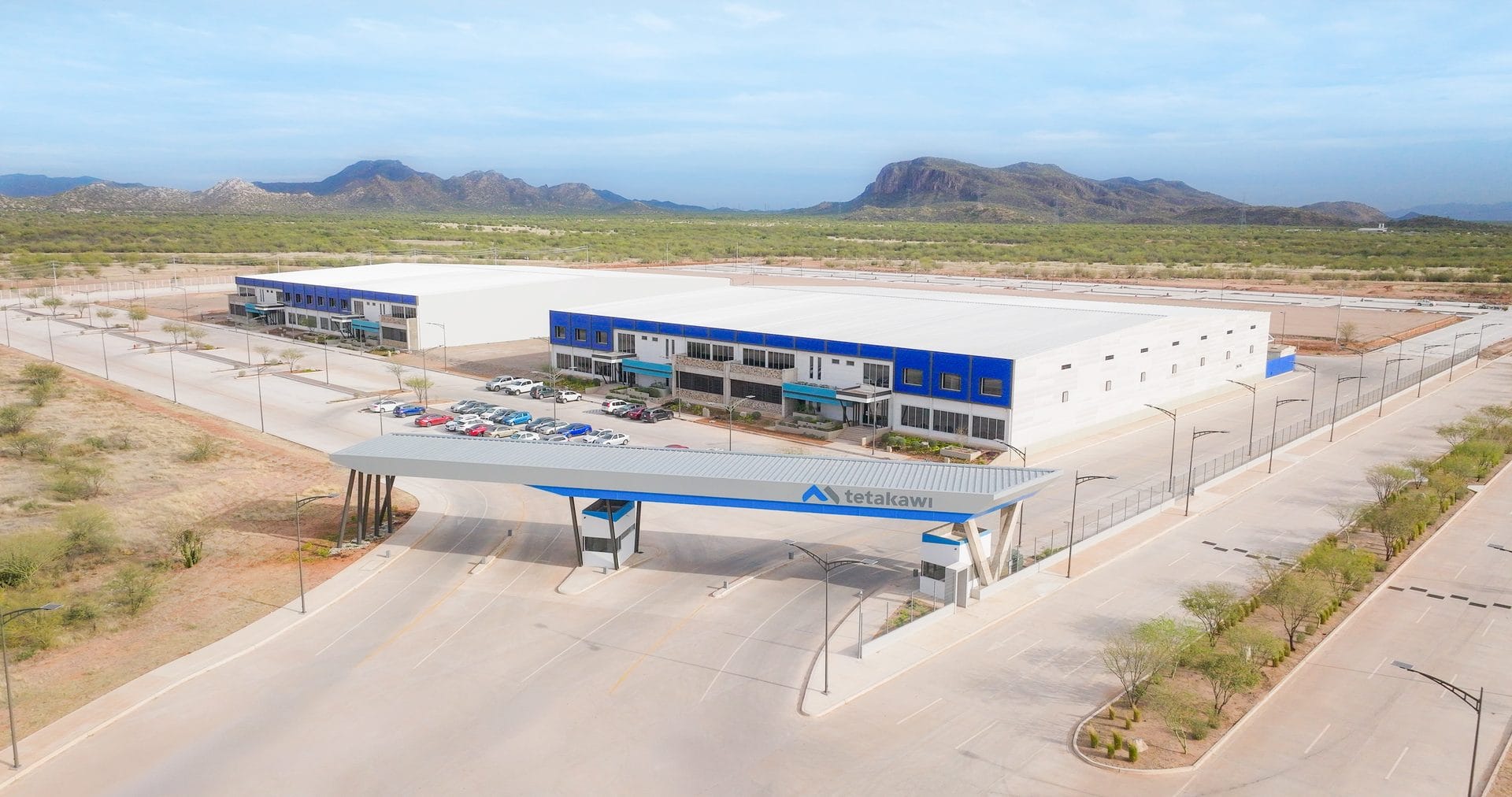
A Manufacturing Campus is that same arrangement at a place that is already running, so less of it has to be built for you. What a Campus adds is established industrial space, shared infrastructure and an on-site support organization. Tetakawi has been doing this in Mexico since 1986 and runs five Manufacturing Campuses in Sonora, Sinaloa and Coahuila, used by 60+ manufacturers. It has put its own money into those sites and it keeps operating and maintaining them.
In Tetakawi’s experience, setting up this way typically takes three to six months. Where you land in that range depends on the site. A new building puts construction in the schedule, with other work running alongside it. An existing building can be faster, or not, depending on what the structure has to carry, what the fit-out involves, and how ready your equipment and your people are. For a well-prepared operation on an established Manufacturing Campus, setup can be ready for equipment in as little as thirty days. The buildings are standing and move-in ready, recruiting is already running in that region, and the authorizations the site operates under are already held. Tetakawi’s start-up team runs that setup work with you. Starting production and reaching planned output also depend on equipment installation, staffing, qualification and any regulatory or customer approvals you need. Some of that work runs alongside setup.
Then come the authorizations, which follow from that choice. You will usually need an IMMEX program if your operation temporarily imports materials or equipment to make goods for export. It is a Secretaría de Economía authorization, not something every manufacturer in Mexico has to have.
Two things about that program catch people out. It does not automatically cover a new location, so check that your operating address is registered under it and file the addition if it is not. Under a shelter arrangement, the provider holds the program. And while goods needed for the covered manufacturing generally do not require a separate expansion, sensitive goods can need extra authorization. Check your materials before you plan the first shipment.
IVA/IEPS certification is separate from IMMEX authorization. It gives you a credit on eligible temporary imports. Guaranteeing the tax or paying it at import are the alternatives, and which one fits depends on the operation and how much cash it can tie up.
Both structures are in use across automotive, aerospace, medical devices, electronics and consumer goods, and the shelter versus standalone trade-offs are worth reading before you decide.
Whichever you choose, somebody has to own the filings, the payroll, the customs entries and the permits. Settle that while you settle the timeline rather than after it.
What you’ll have in hand. A decision on the operating model, a name against every piece of administrative work it creates, and what that means for your schedule and your staffing.
5. Build Your Workforce
Finding people, hiring them and keeping them pulls on three things at once: what the law requires, what the local market looks like, and what it feels like to work for you.
Start with the law: written employment contracts, registration with IMSS, the Federal Labor Law on hours, overtime and termination, and union relations where they apply. Mexico’s 2019 labor reform changed how unions organize and how collective agreements get ratified, and your employment setup has to account for it.
Then the market, which changes city by city, and so does what it takes to keep people. Benefits, a path up, training and working conditions all move retention. How deep Mexico’s manufacturing labor market runs in each city on your shortlist is worth checking before you commit to one.
Give each shift its own staffing plan and its own hiring dates. Do not assume the second shift follows the first. Build a hiring curve instead of a single headcount, so the schedule shows when you need people and not just how many. The other early call is which roles you hire locally and which you move from the home plant. Give the people you move a date to come home.
On a Campus. You define the roles, the skill levels and the headcount by shift. Tetakawi’s recruiters source against that definition in a labor market they already hire in, and the human capital team employs those people and runs payroll and the registrations.
What you’ll have in hand. A staffing plan by shift and skill level, a hiring curve rather than a headcount, and the hire-local and transfer lists settled.
6. Secure Your Facility
There are three ways to get industrial space: build to your spec, take existing space and fit it out, or move into space that is ready. The building choice and the operating-model choice are separate decisions. Needing a building to your spec does not mean you have to run your own Mexican company. On an established Manufacturing Campus a new building takes about six months. Where suitable move-in-ready space is available, you skip that construction period.
Weigh what each path costs you in control and in risk. Build to spec and you get the layout you want, plus construction risk and permitting exposure. Take existing space and you coordinate the fit-out, the utility connections and the certifications. On an established Campus the base infrastructure is already in. Tetakawi checks your process requirements against the building to work out what fit-out and utility work your operation still needs.
Whichever path you take, the same handful of things get confirmed before you sign anything. Electrical capacity first, because what the park quotes is not the same as confirmed capacity at your own service, and the same gap shows up with water and wastewater. Then floor loading for your equipment, room to expand, and how far your workforce has to travel. Check the electricity tariffs and utility costs your building would face as part of the same review.
If the plan assumes room to grow, point at the actual space and find out what using it would involve.
On a Campus. You supply the equipment list, the connected load and what your process needs. Tetakawi’s facilities team checks the building against them, then plans and does the prep work. The production layout and the equipment stay yours.
What you’ll have in hand. Utility, loading and expansion requirements checked against the specific building and your own connected load, with a date the utilities will be ready.
7. Achieve Regulatory Compliance
The rules reach across tax, labor, customs, environment and workplace safety, and together they are what compliance means for a site. Which ones apply, and who enforces them, comes from what you build, how you build it and where.
So beyond any customs authorization, expect environmental operating permits, municipal licenses, and whatever your products, processes and customers have to be certified for. Medical device, aerospace and automotive work each bring their own requirements, and customers add more on top. Work out which ones apply to your site and your operation rather than assuming them from the sector.
Then there is OEA, Mexico’s authorized economic operator program and a supply-chain security certification. It opens up customs benefits, including fewer inspections. It is not a general requirement for starting manufacturing. Work out whether it matters to your customs plan, and whether the operator already holds it.
Here too, on an established Campus the framework for base operations already exists, and your own requirements get worked out against that site and those authorizations rather than assumed.
For every approval, name who handles it, what information it needs, and when that information has to be ready. If an application needs a test report, put sampling, testing and waiting for results in the schedule.
What you’ll have in hand. A register of the approvals your products and processes need, with an owner, a date and the evidence required against each one.
8. Align Your Supply Chain
Getting materials in, keeping track of them, and getting finished goods out are three different problems that go wrong in three different ways.
Getting materials in. Your customs broker and freight forwarder need to know the import route you are using, how your specific materials classify in the country you are importing into, and what paperwork keeps a shipment moving. Classify a part wrong and you can find a duty nobody budgeted, or a truck sitting at the border.
Keeping track of them. Temporary imports have time limits. Under IMMEX, production inputs generally get eighteen months, though exceptions apply. Qualifying machinery and equipment can stay for as long as the program is valid, as long as you meet what the program requires. Your inventory system has to track those temporary imports and show what lawfully happened to every one of them, which covers more than exporting them as finished goods or sending them back. Scrap and production losses get accounted for separately. Annex 24 sets out what that automated inventory system has to do.
Getting finished goods out. For goods headed to the United States or Canada, check the USMCA rules of origin that apply to your product. Depending on what you make, those can include a tariff-shift test, a regional-value-content test or other requirements. Build that work into how you make the product, with trade specialists sitting with production from the start, and keep the supporting records from day one so you can back up the origin call later. According to Mexico Business News, citing US Department of Commerce data, about 89% of the value of Mexican goods exported to the United States got USMCA preferential treatment in November 2025, against about 45% in January. Whether your product qualifies is still its own question.
Go through the classifications with your customs specialists early, because the cost model, the customs plan and the origin call all hang off them. Write down the reasoning next to the code. The reasoning is what defends the classification if anyone ever asks.
On a Campus. You supply accurate product, value, ownership and material-consumption data. Tetakawi’s import and export team uses it to file the entries and keeps the inventory records the authorizations require.
What you’ll have in hand. Materials classified with the reasoning written down, an inventory-control plan that tracks temporary imports and their lawful disposition, and a customs plan that names who files what.
9. Transfer Technology and Processes
Installing equipment, qualifying the process, standing up the quality system and training people on your methods all happen here, and they overlap.
Start with the quality system. Whether you run to ISO 9001, IATF 16949, ISO 13485 or AS9100, work out what the Mexican site has to achieve against its own products, processes, customers and standards, then plan the certification timeline from there.
Then moving the equipment. Plan that around the import route you will use and how each item classifies at customs. Qualifying machinery and equipment brought in under an IMMEX program can stay for as long as the program is valid, as long as you meet the requirements. Document the equipment list, the serial numbers and the values before anything ships. Gaps between the paperwork and the crate create customs problems.
Then qualifying the process, which follows whatever protocols your industry uses. Work backwards from the delivery date you have to hit, then check that plan against when equipment is actually available and what lead times really are.
And moving the knowledge matters as much as moving the machines. Name your process experts, plan how long they are on site during launch, and build local capability through real training rather than leaning on the home plant forever. Give them a date to come home, because “until the line is stable” is not a date.
What you’ll have in hand. Your customer’s qualification requirements confirmed in writing where their program needs approval, and a qualification plan scheduled against them.
Separate the three launch dates
One thing to settle before the launch step itself. “Launch” means three different events, and it pays to decide early which one you are promising, and to whom.
- Installation and commissioning done
- Equipment is in and commissioned against the acceptance criteria the project set.
- Customer says you can ship
- Where your customer’s program requires approval, they release you once they accept the evidence that program asks for, whether that is first article inspection, PPAP or something else. When you invoice follows your commercial terms and is a separate question.
- Running at plan
- You are making the volume you promised, at the quality you promised, at the performance the business case assumed.
Finishing commissioning does not mean you are ready to run at plan. A date that is safe to promise for the first is not automatically safe for the third.
10. Launch Production
Launch is where everything earlier comes together. Getting there means equipment installed and commissioned, people hired and trained on your processes, materials in inventory, and a quality system documented and ready for a customer audit. Rarely all at once, and rarely in that order.
How you get from test runs to target volume depends on your product and your customer. Build in first articles, qualification testing and customer approval where their program requires it, then plan the ramp.
Where the thirty-day figure fits. Thirty days is about setup being ready for equipment, on an established Campus, for a well-prepared operation with move-in-ready space and equipment staged to ship. Your production schedule still has to carry installation, qualification and any customer approval.
Leave time and money for the climb to planned output. Running below plan while a new workforce learns the job is predictable, and it belongs in the start-up cash below rather than showing up later as a variance nobody expected.
What you’ll have in hand. A ramp plan written against the three dates above, with the cost of the ramp carried in it.
What has to be true before you commit
Three commitments are hard to walk back, and each one depends on work finishing earlier.
Before equipment ships. The import route and the authorizations confirmed for your goods. Classification done, with values and serial numbers documented. Space confirmed against your layout, including room to get at the machines for maintenance and room to grow. Say your plan has equipment arriving before the utilities are finally connected. That can work, but you still need a confirmed date for when the utilities will be ready to build the plan against.
Before hiring ramps up. Shift pattern and staffing plan agreed. Which roles you hire locally and which you move settled, because recruiting against the wrong skill mix is expensive to undo.
Before you promise a delivery date. Any qualification and approval your customer requires, confirmed in writing, with that work scheduled against the date you are committing to.
The cash between signing and steady state
Your plan needs two numbers, not one. What it costs to get running, and what it costs to run. The months in between are where projects get caught out.
Spending starts before the money comes in, and output can sit below target well after the first shipment goes out. Put the start-up costs and the working capital on their own line so your CFO can see them, then check them against the operating forecast so the same dollar is not counted twice. Here is where it goes:
- Moving the equipment
- crating, freight, customs handling, rigging, commissioning
- Qualification
- running the protocols, scrap while you qualify, and engineering time on both sides
- First inventory
- materials in transit and on the floor before you invoice anything
- Running two lines
- the old one still shipping while the new one qualifies
- Ramp
- output and labor efficiency below target while a new workforce learns
And one more thing. Your first invoice is not your first cash. Payment terms, and the working capital you need to get through ramp, belong in the same plan.
Who does what on a Manufacturing Campus
None of this goes away on a Campus. Most of it starts from something that already exists rather than from nothing.
Tetakawi coordinates the work between its facilities, employment, customs and compliance teams. Your team brings the production requirements and works with them on the decisions that affect the launch. A Campus gives you an established organization to work with as those pieces come together.
Those recruiters, customs people and compliance teams work across the manufacturers on that Campus, so you are not standing up a department for one plant, and they have opened operations in that city before. Part of what your project needs is already there. Not all of it: capacity and staffing still have to scale with demand.
| You supply | Product and process definition; equipment and its specs; your quality system and standards; production, process and quality decisions; and accurate product, value, ownership and material-consumption data |
|---|---|
| Tetakawi handles, within the agreed scope | The building and its base services; employment administration; customs and logistics support; and the compliance framework the site operates under |
| Your customer or an outside specialist | Customer qualification and first article; industry certification bodies; and your own tax and legal advisers |
What Tetakawi covers for any particular operation is set by the agreement, so read this as a summary rather than the full allocation.
What this means for your plan
The work does not change. What changes is how much of it your own people carry, and how much is already running where you land.
You do not need every answer before you start a conversation. Tetakawi’s Campus teams can work through your location, staffing, facility and administrative requirements with you while the plan takes shape. If you want to see what that looks like in practice, here is how Tetakawi supports a Mexico launch.
Ready to plan a Mexico operation?
Share your target date, expected headcount and process requirements. We will work through site fit with you and build a cost model on your numbers.
Frequently Asked Questions
How long does it take to set up manufacturing in Mexico?
It depends on the operating model and on the site. In Tetakawi’s experience, setting up under a shelter arrangement typically takes three to six months. A new building puts construction in the schedule. With an existing building it comes down to what the structure has to carry, what the fit-out involves, and how ready your equipment and people are. For a well-prepared operation on an established Manufacturing Campus, setup can be ready for equipment in as little as thirty days. Ready for equipment means the space, the legal framework and the workforce infrastructure are in place. It does not mean finished product is leaving the dock. Starting production and reaching planned output also depend on equipment installation, staffing, qualification and any regulatory or customer approvals you need. Some of that work runs alongside setup. With your own Mexican company, plan eight to eighteen months.
What is the first step to manufacturing in Mexico?
Work out your objectives before you look at locations or operating models. Name what is driving the decision, what success looks like in twelve months, and what timeline you can live with. Those three answers shape the site, the structure and the staffing.
Do I need a Mexican company to manufacture in Mexico?
Not necessarily. A shelter arrangement lets a foreign manufacturer produce using an established provider’s Mexican company rather than setting up its own. Tetakawi does this through its Manufacturing Campuses. You control production, process and quality. Setting up your own company is the alternative, and it adds time and administrative work.
What permits and certifications do I need to manufacture in Mexico?
It depends on the operation. You will usually need an IMMEX program if you temporarily import materials or equipment to make goods for export. It is a Secretaría de Economía authorization that applies to that kind of operation, rather than a requirement every manufacturer carries. IVA/IEPS certification is separate from it, and it is one way to handle the value-added tax on those temporary imports. Guaranteeing the tax or paying it at import are the alternatives. Beyond that, expect environmental operating permits, municipal licenses and whatever your industry requires.
How much does it cost to set up a factory in Mexico?
There is no useful single number, because it moves with your product, your volume, your headcount and where you land. What matters more is whether the estimate holds up. Every line should name who gave you the number, the assumption behind it, and a range. Model the operating cost and the start-up cash separately, then check them against each other so the same money is not counted twice.
What is the difference between operating on a Campus and running your own company?
Under a shelter arrangement you produce using an established provider’s Mexican company and authorizations. The provider carries the administrative and regulatory work within the agreed scope. Tetakawi does this through its Manufacturing Campuses. With your own Mexican company, your organization is responsible for setting it up, holding its authorizations and meeting its employment obligations, even where outside advisers do parts of the work. Compare the two on the support you need, the launch schedule, and what your own team keeps.
Subscribe to stay up to date with our latest insights