Our Story
Learn our story, leadership, and mission shaping manufacturing in Mexico.

Learn our story, leadership, and mission shaping manufacturing in Mexico.
Explore resources designed to simplify and de-risk your Mexico manufacturing strategy.
Explore By Format
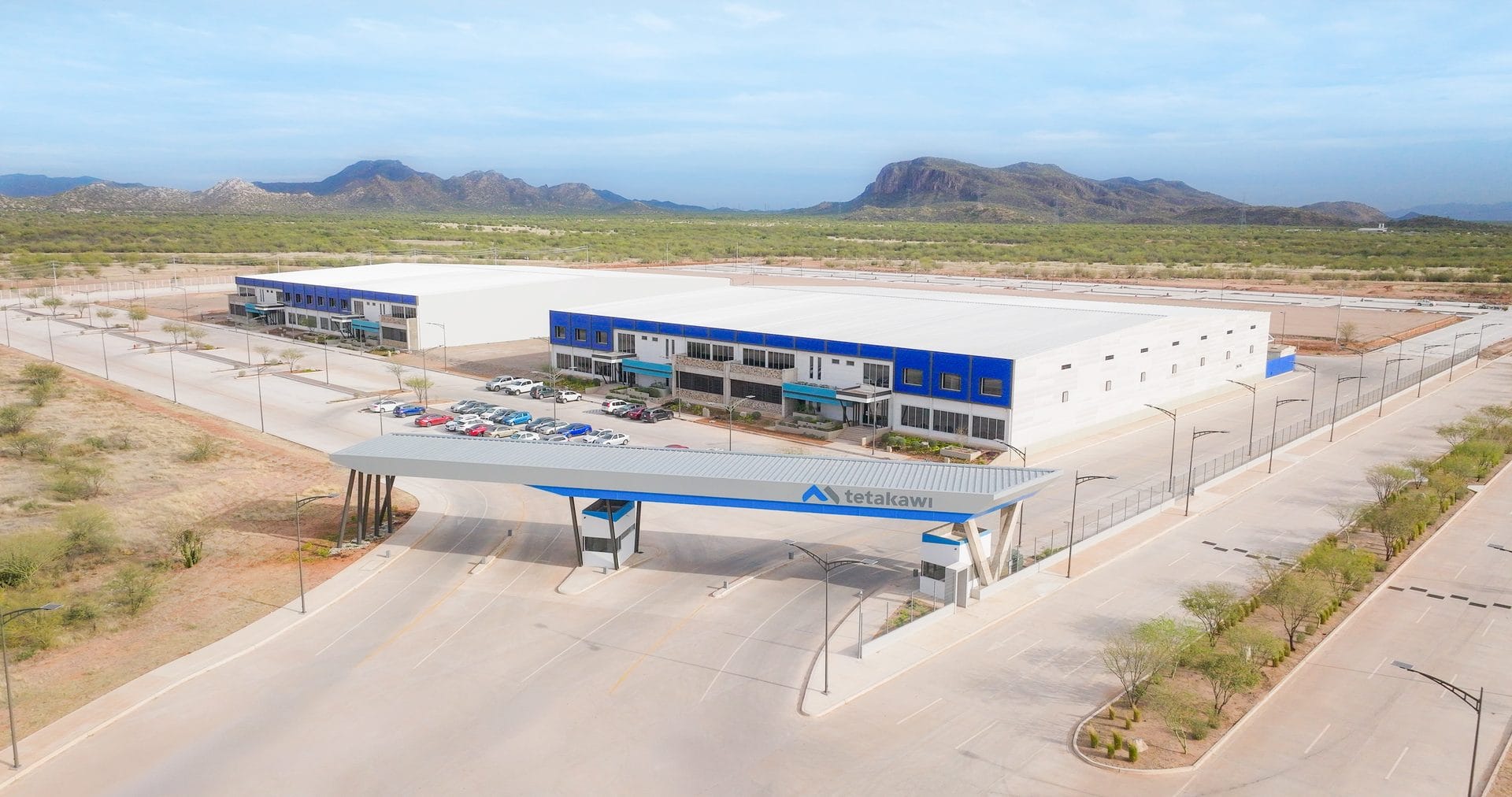
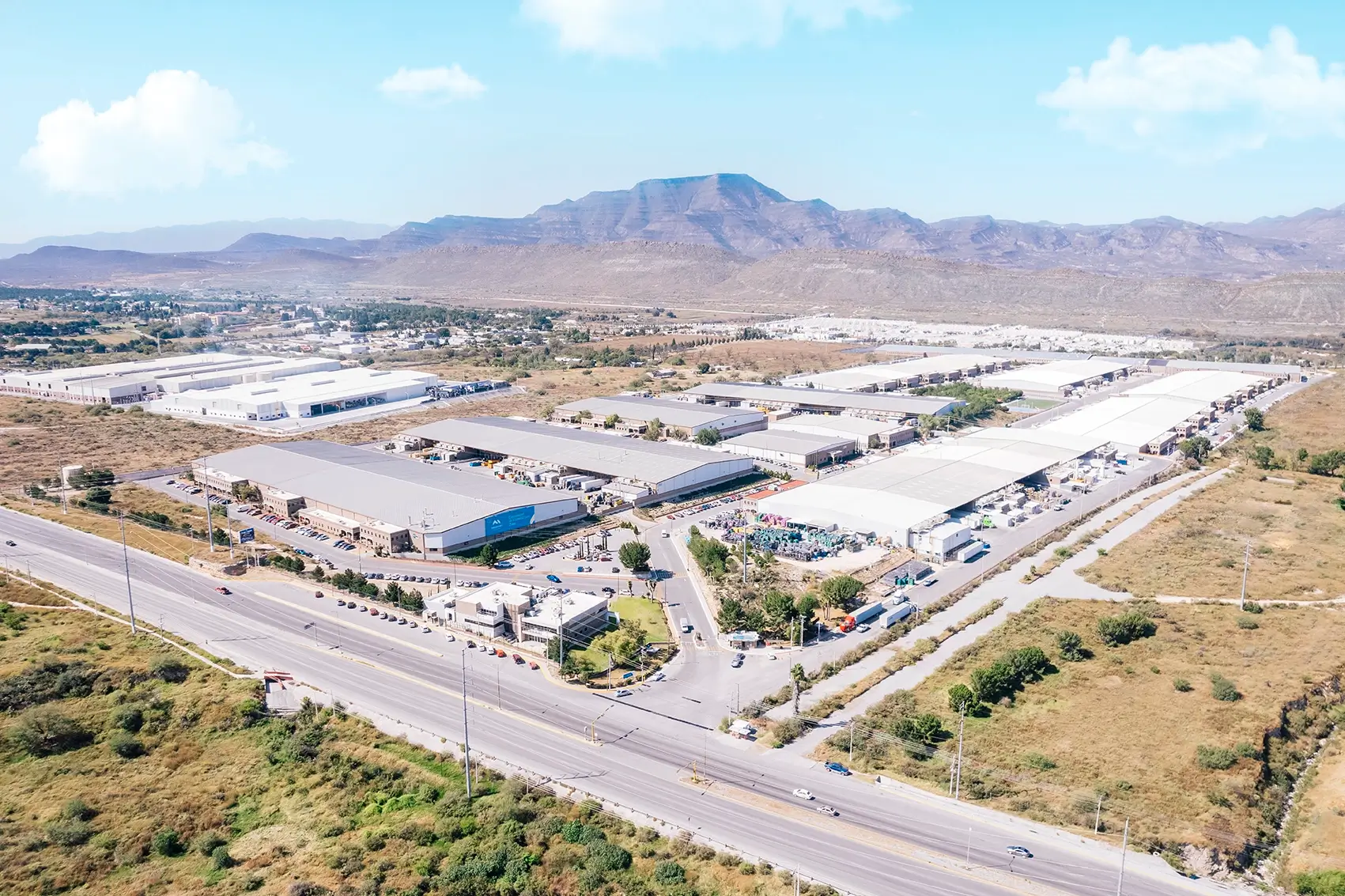
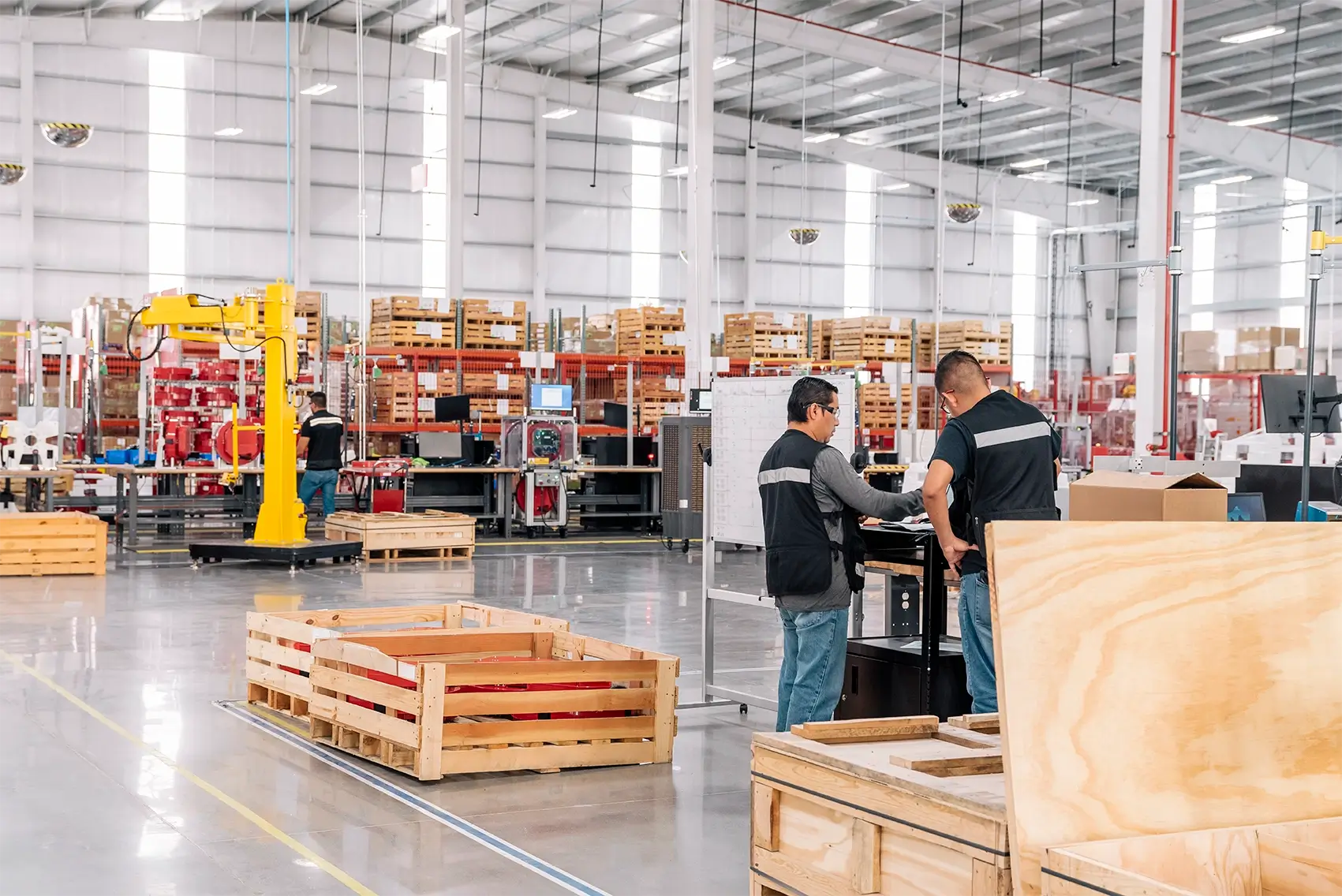
Everything Tetakawi offers is embedded in our Campuses. It’s how we remove the fragmentation and risk that make other setups so unpredictable.
Our Campus Model is designed to eliminate the guesswork of manufacturing in Mexico so you can launch and run your operation without costly surprises.
On-Demand Webinar
Mexico’s six manufacturing regions compared: logistics, demographics, and the cost factors that separate them.
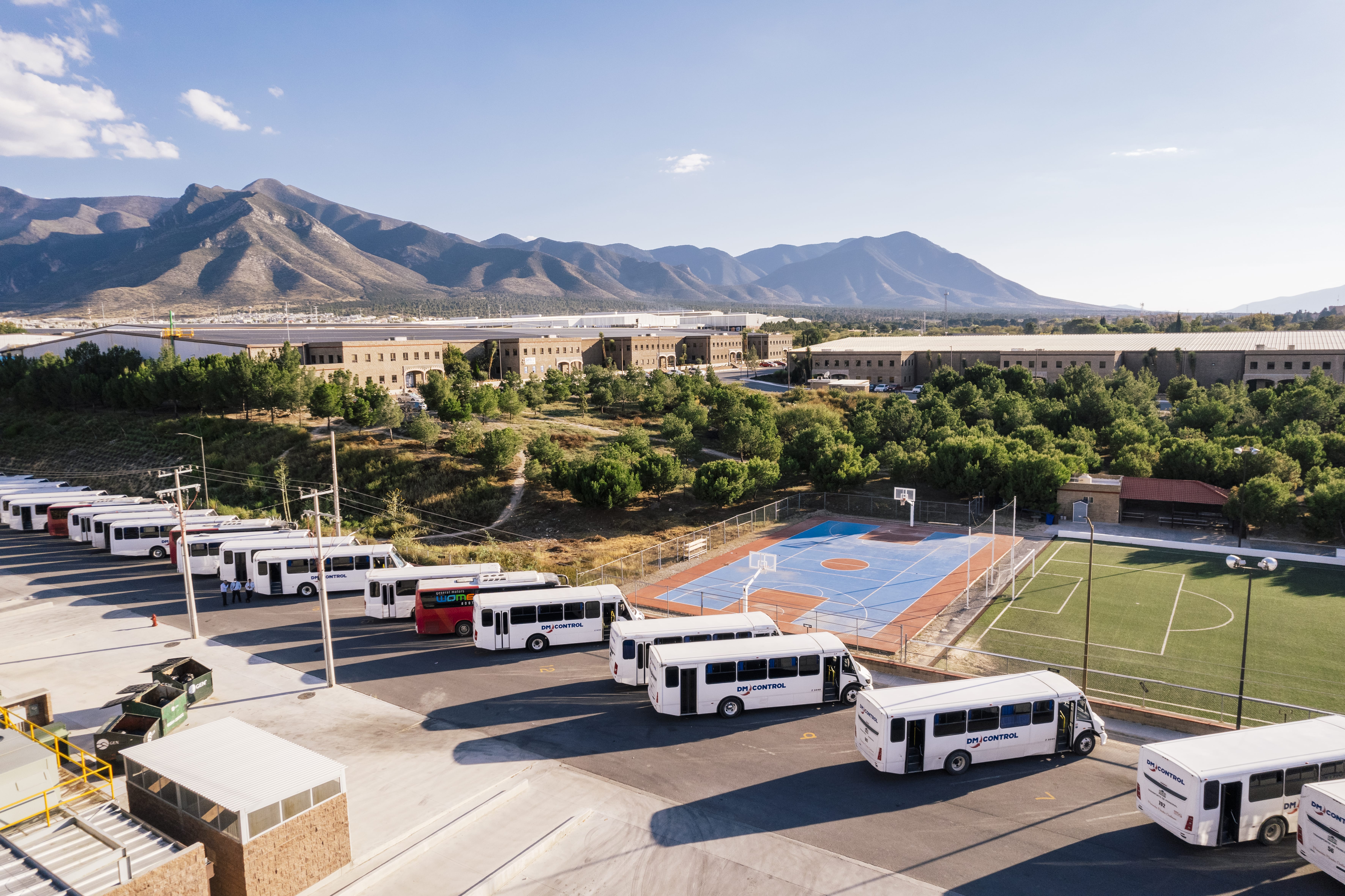
DAVE MCQUEEN: Welcome to Tetakawi's webinar, Choosing a Manufacturing Location in Mexico. As I'm sure most of you know, Mexico is a large country with a lot of potential choices for manufacturing locations, and it can seem a bit overwhelming at first. So what we'll do today is talk about some of the major differences between regions. And hopefully that will break things down to the point where you can choose a region that best suits your company and then drill down on the specific features that relate to your operation. So if we talk, first of all, about-- I'd like to talk, first of all, about who we are, just briefly. Tetakawi is a shelter service organization. That's a specific type of company in Mexico that has the ability to offer to foreign manufacturers a way to legally operate without permanent establishment under a program run by the federal government in Mexico. We, in addition to that, provide a wide range of administrative and facility services, as do most other shelter companies. And those help companies, foreign companies, to launch and operate in Mexico at lower cost and with considerably less risk. We currently employ 24,500 people in Mexico and the United States. Most of those people are in Mexico, although we're headquartered in the US. We're a US company based in Tucson, Arizona. We own and manage more than 5 million square feet of industrial real estate space. We also work with a number of third party real estate companies, and we currently support the ongoing operations of 75 companies in Mexico. At the bottom of this slide, you'll see some of our sister companies. Intugo is the brand name under which we provide office-based services, things like software help lines, engineering and software development operations, that kind of thing. So Tetakawi is factory based. Intugo is office-based. ILS is a third party logistics and freight provider, and that gives us a window on that industry and someone to partner with. And finally, DINISA is our property development arm that builds buildings and provides the facilities that we host ourselves. Our services fall into three areas. Our advisory services make use of our extensive database on operations in Mexico as well as our analytical abilities and the expert advice of our various domain experts. And we provide these advisory services not only to our shelter clients but to other companies who need just the information side of our services, as opposed to some of our operating solutions. Our manufacturing communities are our primary service. It's our oldest service and the core of our operation. These are dedicated industrial parks which exclusively have our clients in them. We provide facilities, admin services, and a whole range of shared support services so companies, really, can focus just on their operation. And pretty well, everything else is done by us. In addition, we provide startup services. These are similar to our manufacturing communities, in terms of the range of services, except that we're providing them outside of our parks in third party real estate. And that allows the plans to be flexible, and companies can customize to just what services they require and forever-- however long they specifically require those services. So that's who we are. Let's talk briefly about the shelter legal framework, just in case that isn't familiar to everyone. So the Mexican government allows companies to operate under this type of legal entity. And to do, so you have a foreign corporation, a non-Mexican corporation, which contracts with a shelter company. I've shown the US entity here because that's what we are. We're a US corporation. But you could also be contracting with a shelter company that is headquartered in Mexico. In which case, your contract will be a Mexican contract, not a US contract. That contract forms the basis upon which the Mexican government allows the shelter company to form a shelter IMMEX entity for the foreign company. It also makes the shelter company responsible for regulatory and legal compliance. Then the foreign corporation is allowed to set up a manufacturing operation in Mexico under the shelter company and operate it, essentially, as they would a subsidiary anywhere in the world, except that they don't have permanent establishments. So that's what a shelter is. It's a fairly unique legal entity option in Mexico. So let's talk, first of all, about location criteria. I think there are five things that are critically important to almost every manufacturer who looks at a new location. First and foremost, of course, logistics. How do you get your material in and out? How do you get goods to your customers? How do you get people in and out, and what does it cost to do that? Second thing that's a major importance is the availability of manpower. And this isn't just a question of whether the skill sets are available and whether you can hire enough people right now, but also what the future outlook is in whatever location you're going to choose. Local costs, obviously important. And they do vary from region to region in Mexico, so this can be a factor for an organization. Expansion opportunities. Almost every company that looks at a new location also sees it as an opportunity to expand their business. And this could be with their home market for people who need their services in the new location. It could also be that they're looking for opportunities actually located in that new location that are available to them by virtue of being there. And finally, the supply chain is critical. Can you get the goods that you need? Can you get them in the quality that you require, at the price you require in order to service your organization and provide the raw materials for your operations? So those five are critical to just about everybody. There are another five here that are important to most people but may not apply to every company. The first one is security. And I think most companies and most people are aware that in Mexico, there is-- from the news, there's a high level of narcotics violence, and there's some concern about that. You may also know that that's very localized, that it's not directed towards foreign companies or foreign individuals. But nonetheless, security may be a concern for you, and so we'll talk a little bit about that. Next is ease of access. So how easy is it to get your personnel in and out of the location if you're in a situation in which, say, a lot of technical personnel are going to be traveling regularly back and forth between the home location and the new location? How easy is that to do? How quickly can you do it if you need to? But also, can your customers get there if they need to? Can your suppliers get there if they need to? Can your service providers get there if they need to? So these things can be important to companies. Local amenities and housing. Obviously, if you have expats, this is going to be on your mind. An expat manager has certain expectations and certain comfort levels that need to be satisfied. But another way of looking at local amenities and housing is in terms of the attraction of senior management and technical people that you might hire in Mexico. Just as in the US, these people are mobile and can market themselves in just about any market in Mexico. So many times, the desirability of the location and the amenities provided by it are a factor in their decision of whether to come and work for your company or not. So you can look at it from that perspective as well. Is this a place where senior managers and senior technical people are going to want to live and are going to be willing to live and work for me? The types of facilities available could be important. Many Mexican markets we're going to talk about have a wide range of industrial facilities, as well as the opportunity to build to suit of specialized facilities of any type. But there are exceptions. You can find markets where there's relatively few small footprint facilities or where there are no large footprint facilities currently available, and the time factor to build one might be important to you. And finally, the availability of partners and services. Now here, I'm not thinking of raw materials and the inputs to your production organization. I'm thinking of the service providers that you might require locally who's going to fix your forklifts. Do you require local accountants? Are there medical providers that you need access to? That kind of thing. So in order to help illustrate what the choices might look like for an individual company, we created three hypothetical organizations. These companies are all based on actual clients. But for obvious reasons, we haven't named a client or made them exactly identical to a real company. So first of all, we have Modern Lighting. Modern Lighting is relatively small company, 80 employees in terms of manpower, currently, and resources. They do about $40 million worth of turnover. They're based in California. They source components globally but primarily from Asia and particularly from China. They ship mainly to the United States for their finished products. Very little goes elsewhere, and they have an unskilled assembly operation which they want to transfer to Mexico and perhaps expand a little bit but still buy a lot of their components internationally. Finally, because that's a relatively small part of their operation and they source so many components, they have a relatively low labor content. Next, we have Newtech Stamping, 300 employees, a mid-sized company, $80 million in turnover, a wide range of industries that they serve, based in Tennessee. They prefer to source locally if they can, because it helps them to meet their customers' schedules and their delivery requirements. They have customers currently in the Midwest, the Southeast, and in Mexico, so they already have a shipping presence in Mexico. They need skilled and unskilled people. And their skilled people, of course, are very specific to the industry that they're in, stamping, and so that's an important component for them, those people available in sufficient quantity. And finally, they have what I would call a moderate labor content because they do a lot of secondary operations as well as operating their presses, and so that's going to be a consideration in terms of the labor that they need, the unskilled labor. Finally, we have Global Automotive, a mid-sized company, a little larger. 1,200 employees, $300 million in turnover, based in Michigan. Obviously, an automotive company. They do source materials globally. They have a range of products, so they source a variety of materials. The plant will supply Mexican customers. It's an intent to focus on their Mexican customer base and provide them with local support, so that's the priority. They need a skilled and an unskilled workforce. One of the things about Global is, because they have a variety of products and a variety of processes, they need a variety of skills. So they may not need many, but they need them to be available locally. And finally, they have a high labor content as well because of secondary operations. And so finding enough people of the various types they require will be critical to them. We're also going to divide Mexico into six general regions. Now, there are many other options in Mexico, but most manufacturers are going to find that they're looking at one of these six regions. They're all to the north of Mexico City and in the north and the east and the west. That's the most industrialized area of Mexico. It's where most manufacturers are going to choose to locate, but keep in mind that there are other options. There are other possibilities. And depending on your industry, you may want to look beyond these regions. Most of you will want to choose one of these locations. So first of all, we have the border zone. This one stretches right across the country. It's the area within approximately 100 kilometers of the US border. Even though it stretches right across the country, it shares two things that are important, the first being, it's on the US border, and the second one being that there are some specific regulations that pertain to the border area only. Relatively few of them, but there are some, including, for example, the minimum wage, which is higher in the border zone. So it's important to consider that area as a single zone. So as you might recognize, Tijuana, Mexicali, Juarez, Nogales are in the border zone. The next area is the northeast. This is an area, of course, more than 100 kilometers from the border zone, primarily, the states of Nuevo Leon, Coahuila, and Chihuahua. It includes cities like Monterrey, Saltillo, Chihuahua, Torreon, that you may have heard of. This area, while it's close to the United States, is also the oldest industrialized area of Mexico, dating back to the 19th century. It's an area of relatively large cities and large populations and with a very long manufacturing history. So that translates into skills and availability of people. The northeast is another option. This is the area, again, more than 100 kilometers from the US border but close to the US border. It includes Sonora, parts of Baja Norte, and Baja Sur, Hermosillo, Guaymas-Empalme, Ciudad Obregon, or cities you might know in this area. And this area is more of a desert location, relatively smaller population, relatively shorter manufacturing experience, but there are some features about this area that can make it very attractive for some companies. Then we move to the Baj��o, as you can see, Central Mexico. The Baj��o refers to four states, Quer��taro, San Luis Potosi, Aguascalientes, and Guanajuato. This area of Mexico is historically a large agricultural producer but has been an area that's been industrializing rapidly for the past 20 years or so. Cities you'd probably recognize, Quer��taro, Leon, San Luis Potosi, Celaya. One of the things about this area, because it was an agricultural region before industrializing and because of the nature of the geography, there are a lot of smaller cities here. So unlike areas like Sonora, where there will be a city like Hermosillo and then a big gap before the next city, Guaymas-Empalme, you'll find a string of cities in this area. And so there are a lot of different choices here, ranging from relatively small cities to larger ones. Again, central Mexico. This is Mexico City, what I call near Mexico City because Mexico City itself, although it's a huge population and a lot of things go on there, obviously, but the congestion of the city itself means most manufacturers are not going to want to locate in Mexico City. But they may very well consider the areas around there, the state of Puebla, Toluca, Estado de Mexico. Again, some areas have long histories of industrialization. Volkswagen was in Puebla in the '60s, for example, and they're still there. So there's opportunities in this area, of course, getting further from the United States. But you're still in the heart of the Mexican population and production area. And finally, [INAUDIBLE] city, Guadalajara. Guadalajara is in the state of Jalisco, which is mostly not industrialized. But Guadalajara is a very large city and a very specialized city in Mexico. It has two things that are important. First of all, it is the distribution hub for Mexico. So in terms of servicing the Mexico market, particularly, the Mexico consumer market, Guadalajara is the hub to be in. And secondly, the concentration of software and electronics activity in Guadalajara is unmatched anywhere else. It's essentially the Silicon Valley of Mexico. So it may be attractive to people for one of those two reasons. So those are the six regions we're going to talk about. Now, let's move on to logistics. I want to give you a quick overview, in case you're not familiar with Mexico, in terms of what's available. So this is a map of highways. And a couple of things you can draw from this. First of all, I'd like to point out that there are many very sophisticated multi-lane highways in Mexico. There's good infrastructure of roadways available to transport goods. And the second thing to note is that that's integrated with the North American system. So it's seamless. You cross borders, but it's seamless. You can put goods on a truck in Guadalajara and drive them all the way on multi-lane highways to Montreal, if you want. They radiate from Mexico City, the roads in Mexico. So east-west roads tend to be a little less common. And therefore, east-west transport is a little more difficult than north-south, and that's something to bear in mind. And then finally, just as I said earlier, the infrastructure of roads is very good. And in any major city, you're going to find an extensive connection of multi-lane freeways. Railways are similar. Mexico does not have a passenger rail system, but their freight system is very, very south Again, it tends to run north-south from Mexico City and radiate out from Mexico City, rather than east-west. But there's good connections to the ports. There's good connections to the US rail system and in fact, all the way up through Canada. So again, a seamless shipping opportunity throughout North America. Ocean ports are spread throughout Mexico, but the primary ports are Manzanillo on the Pacific and Veracruz on the Atlantic. These are the main and largest container ports in Mexico. There are a number of other ports. Some of them are feeder ports, where you can move containers from one of the major ports by ocean if you want. Some of them are container ports in their own right. In addition to the Mexican options, if you're located in the north of Mexico, then Los Angeles becomes an option on the West Coast and Houston on the East. So let's sum that up and compare our regions. So first of all, the border zone. As we know, it's 0 to 100 miles from the US. And obviously, it's the best for US access because it's right on the border. It's definitely not as good for the Mexican markets. You're at the extreme end of the country. But also, the markets themselves tend to be more concentrated towards the center of Mexico. So it's not as good if you're shipping to Mexican markets. It's probably a good choice for Modern Lighting because of the access from the US, particularly if they choose the West Coast. But it's maybe not a very good choice for anybody else. The northeast, you've got 100 to 300 miles. So even at the 300-mile mark, it's reasonably accessible to the US, particularly the eastern US. The Mexican markets are not too far away, but it's not as good as some other options for accessing Mexican markets or ports, particularly Pacific ports. But this might work for Newtech Stamping. The northwest, 100 to 300 miles. Again, good for access to Arizona and the western United States. Mexican markets, like the northeast, are further away. And the eastern US is further away. So if that's a factor, that might be important. Once again, this could be on Modern Lighting's list, though. The Baj��o, 350 to 500 miles. So we're getting further away. This is starting to get into an 8 or 9-hour truck trip, just to get to the border. Mexican markets and ports are very close. By virtue of that location in the narrow part of Mexico, the Baj��o has access to both the Atlantic and the Pacific ports. That's very good. US markets are not as close, so this might not work for Newtech Stamping. But since Global Automotive wants to focus on the Mexican markets, it could be a good choice. Mexico City, much further away. We're now talking about pretty long distances to the US, so that can be a factor. Mexican markets, again, are very close because you're in that center of population. Ports like the Baj��o, very close. Not so good for the US, but maybe it works for Global Automotive. And finally, Guadalajara, 800 miles away, a long distance the US market. But as I mentioned, it is the distribution hub for Mexico, so great access to both Mexican markets and east and west ports. Again, possibly a choice for Modern Lighting. And as we'll see, probably not as good for anybody else. I want to give you a quick overview of population before we start talking about each region. So as you can see, we've been seeing this a few times. The concentration of population, these darker zones, is around the middle of Mexico, clustered, essentially, around Mexico City. As you move north and south, you move into regions of less population density. The northeast is more populous than the northwest. And then there's a central area here that doesn't have a lot of population. But we haven't included it in any of our regions, either. So that gives you a general idea of where people are in Mexico. But of course, most people are going to be thinking about not just the general population but specifically, the city that they're located in. So what does that look like? Well, in the border area, the largest city is Tijuana at approximately 3 million people. Juarez and Mexicali are between 1 million and 2 million. And then you have a bunch of smaller cities under a million, Matamoros, Ciudad Acuna, Reynosa, and Piedras Negras. So depending on what you're looking for, there is a large urban concentration there in Tijuana, Juarez, and Mexicali, but then you fall down to much smaller areas. In the northwest, you have a very large city, Monterrey. 4 and 1/2 million, approximately. It's the second largest city in Mexico. And it happens to be very close to Saltillo. So the Saltillo-Monterrey axis is an urban area that has a large population, Saltillo adding another million people. So there's a big urban concentration there and a market with a considerable amount of services and capability. Torreon is a large area-- about a million and a half-- that's a little further away from the other two cities. And Chihuahua sits on its own at about 750,000. So again, some choices with a large concentration. Or if you're looking for a smaller concentration, then that might be available. In the northwest, as we spoke earlier, the population is lower. Hermosillo is approximately 1 million people. And then there's a much smaller cities, Guaymas, Empalme, and Ciudad Obregon. But once again, there are opportunities there. Although, if you're looking for a large urban concentration, that's not going to be where you're going to look. In the Baj��o, as I mentioned, it's a somewhat different landscape. There's a couple of large cities, Quer��taro and Leon, San Luis Potosi, Aguascalientes. But the one thing about the Baj��o that's different is that there is a lot of mid-sized cities. And many times, they're very close to these larger cities. So it's an area with a lot of different options in terms of location and types and sizes of cities that you can operate in. Mexico City, of course, is huge. But as we mentioned, the congestion there is probably not going to put it on anybody's list to actually manufacture in. Other businesses, yes. Manufacturing, probably not. But then you have some larger cities, Puebla, in the state of Puebla, Toluca, south and a little bit west of Mexico City. And Cuernavaca is a possibility as well. So a relatively populous area and a relatively small area, but you want to move towards the edges of it. And finally, Guadalajara is about 6 and 1/2 million. So on its own, it forms a very large area. So this gives you an overview of what the population looks like. Let's talk about how the manpower compares, then. The border area, high manufacturing experience, by virtue of its proximity to the United States and the long history of manufacturing there. High level of skilled personnel as a result, but the lowest availability and the highest turnover. This has to do with the fact that it is on the US border, but also with the level of transients and competition in the area. It's probably still a good choice for Modern Lighting. They have a relatively low labor requirement. And so probably, they can manage this. But if they consider the border, they are going to have to put in place plans to manage the recruiting effort required and the turnover risk. In the northeast, the highest level of manufacturing experience. As I mentioned earlier, the northeast has been industrialized since the 19th century. It has a large population area, particularly that Monterrey-Saltillo access to areas, very high. So highest level of manufacturing experience. It's a very high level of skilled personnel as well. Availability I would call moderate. It's typical of much of Mexico Manufacturing, not low turnover and not a lot of people available but manageable. It's certainly a good choice for either Newtech Stamping or Global Automotive. The northwest hasn't been industrialized as long. Therefore, it has a lower level of manufacturing experience, a lower level of skilled personnel availability. And particularly, specialized skills might not be available in the northwest. You might find a welder, but maybe a specialized tool maker is much more difficult. The availability of people is moderate, similar to the northeast. And one of the things about the northwest, it has the lowest turnover. This doesn't mean it's zero and you still need to manage it, but it has pretty much the lowest turnover. It could be a good choice for Modern Lighting. There are other reasons why it isn't a good choice for some of the other companies. Baj��o, a moderate level of experience and skilled personnel but growing. And that's one of the key features of the Baj��o, is that the capability is expanding. Availability is high, relative to the other areas. And that's because the Baj��o is one of the few regions, particularly the state of Quer��taro, where there's inward migration. Mexicans, particularly at the unskilled level and lower skilled levels, don't tend to move around in order to find work. They tend to look locally. So even within a city, they may not be much movement between neighborhoods. Consequently, in the Baj��o, what we see is something different than that. There are people moving in from the states of Michoacan, from Mexico City. And so that helps to reduce the turnover and improve the availability. And that's a unique feature of this region. Good choices for Newtech Stamping and Global Automotive, from the point of view of availability personnel. Mexico City, again, a relatively high level of experience and skilled personnel, relatively low availability because, primarily, competition and the other options that are available to people. Moderate to high turnover. It can vary. One of the things about availability and turnover, by the way, is it can vary considerably between cities and even between neighborhoods within cities. So we can make a general statement about a region. But when you start looking at the individual cities or individual locations, you might choose in within a city, you may find variances there. And it's something to look at when you start drilling down. And finally, Guadalajara has a very high level of manufacturing experience and skilled people but specialized. As we mentioned earlier, electronics, software development. If that's the kind of business you're in, Guadalajara is the place to go. If not, then you may not find quite the same availability personnel. And so availability is moderate. Turnover is moderate. There;s a fair bit of competition for people in that area but manageable. Could be a choice for Modern Lighting, probably not for anybody else. So before we compare costs, let's talk about what does change with location and what doesn't. Wages and benefits definitely do. And as I mentioned just a few minutes ago, wages and benefits can change even between neighborhoods within a city. So wages and benefits are definitely variations. One example might be if you locate in an area close to a major OEM automotive plant, you might be compelled to offer paid lunches and cafeteria service. Whereas if you locate a little bit away from there in the same city, that may not be common at all. So there's some important differences even within cities. Certain regions are going to have much higher benefit expectations than others, the border being the best example. Real estate varies, although once again, the variation between locations within the city, between cities, or between neighborhoods can be more significant than the overall variance. But we'll talk about the overall variation. And finally, state and local taxes. Now, I'm not going to drill down on that because it's not a very significant thing, but there is a state payroll tax that provides most of the revenue for the states from companies. That tax is between 1% and 3% of payroll. It does vary from state to state, but it's not a significant or huge factor. Nonetheless, you want to be aware that it is different. So when you start drilling down, you want to make the inquiry. What's the state payroll tax rate in the state that you're considering? What doesn't really change? Well, utilities don't really change, with the exception of gas. I'll talk about that in a minute. But electrical utilities. There are different rates throughout the country. But essentially, the national utility, CFE, adjusts the basic rates to allow for the different degree days of cooling. So it tends to even out. If you're in an area with a slightly lower rate, you probably need more electricity for air conditioning than an area with a slightly higher rate. A bigger concern will be time of use, demand charges, power factor charges, that kind of thing. The same is true of telecommunications, generally, about the same rates no matter where you are. I mentioned gas is different. Now, I don't consider gas a utility, because it's really not used in Mexico for heating. It's used as a process input. If you do need gas as a process input, it does vary depending on the providers and whether you're on a line or how near a gas line is. So if you use gas as a process input, you definitely want to investigate what's available at the location you're choosing and what it's going to cost you, because there could be some significant variations. And finally, federal payroll taxes do not vary. Labor law is federal in Mexico. So wherever you go, it's going to be pretty much the same. The only difference is the minimum wage, which, as I mentioned earlier, in the border zone, there's a higher minimum wage. But almost every manufacturer is going to be paying higher than minimum wages in all zones anyway, so it's not a big factor at this point in time. It's not an issue you need to worry about. So federal payroll taxes are not an issue. When we're talking differences in benefits, we're talking about company-paid benefits. So let's talk some wages. This is a recent survey done by our organization for each of these regions. And you can see, looking at this, that the border zone has not only higher base wages but higher benefit rates and therefore, higher benefit cost as well, by a significant margin. And that's something you can expect. There's also a complexity in managing those benefits because, for example, as I mentioned, the provision of meals and cafeteria services, which is a complex benefit to manage, is expected in the border zone, almost universal. Whereas in these other areas, it may not be a requirement and may not be common. And you can avoid that complex benefit administration. In the other areas, you can see that an area like the northeast is a little bit higher than some of the other areas, as is Guadalajara. But they're all in kind of the same range, and you'll probably find local variations as well that might level that out even more. But essentially, there's not a lot of difference, but there's some. When we start looking at skilled people, things change a little bit. Again, the border is the highest. But you can see in this that Guadalajara jumps up because welders are actually not that common a trade to require in Guadalajara, being an electronics and software area. And so they can command a higher wage. You can also see the northwest has climbed up considerably. And as I mentioned, that's an area with less manufacturing concentration, so skilled people are in a little bit more demand than they are elsewhere. The same sort of thing happens with a maintenance technician. But in this case, you can see that northwest has an extremely high rate compared to the areas, with the exception of the border. And that's reflects the availability of that particular skill set in that region and the demand for it. The border, once again, higher than every other region. And also, you can see Guadalajara tends to be a little higher as well for that particular skill set. So moving on to real estate, then. I mentioned there is some variance. Now by the way, we're looking here at US dollars per square foot, per month, triple net. That's a common way of quoting in Mexico. And many leases are, in fact, denominated in US dollars. Some are in pesos. Some landlords will give you a choice, but it's not uncommon to find a US dollars as the currency used on a lease. And per square foot per month is the common way to quote rates. You can see from this graph that the border zone is, on average, higher than other regions. And that's something that's going to be an expected situation there, I think. Mexico City is also a little higher, and Guadalajara is as well. Those are big cities, and that partially reflects the locations available in those regions for our facilities. As I mentioned, the prices are going to vary more widely, depending on your specific location and the type of building you choose, than any of these averages might indicate. But you can expect the border is going to be higher, and locating in a major city is going to be a little higher. Another thing I should mention about real estate is that if you're looking to purchase land, some markets, Guadalajara, for example, are very closely held. So while there's plenty of leasing properties available and you may even find plenty of opportunities for built-to-suit lease, purchasing land could prove to be difficult. There may not be much on offer, and the pricing could be high. In other markets, you're going to find purchasing land is not an issue. So in most markets, you can readily find leasable facilities. You can readily find build-to-suit opportunities with a leaseback. But some markets will not have very good purchasing operations, opportunities, whereas others will. So let's try and bring all this cost comparison stuff together. First of all, in the border area, as we saw, the wages are the highest in every category, as are the benefits. Real estate is higher, although there's significant variation within any of these markets. So depending on what you're looking for, you may still find an acceptable price. This remains a good choice for Modern Lighting. They're not as sensitive to the wage rates, and they don't need a lot of space. So their real estate option is probably not a big factor, the difference in costs there. In the northeast, all of these things are moderate. It could be an option for Newtech Stamping or Global Automotive. In the northwest, we have low, unskilled wages but high skilled wages and benefits. So that kind of rules out Global Automotive and Newtech Stamping from a cost perspective, although real estate is low. So if either one of them required a very large facility, that might start to be an advantage. Once again, Modern Lighting could use this area, but it doesn't look all that good for the other two companies. The Baj��o, low, unskilled wages, moderate to low skilled wages, moderate benefits, moderate real estate costs. And as we mentioned earlier, the turnover is relatively low. So this looks like a good option, and maybe Newtech stamping would see enough benefit here to outweigh some of the other advantages. Certainly, Global Automotive should be looking at Baj��o. Mexico City does have the lowest wage for unskilled, moderate to low and skilled, and benefits tending towards the higher end on real estate. But again, remember, there's a lot of variation within that. It could be an option for Global Automotive. And finally, Guadalajara. Low, unskilled wages. So if that was the only factor, they probably are very competitive. But as you get into the skilled wages and benefits-- and we didn't mention it for professionals-- the cost tends to be higher. And real estate's moderate to high. So really, I've said Modern Lighting could consider this. But really, it's starting to be the case that unless there's a specific advantage, either the distribution capability in Guadalajara or the strength in software and electronics, probably, Guadalajara is starting to fall off the list for these companies. The next thing we talked about was expansion opportunities. So we've got these companies. They've looked at where they want to be from the point of view of logistics. They've looked at costs. They've looked at availability, manpower. But what's their chance to build their business? And in the case of Modern Lighting, that's not very important. But for the other two companies, it is. Now, as you can see, there's clusters throughout Mexico. There's even some down in areas we don't normally-- that we haven't been considering, which aren't normally on the list for manufacturers. But the key thing is that there's some differences within these clusters, and those might be important to your company. So let's talk about how that pans out, in terms of the key clusters. First of all, in the border area, a large electronics cluster, particularly in Tijuana, that's historical. So it's definitely a major electronics area. It has some automotive. And depending on the city, that might be medium or low. It has some aerospace, mostly connected with California and the proximity to California. And one of the things we don't have, a medical company in the list. But the border, particularly Tijuana, has the largest medical concentration, again, the proximity to California being a factor. But relatively small and metal manufacturing. It historically has been more of an assembly area than a metal manufacturing area. So it's certainly still a good choice for Modern Lighting, but there's nothing really huge here for anybody else. In the northeast, there are some electronics, but it's not the significant industry there, but automotive is the largest area. Even though there's significant automotive, as we'll see in the Baj��o, the northeast has the greatest concentration of assembly capability and a lot of secondary manufacturing in both Saltillo and Monterrey particularly. So it's definitely a very large automotive market. It's a medium aerospace area. There's some aerospace production that goes on there. It has some medical, and it is a very large metal manufacturing area, including actually producing steel and aluminum. So definitely for Newtech, this is starting to look like the place to be. The skill sets they require will be there. The suppliers they require will be there, and the markets that they want to serve are available to them. The northwest, not a big electronics or automotive concentration, although Ford Motor Company has a plant in Hermosillo, but a large aerospace concentration and particularly focused on engine component manufacturing. So if you're in the machining business for engine components, for jet engines, the northwest should be right near the top here list. It has some medical. Again, proximity to Arizona helps with that. Not much metal manufacturing. On our list of companies, still a good option for Modern Lighting or an option for Modern Lighting, but really nothing to get excited about for Newtech or Global. The Baj��o has some electronics again. It has a very large automotive structure, although now we're talking about the Mexican market more than the US market. So the Baj��o has companies which supply Mexican manufacturing plants primarily and has-- in fact, Quer��taro has the largest concentration of tier one automotive suppliers of any city in Mexico, but they're shipping primarily to Mexican assembly plants, not north into the US or Canada. It has a large aerospace cluster but concentrates on airframes and landing gear and things like that rather than engine components. So Safran and Bombardier are both in Quer��taro, for example. Small, but there is a medical device manufacturing there. And there's some metal manufacturing. Good choice, again, for Global Automotive. Mexico City has almost all of these areas but relatively small aerospace opportunity. It has as a medium to large medical opportunity, although it doesn't pertain to our example companies, and has some metal manufacturing. It's a large area, so Global Automotive could locate here, too. And finally, Guadalajara. Of course, as we said, the largest electronics but relatively small in automotive and aerospace. In medical, they have a very significant presence, medium at least, medium to large, but mostly in pharmaceuticals. And finally, metal manufacturing is relatively small. So let's look at the supply side of things. Now, we've talked about the manpower. We've talked about logistics. We've talked about the opportunities for expansion. What about getting raw materials? And this slide is a little bit dated, but the general trends continue in Mexico. And what it's showing you is that the demand for almost every process and every type of sub-tier supplier outstrips supply in Mexico. And what's happening is, as the demand grows and the supply grows, that gap is remaining. So almost any component that you can think of or sub-tier process, there's a good chance that Mexico does not have a sufficient supply base to supply all of the needs of all of the people who want it. On the other hand, you are integrated into the North American Free Trade zone. And so in many cases, you can find suppliers in the United States or Canada that can supply just as competitively as other international options. And of course, they come in without duty. So when looking for suppliers in Mexico, you need to look North America wide, not just Mexico. The other thing about the supply chain in Mexico is that the contract manufacturing options are relatively few. There's a few industries with some players there, electronics, clothing, cotton, but there's not a lot. It's not like China, where there's a well a very well developed contract manufacturing industry. So that isn't available in Mexico. So how does this pan out for the different regions? Well, the border zone, you've got great access to us suppliers. And as I said, many of those US suppliers are going to be competitive with Mexican suppliers or overseas suppliers of components. Great Asian sourcing. You want to bring things in from Asia, from China, very accessible. Really poor for European suppliers and really not good for finding Mexican suppliers, except that they're very local. For Modern Lighting, this works out fine. They mainly need their Asian sourcing to support their assembly operations. The northeast, the strength here is, certainly, US suppliers are available and Mexican suppliers are available. It's not bad for Asian suppliers or European suppliers, but remembering that port access isn't ideal, it's a little less advantageous as some of the other zones we've talked about. But it certainly could work for our other two companies. The northwest, great for US again, particularly if you're talking western US. Great for your Asian suppliers because you're close to the Pacific or on the Pacific. Not good for European, not good for Mexican suppliers, except locally. So once again, it really only works for Modern Lighting in our group of companies. Baj��o is getting kind of far away from the US, but it's still an option. And we've had clients that have sourced components in the US. One of them sourced steel, for example, more economically from the US than they could from anywhere else and delivered to their plant in the Baj��o. Asian suppliers are pretty good because you're close to port. Same with European. And of course, you're in the heart of the Mexican supplier opportunities. Mexico City is a little poor on the US suppliers. You're far away, but you're still close to the ports, and you're in the heart of the Mexican supply chain distribution network. And finally, Guadalajara is very similar, a long way from the US. But you've got that port access, a great distribution hub, and so that could work for some of our companies. So let's move on to some of the secondary considerations that may not pertain to all companies. Now, I talked earlier about security. And I said that narcotics violence is the source of most of the homicides in Mexico, that it's not directed at foreign companies. It's not directed at foreign individuals. It's mostly focused on other narcotics people and law enforcement people, legal people, and journalists. That said, it's also very localized. Most of the violence occurs in very localized areas, not unlike the US, where Chicago, for example, has a significant amount of narcotics violence. But it tends to be concentrated in particular parts of the city not spread over the entire area. So that's the case in Mexico as well. Having said that, though, we do have differences in different areas. The differences tend to be city specific. Again, the violence tends to be localized, so it tends to be city specific. So I've shown four cities here and compared them to Chicago and Los Angeles, as to US options. Chicago's about middle of the pack in the US. Los Angeles is on the lower side. Whether that surprises you or not, I don't know, but it is. So we have Quer��taro in the Baj��o region with a very low rate of homicides, a very safe environment, similar, by the way, to New York City, if you want to us comparator, although New York City is rising right now. Coahuila, which is in the northeast, in Saltillo, which is in the northeast, has a slightly higher level of intentional homicide, a little bit more activity there, but still in the range of Los Angeles, comparable to Los Angeles. So relatively safe by US standards. Sonora, Hermosillo, higher again. And this reflects the fact that in the desert areas of Sonora, there is a significant amount of narcotics activity, and some of it spills into the city. But still, less than Chicago and less than some other US cities as well, which are higher than Chicago. Detroit, for example, is quite a bit higher. And finally, we have Baja California, Tijuana, and in this case, the number is quite high. So Tijuana and most of the border cities are going to see high levels of crime, higher than most US cities. You're still not likely to experience any particular issues. Thousands of people visit Tijuana every day from the United States and have no issues at all. But if you're concerned about the fact that it does exist or concerned about your operation, then Tijuana is going to be an area you might not be as happy locating in. There's information available on most cities and most regions of Mexico. And so when you get to the point of considering your location, that information is available on a city basis or, in most cases, on a city basis to determine whether there's any particular issues in the region you're choosing. Ease of access we talked about, and this usually boils down to major air hubs. So in Mexico, Tijuana, San Diego, Monterrey, Mexico City, and Guadalajara are the primary hubs in Mexico. Any one of those provide pretty good access, particularly Mexico City, which then allows you to get to smaller locations. On the US side, Houston is a great hub. It provides excellent access to a lot of cities, including some secondary cities in Mexico. Atlanta's not bad. Chicago, Phoenix, and Los Angeles round that group out. So if you can coordinate through any of these hubs, you're going to have an easy time of it. If not, you probably want to look at the specifics and determine what would be involved in getting to wherever you're trying to locate. And of course, remember, each one of these-- and Monterrey is a major hub. Saltillo is 45 minutes away from the airport by highway, that kind of thing. Mexicali is close to Tijuana and so on. So you'll notice that the Baj��o does not have a hub. But Mexico City is so close by that most people go through Mexico City and then either get a connector, or they drive to wherever they're going. So that gives you a picture of the access situation. With buildings and amenities, I'd like to, first of all, point out that every company is going to have a different requirement. You need to look at buildings very critically in terms of what services are included, what access there is. You'll find very low rental rates offered, sometimes even free, from state governments or some municipalities. But in many cases, those are un-serviced locations, and you're going to be responsible for the cost of providing the services to that location. That can happen, though, with other buildings as well. So it's important to look. When you're looking at buildings and looking at specifics of buildings, you need to inquire what services are available, what costs you have to pay to get those services to your facility. And you can find things, like, there isn't enough water main volume to deliver your water. There isn't enough transformer capacity to bring the power from the mains. And that can happen in a city as well as outside. So compare locations with a very critical eye. Same with road access. Sometimes you'll find very poor road access. In other cases, you're on a main highway. So important to be very critical of that. Availability. If you're looking to land in Mexico inside of, say, eight months, then a built-to-suit isn't an option for you. You're looking at an existing building. But if you've got the time, then in six to eight months, you can usually have a building built to your specifications and ready to occupy. Some other things to look at, housing. That's maybe expat housing, but also the senior managers or the senior technical personnel. What's available? What's it cost? Schools in Mexico. All of the senior people, as well as expats, are going to want to go to private schools. And so what private schools are available? Are there English language schools available? That kind of thing could be a factor in your decision. The hotels and restaurant situations. A lot of different options in most Mexican cities. In the [AUDIO OUT] AIDA SAMUEL: Dave, can you hear me? I think we've lost your connection. We'll give it a few minutes and see. We'll give Dave just a few minutes to see if he can connect again. If not, I will continue with the presentation here. We're just about done. Thank you, everybody, for your patience. I'm giving Dave just a little bit to see if he can try to reconnect. All right, we'll give Dave a few more minutes. We are just about done. We have a few more slides. So I think I will go ahead and share my screen and we can keep going. So we don't lose a lot of track of time. DAVE MCQUEEN: We talked a little bit about amenities and facilities. So in terms of buildings-- AIDA SAMUEL: I think you could probably now see my screen. Please let me know in the chat, and make sure that you can see my screen. And I'll go ahead and get started, and we'll continue with the last few slides. So I'm going to go ahead and get started and just continue from the slide that Dave had before. DAVE MCQUEEN: We talked a little bit about amenities and facilities. So in terms of buildings, there's a number of things to consider. I mentioned the services. When you approach buildings, what services are provided? And there can be some things that are considerations in the United-- --say, it's like, is there enough water available if you use processed water? Is there even a gas line available if you use natural gas? There may not be. What's the road access like? And once again, sometimes low-- --across properties are relatively inaccessible. If you've got a lot of traffic coming in and out, it might not be too convenient. In other cases, it's you're on a major highway. What's the availability? If this is crucial to you, built-to-suit is going to take six to eight months to be ready. There's plenty of people in Mexico that will do a built-to-suit. Plenty of them will do it on a-- AIDA SAMUEL: Dave, I think you are back. DAVE MCQUEEN: Partners and services is a-- AIDA SAMUEL: Dave, I think you are back, so I've stopped sharing. DAVE MCQUEEN: I am back. Do you want me to resume where I was, or did you-- [LAUGHS] AIDA SAMUEL: If you would, please. Just slide 28. We can continue from there. DAVID MCQUEEN: Sorry? AIDA SAMUEL: Slide 28, if you would like to continue there. DAVID MCQUEEN: I can, yes. AIDA SAMUEL: Wonderful. Thank you, everybody. DAVID MCQUEEN: I'm sorry, everybody. AIDA SAMUEL: Thank you, Dave. We're just waiting. I think you're going to do the screen share again. There we go. DAVE MCQUEEN: OK. There we go. Everybody got that now? Can you see it, Aida? AIDA SAMUEL: Yes, we can see it. Thank you, Dave. DAVE MCQUEEN: OK. I apologize for that. I'm not sure what happened, folks. OK. So as I said, buildings and services. I think we had that section where I was talking about the fact that you need to make sure what services are available. We were moving on to amenities. And so I think the last thing I was speaking about was hotels and restaurants and the comfort of your staff. There's also the question of English language services and what leisure activities are available. And that's not just a gain for your expats but also for the staff that you're hoping to attract and for your employees. Now, one of things I'll draw your attention to, on the right, you can see one of our industrial parks. And you'll see there's a playing field in there. So you may have the opportunity with us or with other people to join a park where some leisure amenities are provided for the employees, and that could be an attribute. Let's talk about partners and services in Mexico. The thing to remember is that there's a higher distribution cost. So the purchase of distributed goods, they may be more expensive than they are in the United States, particularly for things that are less commonly used. But on the other hand, services are much more economical because wages are lower. That said, there are most North American brands and international brands that you're familiar with. But the key takeaway here is, whatever it is that's critical to your organization, you want to make sure that's available, particularly if you're looking at a smaller city as opposed to, say, Monterrey, Saltillo, where you can be pretty sure just about everything is at hand. But if you're looking at one of the smaller cities, then you maybe want to double-check that what you need is available. So where did our three companies choose to go? Well, Modern Lighting chose Tijuana. It's on the border, easy for them to manage. They don't have a lot of resources, so they can get their personnel back and forth from California. And so that's attractive. It's also close to their market. They ship to the US primarily. And that Asian supply side is important. They've got ports right there, so it's going to be very easy to get what they need. And then we looked at services. And of course, those are available not just from Tijuana, but familiar service providers in California are close by as well. So that was their choice. They're going to have to manage that turnover. They're going to have to manage the recruiting problems. They're going to have slightly higher costs, but it works for them. Newtech Stamping looked at Saltillo as their choice in the northwest. Good access to the US, and they still ship a lot of goods to the US from this factory. They have access to Mexico. In fact, they can serve all the way down through the Baj��o, which is reasonably accessible to them. So that's good for them, not only from the point of view of their existing Mexican customers but in terms of growing opportunities for their business in the industries that they operate. The skilled workforce was a main driver, particularly in the metal industry, which is their industry. And the availability of local suppliers was a critical factor for their choice of Saltillo operation. Global Automotive chose Quer��taro in the Baj��o. Right in the heart of the Mexican automotive cluster, their objective is to serve the Mexican market. They're looking to produce goods that are going to be consumed by Mexican assembly plants and tier ones. They're close to ports, so the goods that they do import from Europe or Asia are reasonably accessible. A skilled workforce is available. They may have some trouble here, so they're going to have to manage that. They do have some specialized skills. They may need to do some training, or they may find that they can, in fact, attract people with those skill sets. But that's one thing they're going to have to watch. And they really like the low turnover. They see their products as somewhat specialized. They don't want to be retraining people all the time, so that's a good choice for them. So that's where their choices are. Yours could be quite different, depending on what your needs are. But hopefully we've given you enough idea of the overall range of regions in Mexico and the key differences between them to help you narrow that down a little bit and then look at the specifics. I just want to quickly cover some of the ways we can help. We can help make site selections for you by providing data and detailed analysis, right down to the city level or even the neighborhood level. We can help with cost analysis. We've got a very extensive database, and we can help you estimate what the operating cost is going to be in regions in order to compare them. We can help you find a supply chain. We can help you manage your project to operate in Mexico. And in terms of ongoing operations, we can provide human resource support, import/export support. We can help make sure your regulatory compliance is in order, and we can help you with logistics. So that's the end of our webinar. I'm going to turn it over to Aida to talk about questions. Aida? AIDA SAMUEL: Thank you, Dave. I think you can hear me? DAVID MCQUEEN: Yes, I can. Hopefully everybody can. AIDA SAMUEL: All right. Thank you, everybody. And thanks especially for your flexibility during our technical difficulty. We really appreciate your patience. So we do have a few minutes. There's some questions that came in. Some of them may have been answered throughout the presentation, but we'll take a quick glance at them. And I really appreciate the feedback when we were down for a few minutes. So Dave, the first question. What percentage of the total manufacturing square foot that we have, our 5 million, is for manufacturing? --of our 5 million square feet? DAVID MCQUEEN: Almost all of it is for manufacturing. There's obviously some office space in every factory, usually somewhere in the range of about 5% of the total footprint. But even, then it's manufacturing management, primarily. So I would say 95% to 100% of that 5 million square feet is a manufacturing operation. I mentioned our office based solutions. We don't own office buildings, so that is third party real estate. What we own and operate are factories. AIDA SAMUEL: Very good. Thank you, Dave. Pedro had asked-- so first of all, Nick, yes, we will be sharing the presentation at the end of the webinar. So everyone with your emails, we will send that to you. Pedro, a couple of comments and questions from you. I think we did have a slide on the manpower cost comparison by region. So I think that has been answered. There was another question, Dave. Do you have a list of what you consider to be skilled roles versus less so? DAVID MCQUEEN: Sorry. What was the last part of that, Aida? AIDA SAMUEL: Do we have a list of what we consider to be skilled roles versus less skilled roles? DAVID MCQUEEN: Yes. I mean, some of them are going to be very familiar. Obviously, a welder is skilled, a toolmaker, a machinist, those kinds of things. Trades. But we also would divide-- we would consider a forklift driver as a skilled trade, a skilled activity. In terms of unskilled activities, we would make two distinctions there, so as general distinctions. Your specifics might be different. But as a general distinction, there is a difference between unskilled in the sense of people doing activities you could train them to do in an hour or less, so packaging, for example, and activities which require some sort of semi-skilled training. So you might have, for example, a person who is unloading an injection molding machine. And that requires a skill in terms of how to unload the machine that takes-- I don't know-- a day or two to learn. That person probably has to be paid a little bit of a premium if you want to retain them. So there is a distinction there when you're looking at unskilled wages. The more skilled or the more trained the position becomes, the more there's going to be an expectation to make a slightly higher wage. And so that's something to remember. Each market is different, and each position is different. So at some point, it's a good idea to talk to somebody like us who can-- with a job description and say, this job, what would it cost to hire this job, a person for this job? AIDA SAMUEL: Thank you, Dave. Pedro also had a question, if we were going to talk about the IMMEX, temporary import tax benefits in Mexico. DAVID MCQUEEN: IMMEX. Well, let me just quickly say what IMMEX is. IMMEX is an export program, and it essentially allows companies that export to avoid paying value-added tax or to recover value-added tax, if they pay value added tax. Shelter companies, shelter manufacturers are IMMEX companies. You can also be a standalone IMMEX company. And there's different IMMEXs available. But the one that is of interest to foreign manufacturers is going to be the maquiladora pura, which is the standalone 100% IMMEX company. Now, there's a lot of other details about how you manage an IMMEX operation. And the essential thing is that in order to qualify for IMMEX, you need to export 100% of your product. And that export doesn't have to be physically out of the country, so that's the key point. You can export goods between exporters in Mexico, and that can still qualify. You must have an invoice that shows a relationship outside of Mexico. So the way that it has to work. If you're shipping goods to the United States and your customer's in the United States, well, that's clear-cut. The goods leave Mexico. But if you're shipping goods in Mexico to a US company's Mexican location, then to qualify as an export, you must have an order and send an invoice to the US entity for those goods. But then you're allowed to ship them within Mexico, so a lot of business in Mexico occurs that way. Now, if you need to do a sale that's not IMMEX, there's ways to do that, too. You can be an IMMEX company and still have a way to legally sell in Mexico. And I won't get into that complexity. But if that's of interest to you, give us a call. And we can explain how it works. Again, that goes on all the time. It's a common structure in Mexico to manufacture in an IMMEX entity and then have a way of selling to the Mexican market directly, collecting value-added tax and so on. But that's something that, probably, we should discuss with the specifics of your organization. AIDA SAMUEL: Thank you, Dave. We did have a comment that the slide from ProM��xico. There's a supply chain. The x-axis does not have a legend. So before we send it out, a copy of the presentation, we'll take a look at that to make sure it's clear what that x-axis represents. So we've got time for a couple more questions. And if we don't get to your questions, please, at the end of the presentation, David's contact information is there. Please feel free to send him an email. Reach out, and we can certainly get to your question. Let's see if I can find a question or two before we close. Let me see if we've got anything else here. How many total square feet of manufacturing spaces in Mexico? I don't know, Dave, if you have that total number or if that's something that we can-- DAVID MCQUEEN: It's probably something we should look up. AIDA SAMUEL: We can look at that. DAVID MCQUEEN: But yeah, I don't have that handy. AIDA SAMUEL: Do you get involved in recruiting management-level hires? And I think we do, Dave. Of course, this is something that comes with our services. DAVID MCQUEEN: Yeah. Yeah. When you're in a shelter-- and I should mention-- I didn't mention that our shelter services-- shelter companies were formed to provide the shelter entity. But when they started providing administrative and facility services, those services can, of course, be provided to non-shelter companies as well. So that part of our business can go to either. But if you're in a shelter or using our shelter services, then we're typically hiring all the people for you, doing the recruiting. But you're directing the people in your organization. So it's like taking your administration and saying, well, that's mostly us. But your operations, that's so. So you would have a plant manager who is directing your operation, just as you would anywhere else. But if he needs people, he's going to send his requirements to the HR department, which happens to be us. And we're going to hire the people for him to his specifications. He's going to say yes or no, or she's going to say yes or no, those people meet my requirements. And deploy them. Once those people are terminated, we're going to say, HR, you need to terminate these people. And we're going to do the task of terminating them. Similarly, we're going to process the payroll. But the actual payment comes from you to your employees. And the hours of work that they get set up, that's all in your direct control. So that's the way that the system works. It's like taking that administration component, the Mexican administration, and giving that to us while you retain every other part of operating your business. And the contract stipulates that. It stipulates that we need to follow your directions, follow your policies and procedures, provided they're not illegal, and deliver all of those services to you that we're providing. AIDA SAMUEL: Thank you, Dave. And one last question or comment, Dave, if you can just speak to this as we close. Can you just do a brief bit on the USMCA regulation in its current status? Again, this is of key importance and something that our companies take advantage of as they look to Mexico. So just a quick bit from you, Dave, on the USMCA regulation and its current status. DAVID MCQUEEN: Are you talking about the trade agreement? AIDA SAMUEL: Mm-hmm. DAVID MCQUEEN: Well, essentially, it's pretty simple. The first premise is that you can export anything between any of those three countries, Canada, the US, and Mexico, without paying a duty. That's the basic principle of it. There are some exceptions. There are some issues with certain types of things, like how much content is there. So for example, if you're in Mexico and you're bringing raw materials from China, well, when does that thing that you make in Mexico become a North American good that you can export for no duty versus when you have to pay duty, because it's mostly the Chinese goods. So there's always details, and we do recommend that people get some customs analysis. We do that. Other people do it, too, before they're sure about what they're doing. But generally speaking, you're going to operate under an environment where you can ship to Canada or the US without any duty applied to your goods. You can also import without any duty applied to your goods. So for example, if you're an IMMEX company in Mexico and you want a source-- I don't know. You want to source steel from Texas for your operation, that's going to come in without value-added tax because your IMMEX is going to come in without duty because you're under the USMCA Trade Act. And that's it's like buying it between Tennessee and Texas. It's the same thing. You've got to cross the border. There's paperwork to do. But in terms of cost, it's the same. Now I should mention, too, that Mexico has more free trade agreements than any other country in the world. And consequently, you also have options that are not available to you in the United States to source duty-free from other locations, one of them being, for instance, Brazil, which has very high trade tariffs. But Mexico has an agreement with Brazil, which is something the US does not have. And so there's an opportunity there to either source goods or ship goods from Mexico to Brazil that doesn't exist in the United States. So something to think about in a broader sense is that there's considerable number of opportunities in Mexico to source under free trade agreements. It does get complicated. You bring something in from Brazil and then ship it to Canada, well, OK. You've got two free trade agreements involved. There will be possibilities of exceptions and issues in there. But generally speaking, not. Generally speaking, you'll be able to do it. AIDA SAMUEL: Thank you, Dave. Well, again, I want to be respectful of everybody's time. We want to thank you again for joining us for this webinar. Please, don't hesitate to reach out again. David's contact information is in that last slide. You can see it. You will be receiving a copy of this presentation. And feel free, then, if we didn't get to your question this morning, or if some more questions or more information comes up, please reach out. And we'll be happy to get that information to you. I think there's a couple of raised hands. I think we are good for now. All right, please reach out to us via email. Thank you again for participating in our webinar and joining us this morning. DAVID MCQUEEN: Thank you. AIDA SAMUEL: Thank you.
Where you locate shapes everything that follows: your labor market, your logistics, and your cost base. Mexico has six general manufacturing regions, and they are genuinely different. This session compares them side by side, so you can shortlist with confidence.
Recorded in October 2022. The market has moved since then, so treat the numbers as a guide to the method rather than current figures. Talk to us for today’s data.
Audience
You are considering Mexico and need to know where to locate before anything else can move.
You already manufacture in Mexico and are weighing an additional or alternative region.
You want to understand the cost factors that separate one region from another.
You are a consultant or site selector building your read on Mexico’s manufacturing regions.
Management Consultant at Tetakawi, has over 30 years of senior business leadership experience. His roles have included Director, Vice President, and President of various companies. Among his accomplishments is the successful launch of multiple manufacturing operations in Mexico.
Since 1986, Tetakawi has helped manufacturers launch and operate in Mexico. Today 60+ manufacturers run inside its five Manufacturing Campuses, which employ 22,000+ people across 6.5 million-plus square feet.