Our Story
Learn our story, leadership, and mission shaping manufacturing in Mexico.

Learn our story, leadership, and mission shaping manufacturing in Mexico.
Explore resources designed to simplify and de-risk your Mexico manufacturing strategy.
Explore By Format
Everything Tetakawi offers is embedded in our Campuses. It’s how we remove the fragmentation and risk that make other setups so unpredictable.
Our Campus Model is designed to eliminate the guesswork of manufacturing in Mexico so you can launch and run your operation without costly surprises.
On-Demand Webinar
A cost breakdown for manufacturers evaluating Mexico, covering labor, real estate, utilities, start-up costs, and the expenses that rarely make it into a first estimate.
[MUSIC PLAYING] Hello. I'm David McQueen I'm your host for today's webinar. How much does it cost to manufacture in Mexico? My background is in manufacturing and I've been working with Tetakawi a management consultant since 2012. Helping foreign corporations plan for and implement manufacturing in Mexico. Prior to that I had the opportunity while President of two different manufacturing companies to plan and implement my own manufacturing facility. Today's webinar is brought to you by Tetakawi. We are the biggest shelter service in Mexico with more than 24,000 employees, more than 5 and 1/2 million square feet of industrial space, and serving 75 clients for whom we support their ongoing operational requirements. A shelter service provider is a company authorized by the Mexican government to partner with a foreign corporation and allow that foreign company to operate in Mexico without permanent establishment, by using the legal umbrella of the shelter provider. Shelter providers also typically provide a wide range of advisory administrative and facility support services, to help foreign companies launch and operate in Mexico more quickly, more effectively, and at a lower cost. At the bottom of the screen, you'll see the logos of three of our sister companies that support and enhance our operations. DINISA is a property development firm, ILS provides logistics freight and warehousing, and Intugo is the brand name under which we provide similar services to office based applications. Tetakawi solutions are factory based Intugo office based. Our services fall into three categories. First of all advisory services, where we can provide unparalleled real time operational data, expert analysis, and recommendations based on the extensive experience and access to our many domain experts. Our manufacturing communities our exclusive industrial parks where all the tenants are our clients. This allows us to provide a very comprehensive administrative and facility support system, as well as a number of shared amenities and services. Manufacturing communities offer the quickest lowest cost and easiest way to launch and operate in Mexico. Finally, our start-up services provide most of the benefits of our manufacturing communities but allow for a choice of locations, third party real estate, and flexible or customized service packages. Before we get started, I just want to make a couple of points. First of all, you will all receive a copy of today's webinar. In addition to that, you're going to receive an Excel based cost model that we've developed. And we'll explain during the webinar how to use that model. The second thing I want to mention is that if you have questions, please use the Q&A function button on your Zoom menu. My colleague Ricardo Rascon is monitoring the questions. And at the end of today's presentation, he and I will try to answer as many as we can. If we can't get them all answered, we'll get back to you by email at another time. So in today's webinar we're going to cover three main areas. First of all, we're going to talk about the four major cost factors that affect a manufacturing operation. Those typically are manpower, real estate, utilities, and the basket of goods and services that the companies buy. Second thing we're going to do is talk in a little less detail about three more cost items we'll touch on taxes with a quick explanation of how they work in Mexico. We'll talk about some of the one time costs you may face launching in Mexico. And we'll talk a bit about logistics. And logistics are unique for each company and will vary widely from a major expense to a relatively minor issue, but there's some things about Mexico that we can generally talk about in terms of how you should look at your logistics and some of the things you should consider we'll mention a few of those. Finally, we're going to talk about estimating your costs. We'll go through the steps to estimate your costs for a manufacturing facility, we'll talk about how to use our cost, model and then we'll cover some of the common mistakes we've seen in our client base in the companies that we've assisted the launch in Mexico. So let's start with manpower. Now, the first thing you need to know about manpower is that federal law regulates employment for everyone in Mexico. So regardless of the location you choose. Most of the work rules and most of the employment law is going to be identical comments we make are going to apply just about everywhere. And the first thing you need to know about federal law is that Mexicans are paid in pesos per day. So there's a basic daily pay rate, we've shown one at 2.65 pesos per day but that could be any number possible. In addition to that, there are 298 working days so that wage gets paid 298 days for which the employer can schedule work. But in addition to those working days there are 52 Sundays, and those also receive the basic wage for each day. There are seven statutory holidays and there are in this example eight vacation days. So the total is 365 days. And all of the legislation in Mexico and the compensation in Mexico is based on this concept, that there's a pay rate for every day of the year in return for which the employee works only some of those days. So what does the employee work? Well the hours of work are described by the start and finish times that are scheduled by the employer and the employer has discretion to say, whatever start finish times they want on any of the working days in the year and the employees then have to comply with that. If the employee starts after 6:00 AM in the morning and finishes before 8:00 PM at night, then they're considered to be on the day shift and they must work 48 hours per week for that employer unless of course any vacations and start holidays that they're entitled to. If they start after eight PM and they finish before 6:00 AM, then they're on the night shift they work 42 hours per week. And if their shift overlaps those two time slots then they're on what's known as the mix shift, and they work 45 hours a week with one additional provision the mix shift hours cannot exceed three hours of what is considered to be the night shift or the night shift hours prevail. So this is the way chefs work in Mexico within those parameters employers set up whatever work schedule they like. Outside of that work schedule, overtime applies and it starts with double time after either regularly scheduled hours or on days when the employee is not required to work. Full time applies on Sundays and holidays and after three hours of overtime in any single day or more than nine hours of double time in any single week. Overtime as you can see is relatively expensive many of the fringes and employment taxes will also double or triple. So generally speaking you are talking about doubling or tripling the fully loaded wage. In addition to that, there is a severance law in Mexico there's no unemployment insurance. So employees aren't entitled to unemployment insurance and employers don't pay into an unemployment insurance scheme. However, if an employee is terminated without cause and cause is very difficult to prove and restricted to very few items. One being that the employer resigns of their own accord, but in addition to that the law identifies several items which are allowed as cause. They include things like violence in the workplace, intoxication but they do not include performance related criteria for termination, nor do they allow termination for volume reductions In any other case then, where the employer must terminate the employee they have to pay severance, severance for full time employees starts at 90 days pay at the regular wage of that employee, plus 12 more days per year of service capped at twice the minimum wage, plus another 20 days per year of service at the regular wage without a count. So as you can see by the graph on this particular slide that it's a cost which increases very quickly. So what do you do to plan manpower in Mexico? Well, first of all, you need to realize there's no temporary layoff, there's no provision for temporary layoff because of volume or any other reason consequently, employees must either be retained or terminated. Secondly, contract employment is permitted, but the maximum on contract employment is six months. If you retain a contract employee beyond six months they automatically become a full time employee. Contract employment is useful for managing manpower and certainly is a way to start people and to allow you a probationary period provided the employee agrees to the contract, which many, many people will. Certainly, unskilled employees will. So you're going to use contract employment to modify your workforce. And you should use contract employment to establish whether the employee is an acceptable employee to retain or not, but there is a limit on that. Overtime is costly as we've seen, but it's also a useful tool. Overtime does not enter into the severance calculation. It does not affect most benefits or entitlements of the employee. Therefore, it's a flexible means for the employer to adjust their staffing levels. Finally, when you're planning manpower remember those hours of work, typically Mexicans are required to work a longer workweek than in many other jurisdictions. So you may in fact need fewer heads to provide the same number of working hours. And finally, you need to consider turnover and the impact of turnover. We're going to talk a little bit more about turnover in a minute but suffice it to say that turnover in Mexico in many markets can be a high number, it can be a significant factor. If that affects your operation, you need to take measures to control it. If on the other hand it's not a particularly major impact on your operation then turnover can be a means of adjusting your workforce as well. So what is turnover in Mexico? What is typical turnover look like? Well, we're going to look at four zones. And these zones by the way correlate to the XL model that we provided you with or we'll provide you with. We've divided Mexico into the four most common areas that people invest in. They aren't the only ones but we've considered these four zones. So first of all the border zone which is the area around the border with the United States of course. That's a relatively high turnover the average being 4.7% per month of unskilled workers in this area. Skilled workers, and when you get to solid workers turnover will be lower as it often is in other markets as well. Now, point I want to make about this is that's the average number and that's relatively high. But the range will be significantly greater than that. There will be employers in the border zone who manage turnover in the two to 3% per month range, and there will certainly be employers who have turnover in excess of 20% per month. We go to another zone the Northwest this is the area around Monterrey and Saltillo, and some of the other cities in that particular region, one of the older industrialized areas of Mexico. We see that it lowers itself to 4%. And once again, though the range between employers might be much more significant than that, the Northeast is similar. This is the state of Sonora primarily and cities like Hermosillo, Wyman, Ciudad, Obregon. We go to the Barrio though, we see an average that's lower 2.8%. I want to comment on this because there's a reason why the turnover is lower there. In general, unskilled workers do not migrate to another region for employment as they do in many other markets. They tend to stay where they are and you employ them where they are or you don't employ them at all. That's not the case in some cities in the Barrio particularly Castro in the state of Guerrero, where there is inward migration. The inward migration means that there are more employees seeking work than there's work available therefore, turnover tends to drop in that area. But not every city in the Barrio will see the same turnover numbers. So in general the point to make about turnover, is that it's a significant number it's potentially very disruptive on your workforce, you want to manage turnover but on the other hand judicious choice of location and how you manage your position as an employer of choice can make a difference. Quick word about locations. As I said the border zone is the area along the US border with in say, 100 kilometers of the US border. It's an area of high skill levels, of very skilled workforce and of course, excellent proximity and access to the United States. But higher costs for both labor and services. And in addition to that, security levels tend to be lower along the border social security problems are more frequent. The Northwest as I mentioned, is a state of Sonora close to Arizona and with pretty good access to the United States in general, a truck can be in the United States in four to five hours. This area has not been industrialized as long and tends to therefore, not have quite the same level of services and skills. But on the other hand, costs are often a little bit lower and therefore, can be more competitive in this region. The Northwest which includes Monterey, Saltillo, Chihuahua, cities like that had been industrialized for quite a long time. In fact, Monterey is the oldest industrialized area of Mexico. These areas have high skill levels, high levels of services, good access to the United States, two to three hours by truck. But more stability than the border zone in terms of turnover lower cost than the border zone, and a more stable workforce. The El Bajio has the advantage of being in the heart of Mexico. It includes several states San Luis Potosi and all Aguascalientes Guanajuato. And this area is more recently industrialized. But has developed rapidly to have very high skill levels and excellent services. In terms of servicing the Mexican market, it's an ideal location, very centrally located not far from Mexico City. But in terms of access in the United States the distance is large as we just mentioned a few minutes ago, this is a region with relatively low turnover and that of course, can have an impact on costs perhaps offsetting the logistics difference. There are other areas in Mexico that are popular with various kinds of manufacturers. But without going into the detail of all the possibilities, the majority of manufacturers choose one of the four that have already mentioned you may very well have reason to choose some of the other ones, cities like Pueblo Guadalajara and so on. Let's talk about statutory benefits. There's four that I want to draw your attention to. First of all, vacation. Like many countries, there's a vacation entitlement and it starts at six days after the first year and it increases with seniority as time goes on the employee is entitled to more days. And like elsewhere vacation days have to be paid days off from employment. But in addition to the vacation days there's a vacation bonus. The vacation bonus is a minimum of 25% of the vacation entitlement, so in addition to six days off that are paid for the first after the first year that employee will also receive 1 and 1/2 day's pay as a vacation bonus. The vacation bonus is also a popular item for employment contracts and union agreements to increase. And therefore, many employers will pay a higher level of vacation bonus, which is also often an incentive for retention and to attract employees. Similarly the Christmas bonus is mandatory. You must pay at least days pay as a Christmas bonus. But many employers pay more than the 15 day minimum as a means of attracting employees or as part of their labor agreement. Finally, profit sharing is mandatory in Mexico. It starts at or it is 10% of your taxable income. That applies to almost all employees there's very few exceptions. And the employee share that entire amount on the basis of a formula half of which is related to their time at work and this the other half is related to their compensation levels. So this is a cost of doing business in Mexico, it's something you need to be aware of. It's not something you can avoid. As in most other jurisdictions there are a number of payroll taxes and government benefits. I'm not going to go into the detail here. Most of these are the same everywhere in Mexico with the exception really of the state tax which is of course, varies by state. But you can see in the example we've shown here that this amounts to about 45% of the unskilled persons basic wage which gets added as a government payroll tax and benefit. Addition to the payroll, seems like a high percentage, but of course the dollar amount is relatively low. In addition to that, in almost every market the employers are going to provide fringe benefits, that are company paid benefits. And I've just shown you here in a number of different markets what the most popular company comes from a survey that we did of employers. What's most popular benefits for unskilled workers, and you can see leading the list transportation close behind food coupons. Food coupons by the way is a government program where employees can receive a certain amount of money or actually coupons, which are used in lieu of money to purchase food and it's tax free, so it's an attractive bonus. Typically you're going to find in most markets somewhere between 15% to 25% of the employment cost is going to be company fringes. In addition to the government benefits and the company fringes you're going to, of course, have to cover vacation and holidays. So some compensation strategies. First of all, you want to aim for average or slightly above. Our studies have consistently shown and our client base has consistently shown that paying below average, very rapidly has an impact on retention and turnover. Whereas, paying well above average has relatively little benefit for retention or turnover. You want to choose a high value benefit package and by this I don't mean high dollar value. But I'm talking about is a high value for the employees. We just looked at a slide that showed that transportation was a high value compensation strategy for employees. These that applies to unskilled place. If you're talking about your salaried employees that would have a very low value. So choosing where to spend your benefit dollar is important. One of the areas for example that consistently comes out as relatively low value with the employees yet it's a common benefit, is subsidized cafeteria service. So while you commonly hear that you need to do this and in some markets you might need to do it because in fact, everybody is doing it. So that's the only way to be competitive. But in many cases the employees are going to receive a relatively low benefit for that or perceive a low benefit for that particular expenditure. Consequently, if you do something else if you could say give the employees more food coupons, that might be a much better way to attract and retain employees. You want to benchmark your benefits against the local competitors for the reason I just mentioned, you can't choose for example, no. To have a subsidized cafeteria if all the employers in your particular zone do have one. On the other hand, if they don't you may very well be able to put together the same cost benefit package but with a bigger bang for your buck. You want to build in incentives for retention and remember that those are different for your salaried workforce than your unskilled labor workforce, the unskilled workforce is very low paid they need money for today. They're not going to value long term benefits the salaried workforce is much like a US based workforce, where a longer term benefits often do have higher value to them. And finally, you want to make sure you become an employer of choice. And that means not just dealing with an effective compensation package and an attractive environment in which to work. It also means paying attention to the culture of your factory and your management style. We've seen employers who have had very high turnover strictly because of their internal culture and even though they are paying high wages and have an attractive benefit package. So becoming an employer of choice is important because it can dramatically affect your retention and turnover. Let's move on to real estate. Now, this is just a quick shot of some of the markets in Mexico. As you might expect the closer you get to the border, the higher the average real estate cost is. By the way these are lease rates in US per square foot per month or triple net, similar to most other industrial real estate and commercial markets triple net is the common way to quote rates. But monthly US is a common thing in Mexico. Prices of course, in any of these markets are going to vary by 20% or more, depending on location, building quality, as in any other market location matters. But this gives you a quick idea of what the market looks like in Mexico. A few points about real estate. First of all, lease rates as I say are typically four bear buildings and triple net. And by bear buildings that's often very bare. That typically means, little or no ventilation in the factory area. It usually means very limited amount of installed power in terms of transformer and distribution capacity and it can mean lighting that is barely sufficient for warehouse operations certainly not for industrial operations. So in almost all cases, you will be looking at some kind of leasehold improvements to make a facility suitable for manufacturing. The lease rates are per square foot per square meter or per square meter per month. Many landlords lease only in US dollars. Some will offer the choice, some will insist on pesos, but it's not uncommon for landlords to insist on US dollars. Typically there will be a wide range of leasing options available in most markets. Most markets have a pretty wide range of sizes, everything from multitenant buildings to build to suit and lease back options. So there's plenty of options. You want to be inside an industrial park or not inside an industrial park, the options usually exist. Purchasing is a possibility and in some markets is relatively straightforward. In some other markets, it can be challenging because in some cases, the real estate is relatively closely held and the owners of those assets would rather lease than sell and so the limited amount of purchase options available can mean you simply can't find what you want or you can't find it the price that you want. Utilities in Mexico are pretty straightforward. We're only going to touch on four of them the four most common. So there's electricity, water, natural gas, and communications. Electricity in Mexico is still controlled by CFE the National utility. It was in the process of being deregulated under the previous administration. The current administration has halted that deregulation and in some cases reversed it and it's unclear where the future is going but, it seems that they're going to hold to that course. Nonetheless, Mexico's power rates are currently relatively competitive. I've shown medium industrial power rates in US per kilowatt hour it actually pay in pesos of course but you can see that they are relatively competitive in the North American market. They're also relatively the same as they are in China incidentally. The average rate for our clients is about 11.4 per kilowatt hour. Variations come from things like power factor, demand, and a time of use, all of which apply to your rates in Mexico. Water tends to be relatively inexpensive. However, the supply can be restricted for one or two reasons. In some cases that actually a shortage of water in a particular area. More commonly it's a distribution issue and so it's important, particularly if you're purchasing land, to make sure that in fact the supply is available and that you can access it, and that you're not going to be on the hook for paying for a lot of distribution to get sufficient water to your location. Discharge regulations are very similar to the United States. So much the same water control procedures that you use in the US are going to be satisfactory in Mexico as well. Natural gas is also relatively inexpensive in Mexico, and in fact, where it's available it's plentiful and supply. But not all locations are served, as you can see from this map pipelines don't go to even some of the larger industrial cities of San Luis Potosi does not have a pipeline there yet. And even where there are pipelines it's not necessarily distributed to all locations. So once again, when purchasing land particularly, but also when leasing you want to make sure if you need natural gas for your process that in fact, it is available and is available in the quantities going to require otherwise, you're going to need to use bottled gas. Communications in Mexico is pretty much the same as elsewhere. Very similar to the United States or several provider options in most areas for both landlines and cell phone service. Cell phone services similar to the US and that there are a variety of plans and programs available to suit whatever your particular need is for cell phone service. Data service options are also similar to the US. Once again, you need to make sure if you for example, require fiber optics is it distributed to the location where you're going to locate and is it available. This usually applies only to the situations where you're purchasing and the land perhaps is more remote. but it can occur elsewhere as well. So you want to make sure that although they're available from the providers are they actually distributed to the location where you're going to operate. Goods and services in Mexico is a little harder to assess of course, because every company has a unique requirement for goods and services. Now. First of all, most North American and international brands are available in Mexico so you're going to easily find in most cases, the products that you're familiar with and the products that you want to use, as well as the services that you require to support those operations. However, in general in Mexico, there are higher distribution costs and these come partly from the distribution network itself but also from the fact that in many cases, the demand at least historically in Mexico has been lower. So you may very well find that purchase goods cost more in Mexico than they do in the United States because of these higher distribution costs. On the other hand, of course, with services because of lower wages it works the other way services in Mexico are almost always considerably less expensive than they are in the US. So when you're putting your goods and services package together, you need to think about that. First of all, you likely going to find available what you require but you may find if it's a relatively low usage in Mexico, that the distribution cost to acquire it there makes it rather expensive compared to the United States. And with services you're going to find generally that you can duplicate that in Mexico out of savings. Some of the strategies we recommend is first of all, carefully verify the availability and local cost of any specialized services and supplies or anything you use in very large quantity. This is an area that often in most companies, at least that I've been in. It doesn't get a lot of attention, it tends to be very stable expenditure. You don't vary your stationary too often, you don't vary your safety supplies too often. But when you move to a new market particularly, Mexico that can be a problem. One of the options or one of the strategies you can use if a good that you require, isn't available at a competitive price or easily available in Mexico is consider importing it from the US. In most cases, you are going to be exporting manufacturers, you're going to be manufacturers and you'll have the right to import goods like that for your operation without paying taxes or duty on them, if the company United States say so. So that's a solution. Many of our clients use. You want to maximize the reverse situation with the service price, maximize your use of local service providers. Wherever you can, get the service done in Mexico because it's almost certainly going to be much lower cost to do it there. So that can help to generate a lot of savings. And finally, remember to add training and travel costs. That don't necessarily need to be huge in either case, but you're going to require both in more than the normal amount that you would consume and thinking about how you're going to do that and where you're going to source things can be an important part of coming up with an effective plan for your cost structure and your budget. A quick word about taxes first of all the value added tax is either 8%, 16%, or zero. It's 8% in specific border or frontier zones. These zones have a very specific requirement in order to access that excess that 8% value added tax rate. In most cases, it is not going to apply to people who are looking to manufacture in Mexico, but you may be in a situation in which this is of interest to you and you might want to look at it. In general low in the rest of Mexico 16% is the value added tax, most goods and services have that tax applied to them. But if you're an exporter and you become an TMS company which could do as a standalone or as a shelter client, then you either get the money refunded or you don't pay it in the first place. So for you value added tax is zero. Corporate tax is either 20% or 30%. The 20% applies to those same border zones. As I mentioned, the criteria is very specific, locations are very precise, it's generally not going to apply to a manufacturer particularly an exporting manufacturer. But in some cases, it might. In general it's 30% that you're going to pay and Mexico does have a safe harbor calculation option, which applies to non arm's length transactions. In those cases, you can use 6.5% of your assets in Mexico, or 6.9% of your expenditures in Mexico whichever is greater as a proxy for your income and pay 30% of that as your tax. And that's often an attractive option for companies that are engaged in non arm's length transactions which many of you will be. The perennial or the real estate taxes, how municipalities raise money it's not very large. Generally, it's between 0.1% and 0.5% the assessed value of a property. Of course, if you're leasing it's probably already either rolled into the rent or the landlord's going to tell you what it is, and tell you what you've got to pay. But if you're purchasing then this is something you need to be aware of. And then there's a state payroll tax, which is the primary source of revenue for the states. It's applied to the payroll and it ranges from 1.8 to 2.9% depending on the state, and it's paid as payroll's pay. IMMEX as I mentioned, which is the Explore program, avoids the value added tax there is a registration component to that. If you go with the shelter you were automatically registered, if you go on your own then you need to go through that process to become a mixed company but it avoids the value added tax. Some other taxes may be delayed or deferred and under incentive programs these are becoming far less common, but the possibility is there and it's worth mentioning. Some typical one time costs. First of all, electrical demand capacity. I mentioned earlier that, typically the installed electrical demand availability and the transforming capacity in a building will be insufficient for your needs. The CFE requires a one time demand payment of $100, approximately $100 US per kva, so actually in pesos, per kva, over 200 kva. So whatever you need to install over that you'll probably have to install your own transformer, but you'll also have to pay that demand capacity charge of $100 per kva. You need an environmental study in order to start production. Typically, you're going to need to engage a third party consultant for between $15 to $5,000 US, to prepare that study submitted and get you the approval. Utility bonds are required by most utilities. They range from $1,000 to $5,000 US. And these are independent of other costs that might be associated with the utility. In the case of CFE the electrical utility are definitely going to have to pay the bond in the case of some other providers, like some of the communication providers you can often negotiate out of it. If you incorporate your own company, and choose not to be a shelter client, then you've got to pay incorporation costs. These can be relatively small $5,000 US. Can certainly provide an incorporation for a single company that's adequate and appropriate. But they can be of course, depending on your needs much greater, and the just depends on the legal and accounting assistance that you require. Another big thing about incorporation is it takes time, and it takes a fair bit of time these days in Mexico to register your incorporation particularly if you need IMMEX as well. So you need to allow in your plan for the time required to do that. In the case of a shelter, it's not required because you're using the legal entity of the shelter. Electrical certification is required before you can start your plant off. It's between $3,500 to $5,000 US typically to get a Mexican electrical engineer to review your drawings and provide the CFP with the appropriate information and then obtain the certification. In order to do this, you do need a layout of your equipment and the loads that you're going to impose in the system. Once again, it takes time, so you want to make sure you do that as soon as possible or you could be left waiting for that to be done. You also need a fire system certification in Mexico. Fire systems rely not so much on the installed systems within the building, but rather on the Training and Support of the staff. And so that's really where the it's a small cost to get the certification but you need to allow for the training of the staff and putting in and maintaining a fire protection protocol. And then there are three items which can be small or huge. And those are utility connection fees, your furniture and fittings, and your leasehold improvements. They vary widely with utility connection fees. Certainly, if you're looking at purchasing property, but even in some cases where you're looking at leasing or building leaseback, you want to be very careful about what utilities are there. What connections are required? And what you're going to be responsible for versus what the landlord or the utility themselves are going to pay for? Furniture and fittings it's just a caution really. It often gets neglected but obviously if you've got an empty building it needs just about everything, and so you need to look at that. You are, by the way allowed to import furniture and fittings as well, so if you have excess somewhere else that you can relocate to Mexico that's permitted. And then lastly leasehold improvements. Once again, bare buildings generally, so you're going to have to budget almost certainly for some leasehold improvements and they may be considerable depending on what your particular process requires in terms of the facility. Let's talk a bit about logistics. As I said, logistics varies widely from company to company of course, depending on what you're doing and who's paying for what. But a couple of key points, when you're thinking about logistics and thinking about how that impacts your costs, the main ports of Altamira or Veracruz on the Atlantic and Manzanillo on the Pacific there are other options, but those are the main container ports within Mexico. If you're in the North US ports are also options La or Houston being the most common choices but there are others again, that can be used. The highway system is very efficient in Mexico and integrated. It runs primarily North South rather than East West so the main links are North South but it's integrated in North America you can load goods on a trailer in a Monterrey and have that trailer unloaded in Montreal if you want, or Chicago, or New York, or anywhere else within North America. So the highway system is very efficient and it is linked throughout North America. Same is true of the rail system. It's an integrated system throughout North America and so rail options are very good. Once again, tends to run more north-south than it does East West, so routings might be influenced by that. But nonetheless, the rail system is excellent and the rail that is available. Key point to remember, trailers can transit the US border but tractors cannot. Now, some transit companies will handle that for you and it will be transparent, but also you have the option of having that trailer dropped at the border and picked up by a different carrier on the US side or a different carrier on the Mexican side depending on your requirement. The main air hubs if air freight is a factor for you. The main choices are Mexico Tijuana, Monterrey, or Guadalajara, with Guadalajara being the primary hub in Mexico or the leading hub. Mexico City is also an option but these others tend to be used more frequently. In addition to that, most of the Industrial cities are going to have airport service that's pretty effective. But depending on whether you need to land at a hub or whether you want to distribute locally, that may be a criteria too. Finally, the free trade agreements. It's important to be aware or to remember that Mexico has more free trade agreements than any other country, and it includes free trade agreements with some places that are relatively unusual. Brazil, for example, which is very few free trade agreements does have one with Mexico. So your options in terms of logistics and the goods that you are bringing in or shipping out, may be increased by the availability of optional sourcing through different free trade agreements in Mexico. So something to be aware of, something to remember is to have more sourcing options without duty in Mexico than you do elsewhere and the same in terms of your customer, your customers and your outbound goods. So let's talk about estimating your cost now. The model that we provided doesn't cover all your costs but it includes several key things. It includes direct labor, that's the unskilled labor force that you're going to hire. And includes your indirect labor and your salaried operational workforce. It also has facilities costs in it and utilities, and there's a section for indirect expenses. What it does not include raw material, that's very company specific, and very specialized. Secondly S G and A because in most cases, if you're in a shelter organization you don't need S G and A support, and even if you are not your choices about what administration and sales activity you're going to do in Mexico versus what you're going to do elsewhere in your global empire-- could be quite different from another company, so we can't really make very many generalizations there. Depreciation and amortization, of course, are not included don't know what you out there. And finally, allocations again, a very company specific choice. So how do you estimate your cost in Mexico using our model? Well, first of all, you create a staffing plan. And if you go back to what I said earlier, you will need to think through those issues with respect to the way labor law works in Mexico, the way the hours of work are structured in Mexico, and the possible impact of turnover. Once you've got a staffing plan, it should be possible to estimate your building footprint and get a size for your facility. Then from that it should be possible to determine your utilities needs and what your demand is going to be for utilities. And then you're ready to estimate your expenses. Expenses that I mentioned, perhaps being the most difficult part, because it requires analysis of what you're buying now and then a comparison with what you might be buying in Mexico. And then you're ready to use the model. So let's start on the model. The first thing you do, is enter the exchange rate in the yellow box. Yellow boxes by the way, the model or you can enter data and so you start with that. I've also shown here, there is an instruction field on the model that explains the processes and the steps that you require. So next thing we do is put headcounts in. And you see on the left hand side in the yellow boxes I put some sample head counts. Then you'll see next to that, average hourly rates. These are average hourly rates drawn from our database. They include the cost of government benefits, they include the impact of vacations and statutory holidays, and they include an estimate of what company fringes might be to be mid-market. There will, in fact, in any market be some range around these, and within any of these regions one city won't be exactly the same as another. But this certainly gives you an idea of what the typical cost might be for each of these particular positions in the market such that are shown here. The model will then extend it to a monthly cost and take it down to a total. The next thing to do is look at your buildings and utilities. And with the building at the top of the screen here we provided a conversion tool so that you can compare rates and square meters to square feet and vise versa. We've also provided a tool for helping you to calculate or estimate the space that you might require. But the key part of this is that when you need to enter a space in the cell that says rental cost so we have a 35,000 square foot building in my example. Now, when we go down to the monthly net building rent here. The first line is that triple net number bear building. Remember again, bear building. Now, in each of these markets, say, the Northeast for example, the average is $0.38. There are buildings in that market probably as low as $0.30 per square foot and certainly there are some as high as 50 or $0.55 a square footbed. For most industrial users you're going to be at or above the average rate. Just a caution there, some people might be able to use buildings at the lower end of the scale, but they're going to be less desirable buildings in less desirable locations where and at the other end of the scale, the high end of the scale probably also not necessary. So just give you a perspective there. You see a line there for the TMI and the common area and maintenance fees. This again will vary widely. If you're in a park with a lot of amenities, this number is going to go up, but of course the amenities that you're provided with are also going to offset other expenses. And then finally, we have the monthly leaseholds. And I've left this open so that you can enter your own numbers in here. As I mentioned earlier, you're going to require some leasehold improvements even on a bare building. I can't imagine very many manufacturers are going to have less than $0.04 or $0.05 per square foot, as a number of tender there and most will have more. So putting 0 in here is really unlikely that you can find a building and operate in it without an expenditure. So you enter in here whatever you think you need, more if you need things like trenches and foundations, less if you just need lighting, and improvements, to ventilation, and so on. Then you drop down to electricity. Monthly consumption in kilowatt hours. Number of circuits that you use for your voice and data line, these are the landlines. Then there's a dropdown, box the green box to knock down box where you can choose the internet connection, the data connections that you want and the whole range is there. And then lastly, you put in the number of cell phones that you intend to provide your employees with any number that you choose. If you use processed water, you enter it in the water cell. if you just use basic personal use the model calculates that automatically. And then finally, if you use natural gas in your process center that. Busing is calculated automatically. And once again, we put an average number in here. If your facility is located outside the urban areas and away from employee housing, You're going to pay more for employee busing. If it's located in an urban area and very close to housing, you might get away with something a little less than $37 per month per employee. But this is a typical average number for a facility in an industrial park. For other expenses the goods and services side of things, we provided a worksheet where you can enter a wide range of categories partly to help prompt you to think about categories that might be required, but also as a means of making sure that you've covered all of the expenses you're going to incur in Mexico. You can also choose as I've done in the example, to simply enter a number in the green cell and override the calculated amount. So either way works, in this case, I've overridden it and shown an amount. When you've done all of that, you can go to the Summary tab and you'll see the results of your estimate. It shows the exchange rate, it shows the head counts split by indirect and salary versus direct, factory size that you chose, and the monthly and annual cost for each of the zones. And as you can see there's a significant difference between zones. In the case of Barrell here it's the same data, gives us a $2 million annual cost and that same operation in the border zone is going to be $2.3. So significant change there depending on the mix of people and so on, that could vary widely. So now let's talk about some of the mistakes that our clients have made and that we've seen others make. First of all, logistics we talked a bit about that. But the issue with logistics is two things. One is a failing to realize what implications there are for logistics in terms of increased cost because the difficulty of getting goods to a market or to where you need to be is greater than expected. The other is the flip side of that. Missing savings, potential savings associated with better logistics and lower inventory. So paying some attention to logistics and how it's going to impact you both locally and in terms of both raw materials and finished goods, is an important part of things. Raw material costs similarly. Biggest thing I can suggest here is not to make assumptions either about the availability or the ability to get and deliver raw materials. We've seen clients make mistakes there, it's not something we can put into our cost model, but it's something we certainly can caution you that you need to investigate. Computer and IT equipment. In this case, it's not so much the cost of the equipment that gets neglected, rather the timing and the effectiveness of the IT solution. Many of our clients do manage their operations of Mexico very effectively over the cloud, but some are not able to do that and have failed because or have run into problems because they didn't install appropriate IT capacity at a local level. On the other hand, some have gone the other way and spent considerable money that wasn't really necessary because in fact, cloud based solutions and other options were available. Furniture and signage. Again, it's an expense that sometimes flies below the radar. If you're starting a new facility, it needs everything, including signs on where to go, and what to do, and where to park. So you want to make sure you cover that off. Also it's something that often gets left late in the process, and you're trying to launch in your missing signs and furniture. Indirect expenses. We've talked extensively about and my cautions there in terms of looking carefully through that expenditure. Travel and accommodations and training. And we mentioned this earlier, the biggest problem here is underestimating one or both of these. Again, they don't need to be a significant expense, but if they're not done effectively they have operational consequences as well. So with travel and accommodations, it's better to assume you're going to be doing a lot more traveling and a lot more people are going to be doing traveling at least in the first couple of years of your facility than you might otherwise think. Making that easy to do and low cost is a good idea. First of all, accommodations are available that provide things like furnished apartments at a much lower cost than using hotels and much greater comfort for the people who are doing the traveling. Similarly with vehicles. You can to use taxis or is there a driving service you can contract, or should you buy your own vehicle. These kinds of things can help to reduce the overall cost and also to make it much easier and more comfortable for the employees that are doing the traveling. With training the thing to remember is that there's no native knowledge in your facility when you start it from the ground up. This isn't a Mexico thing, it's everywhere. This is a new facility nobody knows the culture and nobody knows the history, consequently there's going to be a long learning curve to get that in place. And no matter how effectively your organization documents and currently trains, they are unlikely to be able to cover every avenue as effectively as they might in addition to that, you probably have a language barrier to overcome. Most of the employees will speak only Spanish and therefore, training and training tools need to be available in Spanish for those employees. Once again, is not necessarily a huge expense but it certainly has massive consequences operationally if it's not done effectively and it's not done thoroughly from the get go. We can help in a number of ways and we can help you with site selection by providing data and guidance on where you might want to locate. We can certainly help with cost analysis, we have a massive database and we have cost models that are much more extensive and detailed than the one we're sharing with you today. We can help you find and identify a supply chain solutions for Mexico. . We can help you with project management if you need boots on the ground in addition to that, on an operational basis, we can be your human resource department in Mexico, your import export department in Mexico, we can make sure you're comply with regulatory requirements, and we can help you with logistics. You're all going to get a copy of this it has my contact information. So please if you aren't staying with us for the question and answer session. Please feel free to reach out to me and I'll help you wherever I can. If you are staying with us Ricardo and I are now going to switch to video and we'll answer as many questions as we can. How's it going, David? DAVID MCQUEEN: Good. Good, perfect. Thanks. Looks like we have some great questions here. So thank you all for participating, putting up with the technical issues at the start, and for asking these questions. I'll start with one that I think it's important for everyone to have a good understanding about, Dave can you explain the IMMEX Program a little more fully. Sure. IMMEX is an export program from the Mexican government. It's meant to allow exporters to access particular programs on duty remission but more importantly, it allows them to avoid paying or to get a refund on value added tax. It was a very important program. The most common way for foreign corporations to enter IMMEX either as a standalone IMMEX corporation or as a shelter IMMEX corporation. And in both cases they are entitled to maximum benefits that's why those are the two ways that people most commonly do it. However, in both cases, all of the product must be exported and that doesn't necessarily mean physically outside the country, it's possible under IMMEX to move goods between IMMEX manufacturers within Mexico, so they physically aren't leaving the country but the transactions are ultimately outside the country. So that's common way of doing business in Mexico but those are the only two options for IMMEX corporation IMMEX transfers or actually physically exporting outside the country. Now, in cases where companies need to do both say, they are exporting companies therefore they want to be IMMEX but they also need to transact business with Mexican companies, where they do need to charge value added tax and where they need to pay value added tax. The typical way of doing this or the easiest way and a common way amongst our clients is to set up a second corporation which is a trading company. And the trading company will have permanent establishment, it will be a full company as far as the Mexican government is concerned. Doesn't necessarily need to have any employees, but you can use that trading company to bring goods to effectively import goods from your IMMEX operation and then sell them to Mexican clients and collect and remit the appropriate value added tax. But it's a common solution and that's probably those ways that I've just described are the way most foreign corporations operate in Mexico. Perfect. Thanks for that, Dave. Another good question here. Obviously what the cost model talks a lot about helping companies set up their own facility and estimating the cost with that. My guess, what suggestions do you have for finding an already established facility to manufacture our products? So more of a contract manufacturing type relationship particular kind of recommendations. Well, contract manufacturing is possible in Mexico in some industries, but it's quite different than, say China. In the case of China there were large state owned enterprises that ended up being collapsed by the government and spun off as independent manufacturers. And so you had a large vertically integrated industrial system that suddenly had to find clients and consequently was capable of doing contract manufacturing and that's how it evolved. But in the case of Mexico most of the Industrial development has been funded by foreign direct investment and consequently there's a lot more of an integrated supply base. In other words, where corporations are either integrated or they're sourcing from elsewhere in the world and the level well of supply activity in Mexico is just simply not as extensive as China therefore, finding a contract manufacturer in some industries similar to what you might find in China may not be possible. On the other hand, you are in the North American market and the potential for sourcing throughout North America, and in fact, globally is significant. But it may be necessary to do the top level manufacturing yourself. OK. Thanks, Dave. So another good question here. Can you provide some advice around termination costs? Specifically if a company needs to hire and then reduce labor unexpectedly. I'm assuming maybe they're talking about due to seasonal demand or maybe just some unavoidable occurrence. What kind of strategies can you provide us with in terms of reducing termination costs? Well, there's a number of things that are possible. A lot of them have to do with how you pre-plan. So as I mentioned earlier, using contract employment as a buffer against potential labor force reductions, using overtime is a bit of a buffer, and even using judicious use of your turnover, help to reduce the work force without any cost or consequence to the employer. There are some other things that are possible. In general, unions in Mexico particularly those that are business friendly unions, will cooperate with the employer to find solutions where possible. So you may find some people that are willing to do some kind of a voluntary break from their employment, perhaps at a reduced rate of pay and return. That has to be worked through your union but it's a possibility, there are options for banking time if the employees agree. So if you're in a seasonal situation where perhaps extra work is required in the summer but then you need to reduce your workforce around Christmas, employees may be very interested in banking time and taking it as time off later in the year. There are also some specific strategies that can help to limit your expenditures in the case of a performance layoff. They're a little more complicated, probably not something we can go into right here. but Suffice it to say, there are some strategies that can help to reduce that cost. Not eliminate it, but to reduce that cost in the event of a performance related termination initiated by the employer. The other thing I will say is diligence as far as those actions that are not your responsibility, is an important way to reduce your severance cost. So first amongst those is making sure when people have resigned, that you have the appropriate documentation on that. Or if someone just abandons their employment which can happen they just go work for somebody else, or they don't work at all. Well, in those cases have having the appropriate documentation and taking the appropriate diligence will protect you against that employee coming back later and saying, oh, I was terminated without cause. Similarly, if there is cause you want to act quickly in Mexico and general HR people are very quick to act, no second chances because the cost just continues to rise. So if there is in fact an identifiable cause intoxication violence in the workplace that sort of thing, then you want to act quickly and terminate an employee and then you will have no expense associated with that provided you've documented it correctly do you want to make sure you do it immediately. OK. Perfect. Thanks for that. So documentation, documentation, documentation. Yeah. So another good question here from Blake. Can you explain how profit-sharing works some of the slide we mentioned 10% of taxable income? Can you provide some detail as to how that plays into the total landed cost of setting up a facility in Mexico? Well, as I mentioned, yes, it's 10% of taxable income and a couple of points. About that I mentioned earlier about safe harbor, obviously if you use safe harbor your taxable income is defined by safe harbor and that's in fact, what you'll pay profit sharing on. In other cases where you're actually as you would be in the United States say, completing an income tax form and you develop some kind of a taxable income, the obvious question is, what would happen if I have losses? And certainly that does happen. There are years where employers do not have profit sharing that they owe because they have losses. However, if you have a sustained pattern where you're incurring losses, even if it's real, you're going to find that you're going to have some employment difficulties. And particularly if you have a union, you're going to have employment difficulties. But even if you don't because employers who try to avoid the profit sharing through manipulation of their results, typically find that they are in hot water. So if you have a situation, one of the things you can do is if you have a situation where your results vary from year to year, and there's a lot of volatility and you don't want to create bad will with your employees, you can sometimes negotiate a number and say, look let's just every year we'll make it this, and whether we have a better year or worse year it'll be this. And many employers do that. So that's an option. And once again, you really need to have a union to negotiate that successfully but it is an option. In terms of the impact on your results, it's like any other employment cost. You know it's there, you know it's going to happen, and so you factor it into your calculations Perfect. Thanks, Dave. A couple other questions here. Dave and I will keep on answering questions as long as people are here so feel free to keep on asking away. Can you help us find the right reason to set up a business that will complement existing supply chains in Mexico? For example, ease of access, to certain materials, and precision machining in Mexico so really asking primarily about site selection, and how we might be able to help companies who want to make sure that they're making the best location decision in Mexico. Yes. Definitely we're going to help companies do that. Our expertise on site selection is primarily from the operational perspective. So the things that you mentioned supply chain, logistics, some companies approach it from point of view market opportunities and that's not something we're particularly capable of helping with. But if you're looking at the operational side and trying to optimize cost versus logistics versus access to services and raw materials, that's certainly something we can help with and we'd be happy to talk about that. OK. Great, thanks, Dave, and another question here. Do we need a partner in Mexico or can a US person or entity own directly in Mexico? You don't need a partner. US corporations and in fact, individuals, have pretty much the same rights as Mexicans. Individuals have some restrictions on the ownership of property near borders and the shoreline. But corporations, Mexican corporations and can do the same things as Mexicans can do in almost every industry. Again, there are some defense and so on that are restricted. But generally speaking exactly the same. There's no restriction on the number of companies that foreign corporations can own or foreign individuals can own, there's no restriction on the types of arrangements with joint ventures or purchasing Mexican companies. So you have pretty broad opportunity. One of the things to understand, though, is that, as we talked about the IMMEX corporations, they have a particular focus and some restrictions. But the same is true of some other types of corporations. So it's not uncommon in Mexico for someone to say, create a corporation with the purpose of owning real estate and other corporation is a trading company for the purpose of selling into the Mexican market. And the third corporation or their shelter entity which is also permitted to be combined with ownership, you could have a third operation which is in fact your manufacturing arm. So there may be some mix of companies and even shelter operations that you put together to achieve what you're doing in Mexico. Perfect. Thanks, Dave. And another question with respect to the cost model that we'll be sending to everybody. What if a company needs a more specific skilled labor breakdown? So obviously there's some general positions there. But if they're in a position where they require very specific skill set how would they go about estimating that? I think, situations, our cost model is meant to give you a general idea is basically a feasibility model. Does this look feasible? I should I perhaps consider a different regions? Should I perhaps consider a different way of structuring my operation? That kind of a model. To get down to the detail level, as I mentioned a couple of times during the presentation, it may matter where you are. Particularly with unskilled labor, with unskilled labor the cost can vary by neighborhood not just by city or region. So that can be important in addition, of course real estate varies and many other things transportation, and so on. We can help with that and we can get down to very detailed levels. In fact, for some clients we actually work from job descriptions rather than our database. So that can be done if you have a very specific requirement and unique job description of some employers do. So let's put it, it's possible to get to that level and we can certainly help with that. OK. Thanks, David. And another good question here from Trish with respect to knowledge transfer. I think we see a lot of clients do things differently but the specific question that's being asked here is, is it difficult to get work visas to send skilled trade employees from the US or Canadian corporation to work in the Mexican plant at least in the beginning when the business is getting established? No, not at all actually. Mexico, they do have some restrictions on how long foreign people can work in Mexico. Much different than the US or Canada as far as restricting people coming into their countries. So it's quite possible to have people were there for an extended period of time actually producing goods as part of the training process, something that's not allowed in the US or Canada if your training. So it is possible to do that. In terms of managing people, it's possible to have them there for extended periods of time. And then there's a later stage they can move to which is kind of like a V1 Visa type arrangement. All very easy to get and highly encouraged. So not a problem at all. Perfect. And then I think we have one last question here. So what about other benefits such as company paid and organized benefits as well as paid lunch, are those statutory or company lads? I think really what they're asking so in terms of whether or not I'm going to provide busing? Whether or not I'm going to provide meals? How do I determine whether their requirements or if there's something that I should do to become an employer of choice in the region I'm operating? They are not requirements. In fact, the requirements are relatively few. The ones I mentioned around vacation and vacation bonuses, the ones I mentioned around Christmas bonuses those, are government minimums. But and you can choose to do more but you can't choose to do less. But in terms of say, transportation no requirement to transport your workers to your plan. And you may even find in the odd case a market where you don't need to. I know of a couple of cases where there are urban locations and in fact, do have adequate public transportation or close enough to housing that employers don't typically provide transport. But in general, providing transport for example is a way to become an employer of choice. And the better your transport is, and the more effective it is, the more the employees want to work for you. In surveys we've done, unskilled, these are unskilled workers of course, I mean, once you get to tradespeople and professionals, they're going to have their own vehicles and they're not interested in company paid transportation. But for unskilled people, we've done a number of surveys which repeatedly show that that's one of the chief reasons why people leave their employer, is to get better transportation situation and that can include everything from how far they have to walk to the bus stop in their neighborhood, to how long it takes to go on the bus ride to get to the employer, or in fact does the employer even have transportation. So it can be very important. With respect to subsidized meals, again, not a requirement. Many, many employers, well, over half, do not provide subsidized meals. And as I mentioned again, our surveys repeatedly show that where there are subsidized meals, it may be necessary. It may be in a neighborhood where everybody is doing it so you have no choice, you have to do it. But the employee perception is generally negative, which is ironic but it's true. So employees they first get subsidized meals are very happy, and then and then after a while they didn't like the chicken they got today, or they didn't get enough beans with their meal, or the drink was cold. They start they start looking at the quality of what they're getting. And it's a subsidy it's not a complete payment so they're paying something for that meal, and so they start looking at the value of what they're getting. In the end of the day, the employer ends up with a relatively expensive benefit. They facilities, they need either to have a catering service, or they need to manage themselves. And with employees they get mostly complaints. So it may be necessary and if it is to do the best job you can. But if you have the option of locating in a neighborhood where you don't need it in many cases, you won't. Even if one or two employers in that neighborhood do offer it. If you don't need it, then you're far better to allocate your money somewhere else where the employees are going to have a higher perception of value. And that could be food coupons for example, again, no requirement to offer food coupons, the player doesn't have to do that. But it's a great government program with a lot of value for both salaried and hourly employees and so you can allocate more money to that you probably get a bigger-- Perfect. Thanks, Dave. And one last question trickled in here and I think it is important to discuss especially maybe how things have shifted recently now that we're seeing more interest in Mexico. But what are the most common incentives that a government might offer a company to locate a new facility? Well, incentives in Mexico have blind from where they were say, 10 years ago when Mexico is very aggressively looking for people to invest in Mexico. And these days they are concentrated primarily on training incentives with the added possibility of some assistance in terms of startup costs. Generally speaking you have to negotiate with the state that you're locating in, a larger employers are going to find it much easier than smaller employers to negotiate incentives. End of the day, it's certainly worth asking about and it's certainly worth accessing any of the programs that are available. But by and large incentives are unlikely to be a major factor in your choice of either where to locate or whether to locate in Mexico. Something you should do for sure particularly for the training side of things. Thanks, Dave. Perfect. So I think that's all we have in terms of questions. Thank you again, everyone, for staying with us a little 20 minutes past when we initially were going to wrap up. And we appreciate the questions the time and the patience and thank you, Dave, for imparting all this wonderful information. We'll be sure to send everyone a recording, a copy of the presentation, and a copy of the cost model within the next 24 hours or so. And if you have any questions, feel free to reach out directly today to me and we'd be happy to help you in whatever way we can. Thanks very much for joining us.
Pricing an operation in Mexico is one of the harder parts of the evaluation, and it is usually where the decision gets made. Published wage rates and lease rates are easy to find. What decides whether the business case holds is everything underneath them, and that varies by region and by how the operation is set up.
Recorded in December 2021. Rates have moved since then, so treat the numbers as a guide to the method rather than current figures. Talk to us for today’s data.
Audience
You need to know whether the numbers work before committing to a site or a structure.
Your plant is running and you want to see how its cost structure compares.
Your competitors manufacture there, and you want to understand the cost base you are measured against.
You are spreading production across more than one country, and Mexico has to be priced honestly.

David has more than 30 years of senior leadership experience, in roles including Director, Vice President and President. He has led the launch of multiple manufacturing operations in Mexico.
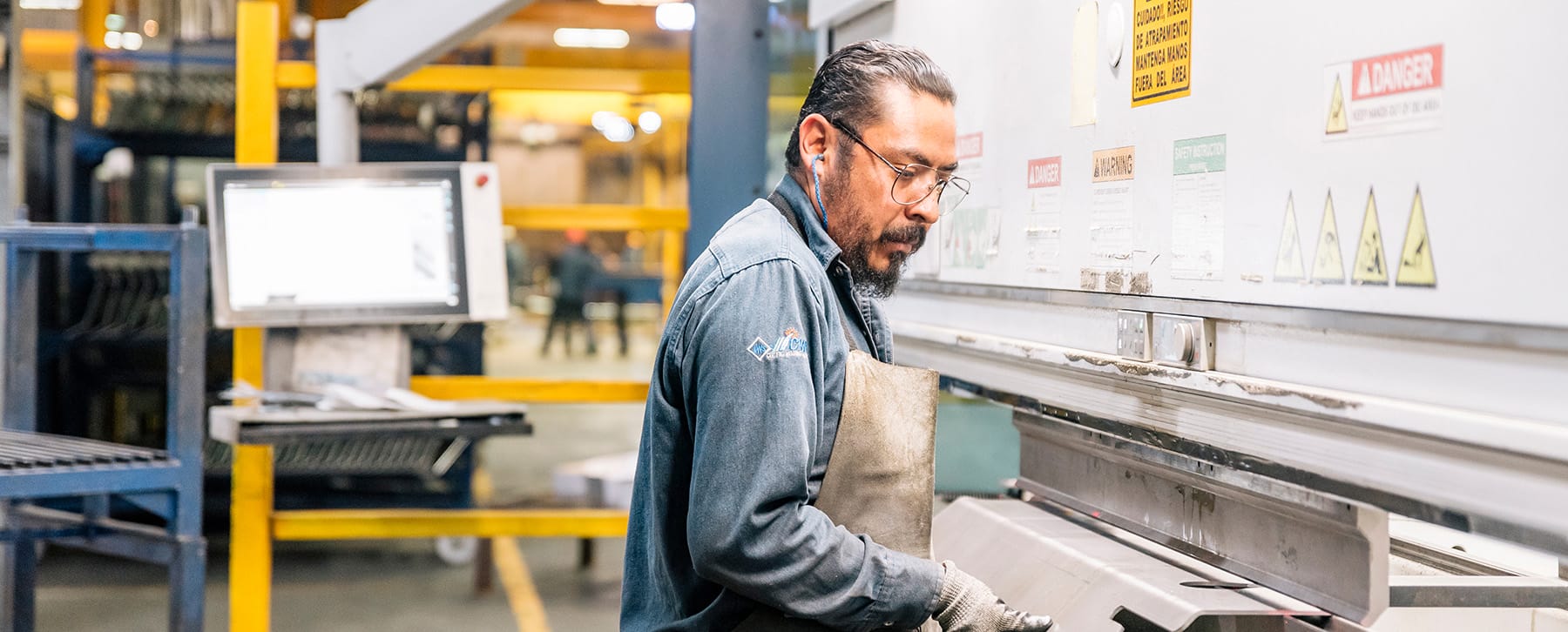
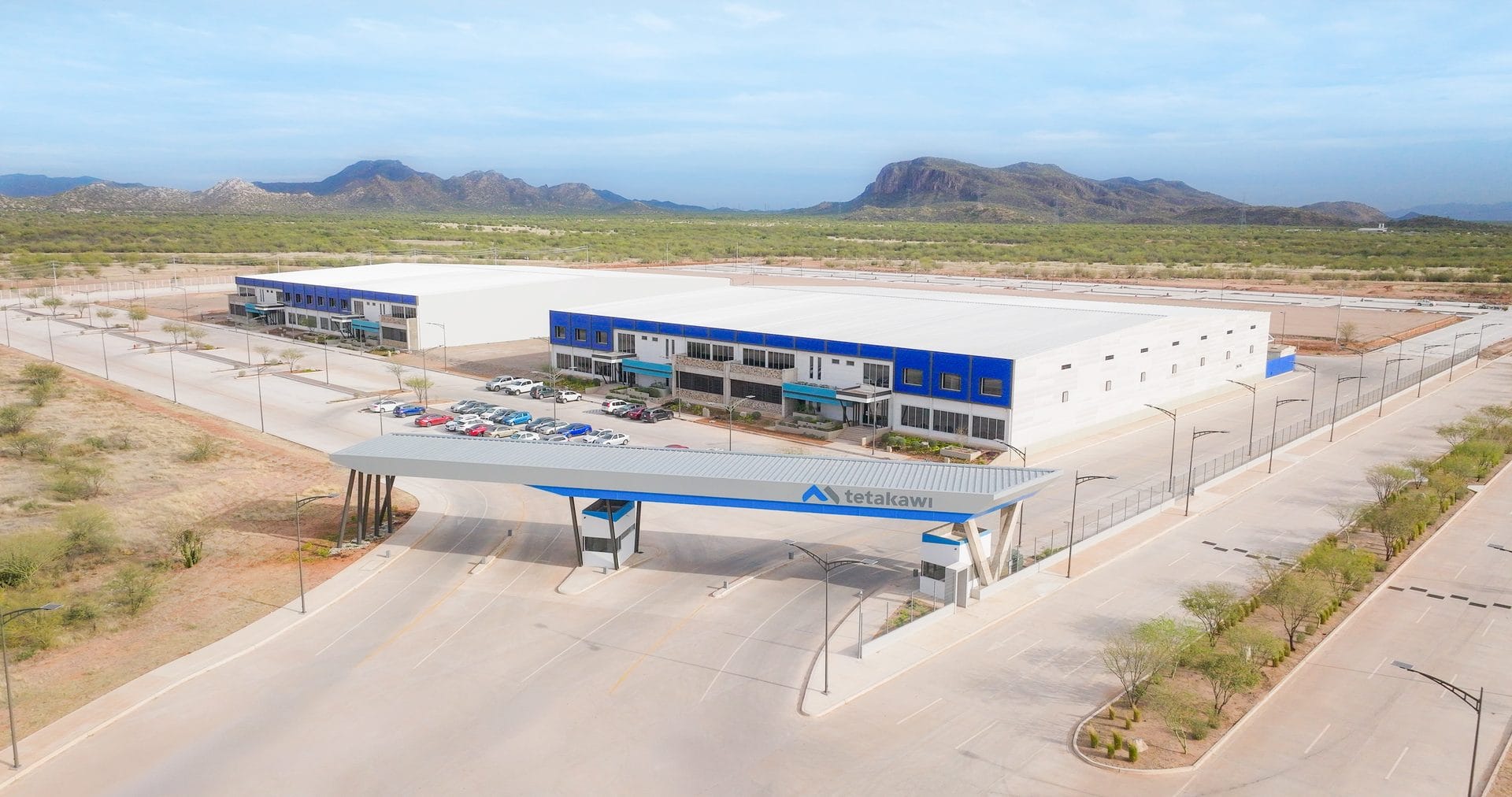
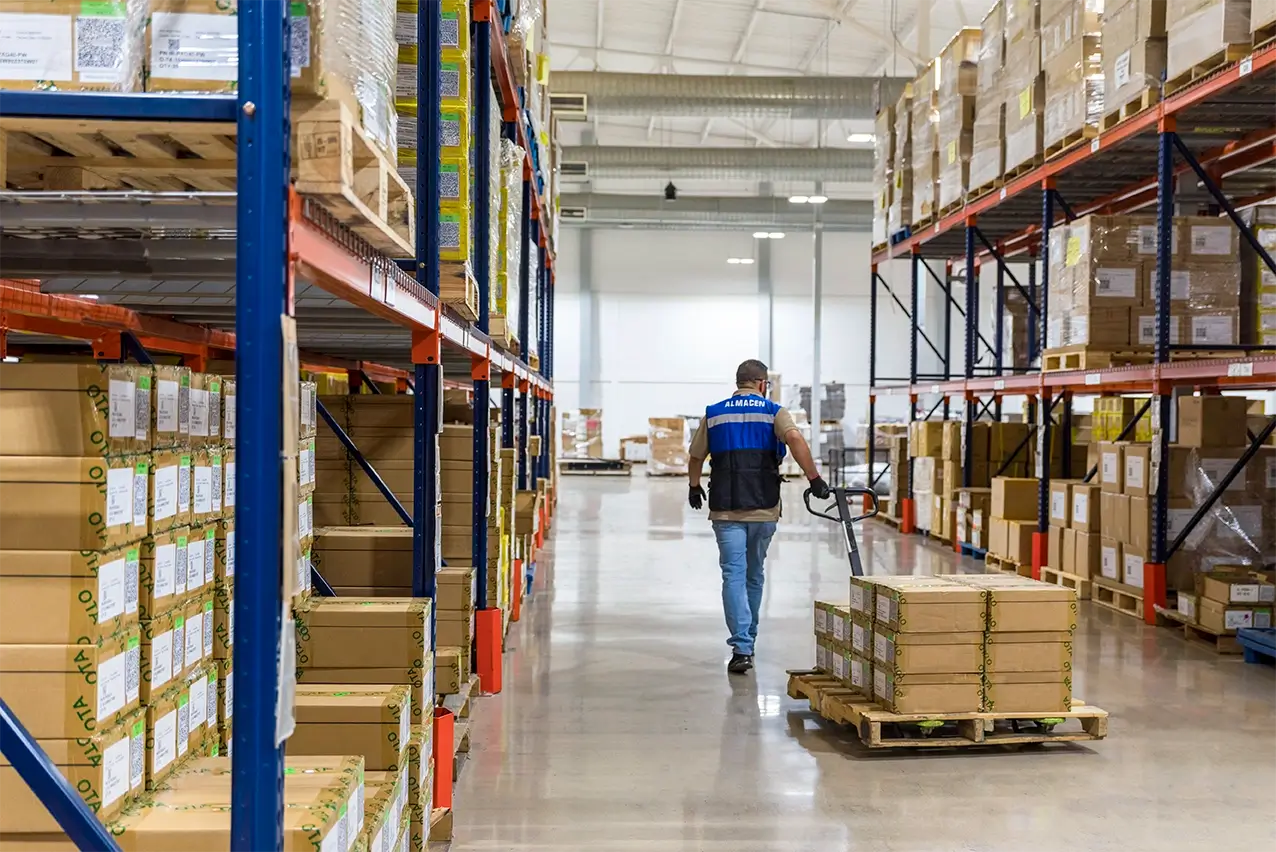
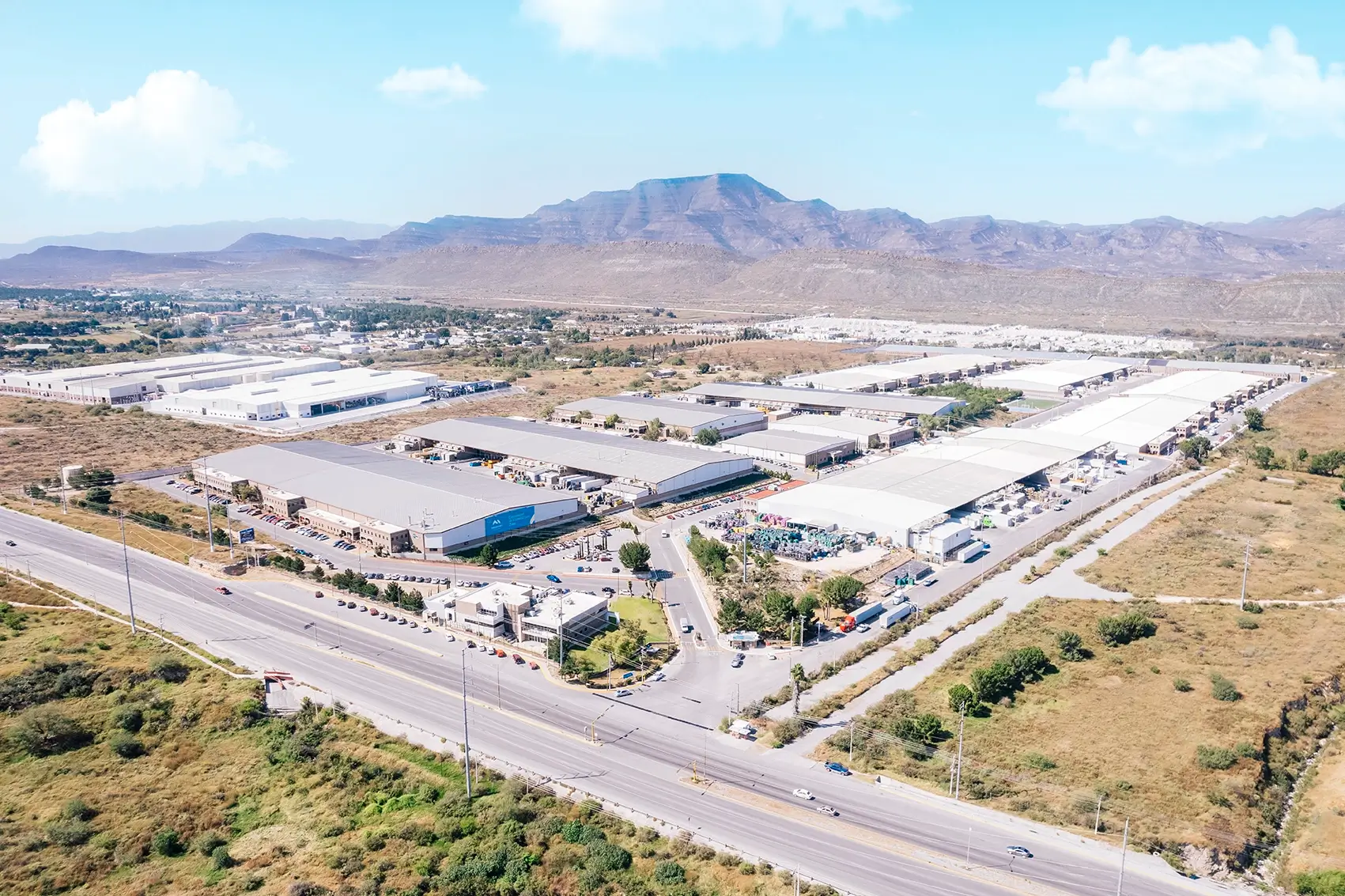
Since 1986, Tetakawi has helped manufacturers launch and operate in Mexico. Today 60+ manufacturers run inside its five Manufacturing Campuses, which employ 22,000+ people across 6.5 million-plus square feet.